
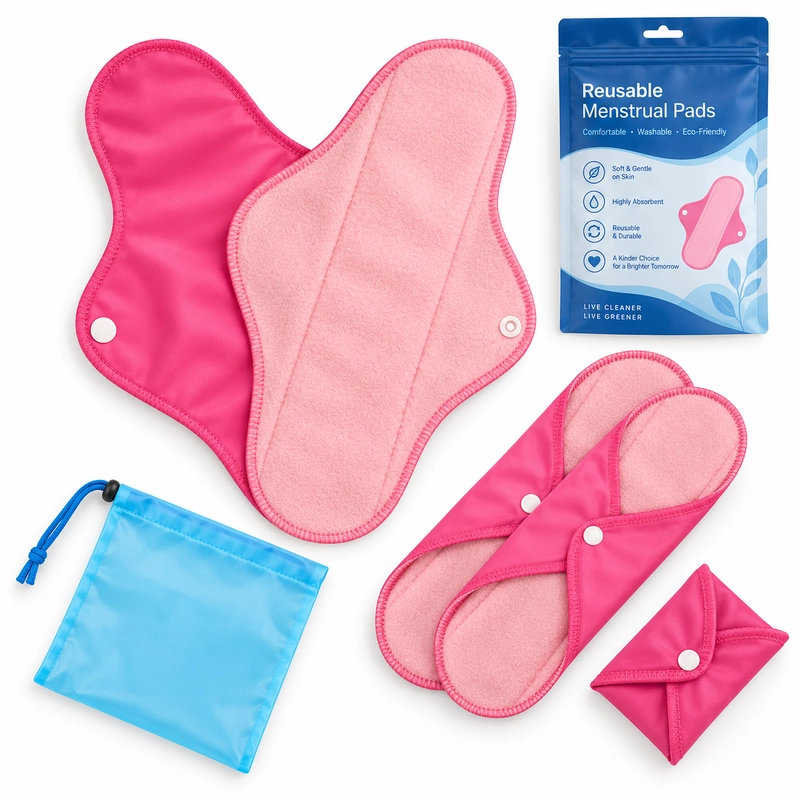
“Waterproof pouch” is not a complete specification. Define whether it carries clean pads, used pads or either; state capacity as an item list; then confirm materials, closure, seams and product-specific containment evidence. Waterproof fabric alone does not prove a finished pouch will contain liquid.
For a separate 20 × 25 cm canvas or polyester example with clear matte TPU lining, one white snap and a one-colour print, see the custom wet bag manufacturing guide. This page continues to cover storage pouches for reusable pads across different constructions.
Separate clean-item and used-item storage
A pouch for clean pads organizes items before use. One for used pads has a different handling expectation: define how long it may be carried, where it will be stored and how it should be cleaned. Some buyers prefer separate products; others want one pouch for both. Do not assume that a pouch shown beside menstrual pads is designed for every use case.
Write the use on the request for quotation (RFQ). For clean items, list the pad styles and whether the pouch is sold alone or in a set. For used items, describe expected contents and handling, then ask what design and care guidance the supplier can support. If clean and used products share one pouch, specify whether they need separation. The pad range and wet-bag page are visual starting points, not substitutes for that brief.
Make capacity an explicit RFQ field
There is no universal capacity implied here. List the pad versions and approximate item quantity, whether items are folded or wrapped, and any other intended contents. Ask for usable internal dimensions and confirm them on the sample, distinguishing interior space from external measurements. For a retail set, list the pouch, pads and inserts as separate contents and confirm the final pack against approved artwork. See the individual packaging guide.
Confirm outer and inner materials
Ask the manufacturer to identify outer and inner materials separately, including any coating or functional layer. Request fibre composition and documentation for the exact nominated material. If you prefer organic cotton, bamboo-derived fibres or another option, record it as a preference to confirm for the selected style; do not infer composition from a photo or supplier shorthand.
Clarify which face contacts the contents, desired surface feel, wipe-clean expectations and care limitations. If a coating, membrane or laminate is proposed, ask that it be named in the specification. For a certification, confirm the holder and scope for the exact material or product; a fabric document does not automatically certify the finished pouch. See the certificate scope guide.
Specify a matching dark pouch by function and appearance
If your set direction calls for a matching dark pouch, treat “dark” as an appearance preference only. A dark color does not prove waterproof, leak-resistant or odor-control performance, and it does not confirm that a particular black style is available. Confirm the selected pouch's dimensions, usable capacity, outer and inner materials, closure, sewn seams or heat-sealed construction, color tolerance, logo placement and artwork, sample approval, and the agreed test method. Keep any containment or care claim tied to evidence for the exact finished sample and intended use. Browse existing pad styles, pouch and gift-set options and the gold-snap private-label guide for related product decisions.
Review the closure and sewn construction
Specify preferred closure and opening direction, then confirm the selected construction on sample; do not infer it from a cropped image. Inspect the seam path, corners, opening and closure attachment for the agreed finish and visible damage. Ask how seams and closure interact with any barrier layer: the complete sewn construction matters for the intended use.
Agree what “waterproof” evidence means
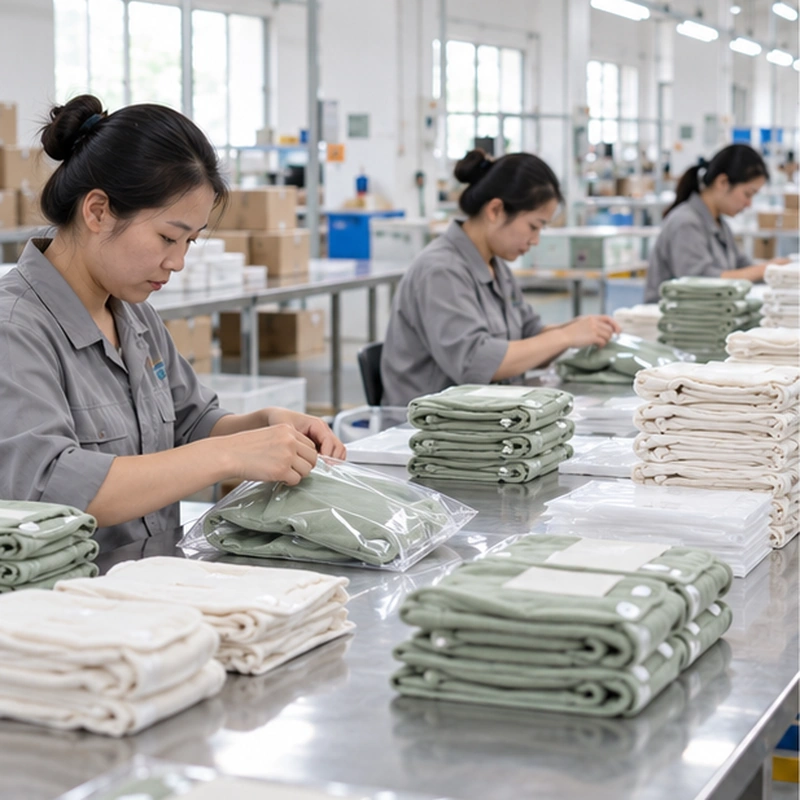
Agree on a product-specific method before relying on a result. Identify the sample version, conditioning, test setup, observation period, check points and pass criterion. Ask what construction was tested and retain the method and observations. A fabric water test does not establish finished-pouch containment, and an informal check is not a certified or universal test. Use a broad “leakproof” claim only when suitable evidence supports the marketed product and intended conditions.
Set care instructions and sample checks
Ask the supplier to confirm care guidance for the actual materials and construction, including washing, wiping, detergent or drying limitations. The sample checklist should record version, dimensions, capacity, material identification, closure, seams, care label, packaging and agreed containment check, with reviewer, date and observations. Link the approved pouch to the pads, artwork and packing plan; ask whether its MOQ is separate. See the sample approval workflow and private-label packaging guide.
Prepare private-label inputs
Provide the logo file, placement, artwork revision and proof approver. MOQ and decoration routes depend on the selected pouch and method, so confirm them for the specific request. Specify whether it is sold alone, bundled with pads or placed in a gift box, plus language, barcode, pack contents and artwork status. Request separate sample, branding and packaging details. The 100, 250 and 500-piece planning guide explains why quantities are route-specific. Get the final specification in writing through the inquiry form.
Your RFQ should include intended use, capacity, material positions, closure, care, sample checks, artwork, packaging and quantity. Mark unknown fields “to confirm” and ask the supplier to return the proposed specification in writing.
Waterproof pouch buyer checklist
- Will it carry clean pads, used pads or both?
- Which product versions and approximate quantity should fit?
- What usable capacity and measurement method will be checked?
- What outer/inner materials and documentation are requested?
- Which closure, seam, care and sample checks are needed?
- What logo, label, packaging, quantity and destination apply?
Share the brief through the quote form. ReuseCare can confirm which options fit the known requirements and identify open questions for sample review.
Frequently asked questions
Does waterproof pouch fabric guarantee that a finished pouch will not leak?
No. Fabric performance alone does not establish how a finished pouch will contain liquid. Ask for product-specific evidence using an agreed method, and review the sample's seams, closure and intended use.
What capacity should I request for a reusable-pad pouch?
State which items and approximate quantity the pouch should hold, whether they are clean or used, and how the pouch will be carried. Confirm usable capacity on the selected sample; there is no universal capacity implied here.
What details should I send for a private-label pouch quote?
Share intended use, capacity target, material preferences, closure and construction requests, care instructions, logo artwork, label and packaging brief, quantity by version, sample needs and destination. Ask the supplier to identify open specifications in writing.
How should I check a pouch sample before bulk production?
Use a written sample checklist covering dimensions, usable capacity, seams, closure, finish, care label and any agreed containment check. Record the sample version and method; do not treat an informal check as a certified or universal test.
Does choosing a dark matching pouch confirm its performance?
No. Dark is an appearance direction only, not evidence of waterproof, leak-resistant or odor-control performance. Confirm dimensions, capacity, materials, closure, seams or heat sealing, color tolerance, logo, sample approval and the agreed test method.