

This private-label packing record requires the product label to be scanned and scan-confirmed, packs 200 units per carton, records gross and net weight in the 60–120 kg control range, and requires a post-packing weight, photo and record review by Mike, Quality Control Lead.
Choose the selling unit first
Start by defining what the customer or distributor receives as one unit. A reusable menstrual pad set may contain several sizes and a wet bag. Nursing pads may be sold by pair or as a multi-pair set. Cloth diapers may include an insert, while a cover may be packed without one.
This definition controls the quotation, barcode, package dimensions, carton count and packing list. Write the unit clearly and avoid switching between pieces, pairs and sets in different documents.
Approve artwork by exact version
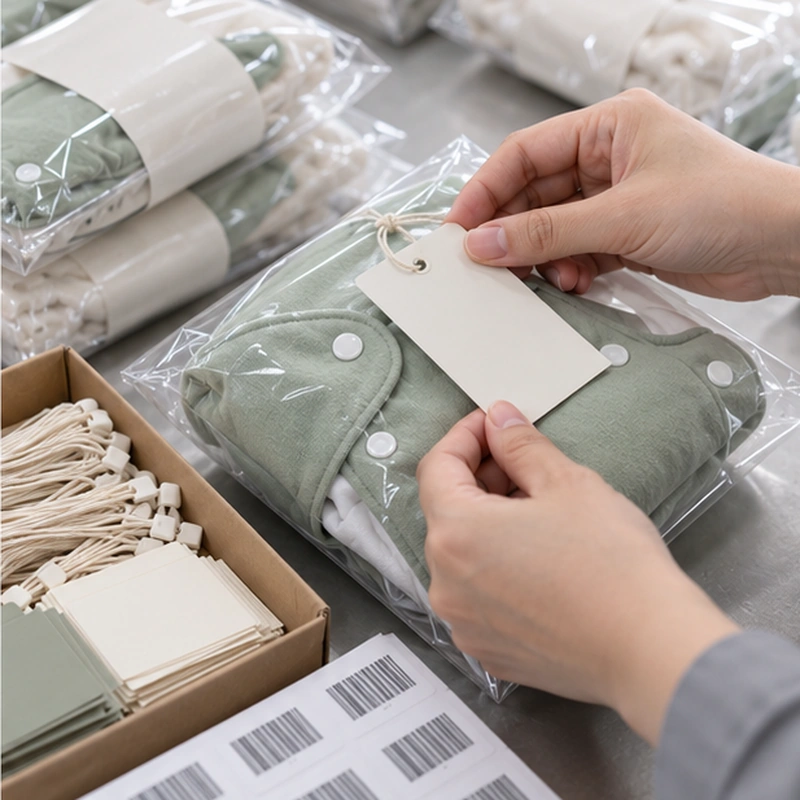
Packaging approval should identify the final artwork file, revision date and package structure. Check product name, material statements, care instructions, quantity, barcode, contact information, country-specific text and any required warning. Claims should be supported by documents that apply to the selected product.
Keep product and package variants connected
Mixed orders need a variant matrix. The matrix can connect each print, size or color to its retail artwork, barcode and carton quantity. This is especially important when several products use similar packaging but have different contents.
Scan the product label before carton sealing
The barcode control starts with the product label. Scan the label, complete the scan confirmation and connect the result to the product variant, carton number and packing record. The workflow defines the scan action and confirmation; the barcode symbology itself should follow the buyer-approved artwork and market requirement.
Define carton information and the 200-unit count
Carton instructions commonly include buyer name or purchase order, product code, variant, quantity, carton number and destination marks. For this control record, the carton quantity is 200 units. Count and reconcile the actual quantity against the label and packing list before the carton is sealed. Confirm whether inner cartons, polybags, protective inserts or moisture controls are required.
Weigh, photograph and record after packing
After the carton is packed, weigh it and record the gross and net weight separately within the specified 60–120 kg control range. Photograph the weighing result together with the carton or carton number so the image can be matched to the record. The packing record should include the carton number, quantity, product-label scan confirmation, gross weight, net weight, photo reference, operator and review status.
Recheck before warehouse handover
Mike, Quality Control Lead, reviews the scan confirmation, 200-unit count, weight record and photograph before final handover. If the count, label, weight or photo record does not match, place the carton on hold, correct the packing record or repack as needed, and complete the review again before release.
Protect the shipment record
Before dispatch, confirm the shipping method, delivery terms, collection details and required documents. “Dispatch within two days” for in-stock goods does not mean two-day delivery. Transit timing starts after the carrier receives the shipment and depends on the selected route.
Packaging brief checklist
- One clear selling unit with every included product and accessory.
- Final packaging structure, dimensions and material direction.
- Approved artwork file, revision date and product label.
- Product-label scan and scan confirmation.
- Carton quantity: 200 units.
- Gross and net weight record: 60–120 kg control range.
- Post-packing weighing photo and carton record.
- Mike, Quality Control Lead, review status and handover decision.
- Carton marks, carton numbering, packing list and destination information.
Custom packaging minimums and lead times depend on the structure, print process and quantity. Confirm them separately from the product minimum, while keeping the barcode confirmation and final carton evidence connected to the private-label order.