
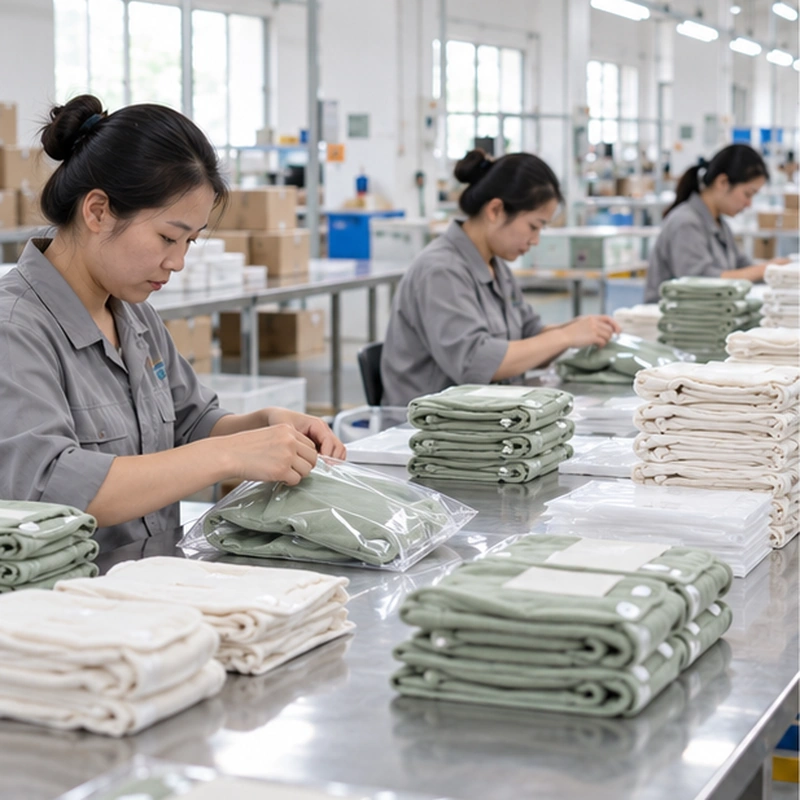
For an individual reusable menstrual pad package, define the exact selling unit: pad style and quantity, pouch or wrap, insert card, label, barcode and any additional component. Approve the artwork revision and a representative physical sample. Ask the supplier to confirm packaging MOQ and timing for that format; neither should be inferred from the product MOQ.
Define the retail unit before choosing packaging
The phrase “individual packaging” can mean different things: one pad in a sleeve, a set of pads in a pouch, a branded paper wrap, a box containing a set, or a retail pack with an insert. Start by describing what a shopper should receive and how many pads or accessories are inside. Record the product style, size or size mix, color/print variant and unit count. If a wet bag or another accessory is included, list it explicitly so the pack sample and quotation describe the same contents.
ReuseCare’s product references can help identify a starting style in the reusable menstrual pad range. A photograph is useful for discussion, but it does not define package dimensions or every included item. Send a drawing, reference pack or written contents list where possible. Mark any open choices, such as pouch material, closure, card or outer box, as questions for supplier confirmation.
Separate individual wrapping from the retail selling unit
“Individual OPP bag” can mean one bag per pad or one OPP bag per retail set. State both levels: define the retail selling unit (for example, four pads per retail bag), then specify whether each pad also needs its own inner wrap and what outer carton groups those retail units. In an anonymized inquiry, 80,000 bags at four pads per bag would equal 320,000 pads; confirm whether the 80,000 refers to retail bags and whether separate wrapping for every pad is required before costing or production. The inquiry did not settle that detail. Record bag material, dimensions, closure, print and carton count on the packaging brief, and connect it to the institutional procurement brief and the reusable pad category.
Write the label and artwork brief
Provide the logo file and artwork revision, product name, SKU or variant identifiers, pack quantity, barcode data and the text that should appear on each panel. Include placement, orientation and color references. If the package is bilingual or multilingual, specify which language is used on which panel and provide the final approved copy. Use one source of truth for the latest artwork so the design proof, sample and order record do not carry different revisions.
Product labeling rules can depend on the market and product. The brand owner should confirm the required consumer information, claims and language for the intended destination. Do not assume a packaging mock-up establishes legal compliance or that one label can serve every country. If a certificate or test reference is to appear, confirm the exact document scope, holder, product coverage and validity before including it in artwork. See ReuseCare’s certification information for scope questions.
Barcode control: data, artwork and scan confirmation
The brand should provide or verify the correct barcode number and identify the SKU it belongs to. Check that the number, bars, quiet area, orientation, contrast and print size remain clear in the final artwork. A barcode image copied from another product or an early design file can create a costly identity mismatch. Maintain a simple SKU-to-barcode table and attach the approved version to the packaging proof.
At sample stage, inspect the printed barcode and scan it with a suitable reader. Confirm that the scanned result matches the intended number and product record. Keep evidence of the scan confirmation and the artwork revision reviewed. Scanning verifies the encoded value can be read under the check conditions; it does not independently confirm the brand’s product assignment or retail database setup. The brand remains responsible for confirming that the number is correctly assigned to the intended SKU.
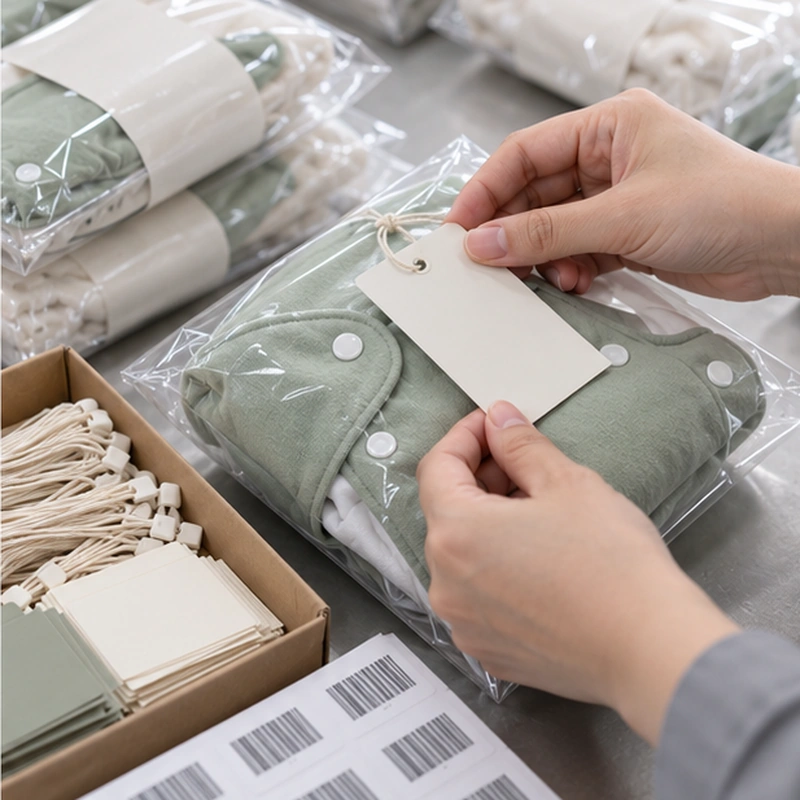
Approve the physical pack as a product sample
A flat artwork proof cannot show every physical detail. Review a representative pack for opening and closure, fit around the product, legibility, alignment, finish and the exact contents. Confirm that the product variant inside matches the label, and check whether the pack can be handled, stored and displayed as intended. For a set, count the pieces and accessories against the written unit definition.
Write down the approved packaging revision and sample identifier. If a barcode, copy, material or dimension changes later, treat it as a new review point. Keep one approved reference with the order records and make sure any production checklist points to the same version. The photo record should identify what it shows and should not be used as a substitute for approval. ReuseCare’s sample approval guide explains how revisions and sign-off can be tied to the bulk-production basis.
Keep packaging MOQ and timing project-specific
ReuseCare confirms basic finished styles at product-dependent minimums from 5 to 300 pieces and finished-product custom printing from 300 pieces. These facts concern product ordering and do not establish a universal minimum for custom packaging. Packaging MOQ and timing depend on format, dimensions, printing method, artwork, quantity and sample approval. Ask for those details to be stated separately in the quotation for your chosen packaging.
Confirmed in-stock styles may dispatch within two days after stock availability is confirmed. Dispatch is not delivery, and this stock note does not establish the production or transit schedule for custom packaging. Request separate estimates for sample preparation, packaging approval, production, dispatch and transport, and ask what event starts each timing estimate. For the documented floor process, see the packaging and private-label workflow.
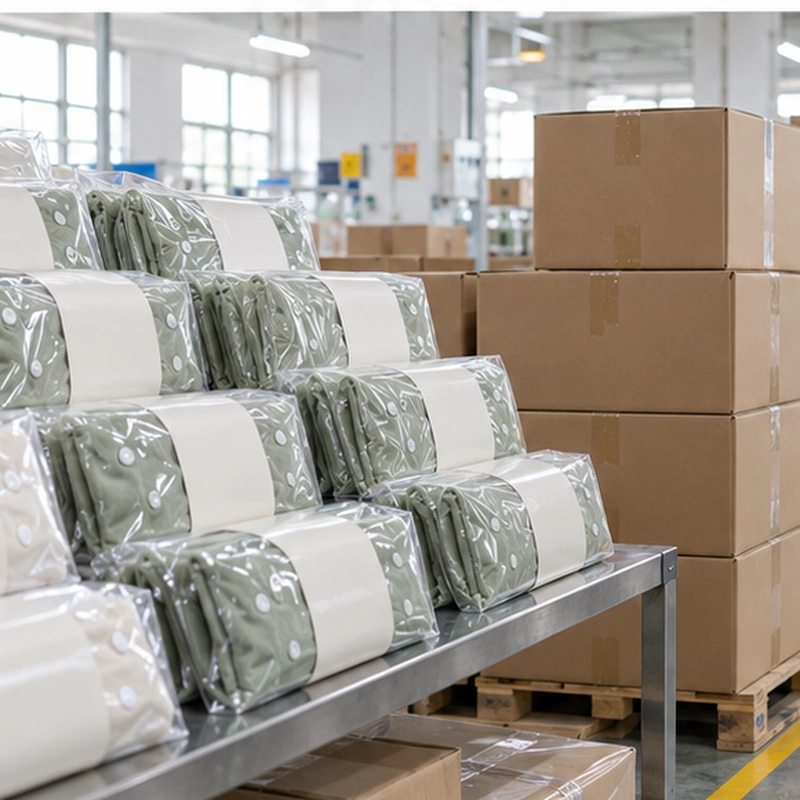
Individual packaging approval checklist
- Selling-unit contents, number of pads, accessories and product variants.
- Package format, dimensions, closure and material direction.
- Final product name, SKU, artwork version and language copy.
- Barcode number supplied or verified by the brand and matched to the SKU.
- Printed proof reviewed for layout, spelling, color, orientation and legibility.
- Physical packaging sample checked with the correct product inside.
- Barcode scan confirmation recorded against the same revision.
- Packaging minimum, sample steps and timing confirmed in writing for the project.
- Approved packaging sample and order documents share a clear revision identifier.
For logo placement on the pad itself, use the dedicated logo application guide. For one combined supplier brief covering the product, order, branding and delivery questions, see the private-label inquiry checklist. The broader brand-start guide covers early product-line planning.
Frequently asked questions
What should an individual pad package include?
Define the selling unit and list the pad style, quantity, pouch or wrap, insert card, label, barcode and any other included item. Required consumer information depends on the destination market and product, so confirm the final content and responsibilities for the project.
Who provides the barcode number and artwork?
The brand owner should provide or confirm the correct barcode data and approved artwork for the specific SKU. The supplier can check that the supplied file is placed and scanned as agreed, but the brand should verify the number and retail-system assignment.
Are packaging MOQ and timing the same as the product MOQ?
No universal packaging MOQ or timing is established. Packaging minimums and timing depend on format, dimensions, print method, artwork and quantity, and must be confirmed per project and sample.
How is a packaging sample approved?
Review the physical format, material, dimensions, artwork revision, label fields, barcode readability and the exact items inside the selling unit. Record the accepted version and approval before the order moves forward.