
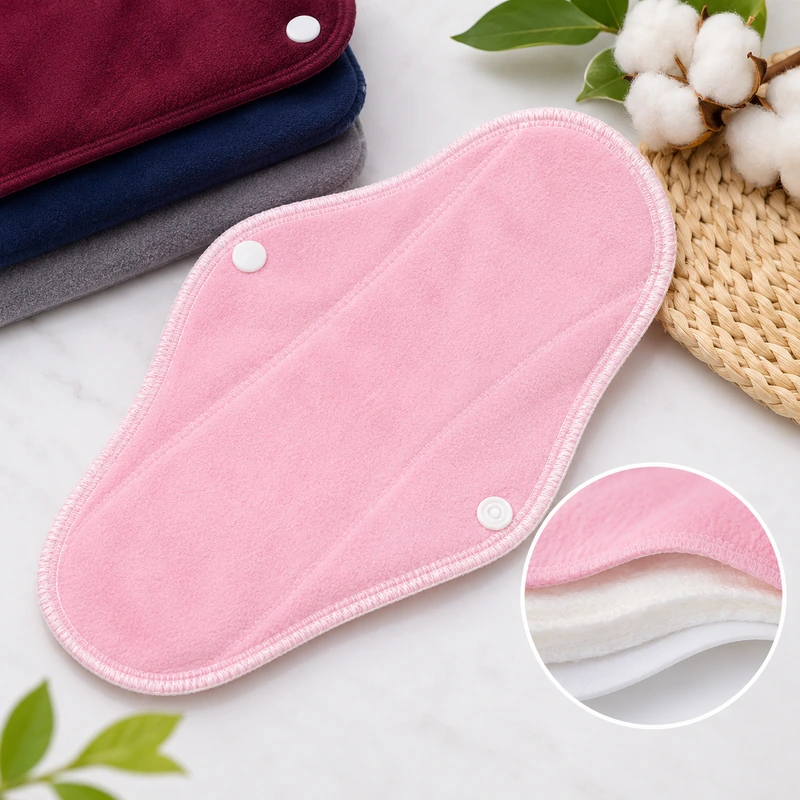
Ask suppliers to quote a clearly defined pad and bag quantity, identify what a bag contains, and document dimensions, materials, packaging and delivery terms. The calculations below use a buyer-supplied example of four pads per bag; they are quantity arithmetic, not a verified specification for every pictured product or a price offer.
Convert the programme need into order units
Institutional requests often describe beneficiaries, distribution events or individual pads, while factories may quote by piece, set or packaged bag. State all units in the same request so proposals can be compared without assuming that “one pack” has a universal meaning.
These are unit conversions only. They do not establish case quantities, spare ratios, final artwork, carton packing, production availability or freight. If the programme needs a particular number of individual pads, request the supplier’s quote both per pad and per bag and show the arithmetic beside each total.
Define what “four pads per bag” means
Packaging language can hide different order units. “Bag” may mean an individual retail or distribution pouch, an inner pack, or a shipping bag. Specify whether four pads are loose, folded together, individually wrapped, or arranged by size or absorbency category. State whether the bag is part of the supply scope, who provides artwork, what languages or care information are needed, and whether bag printing or labels are included.
Ask for a packaging breakdown: pads per consumer/distribution bag, bags per inner carton if applicable, and the number of bags and pads represented by the quoted order quantity. Request a sample or packaging mock-up for approval. See the individual packaging guide for choices that need to be resolved before production.
Put the product specification in the tender
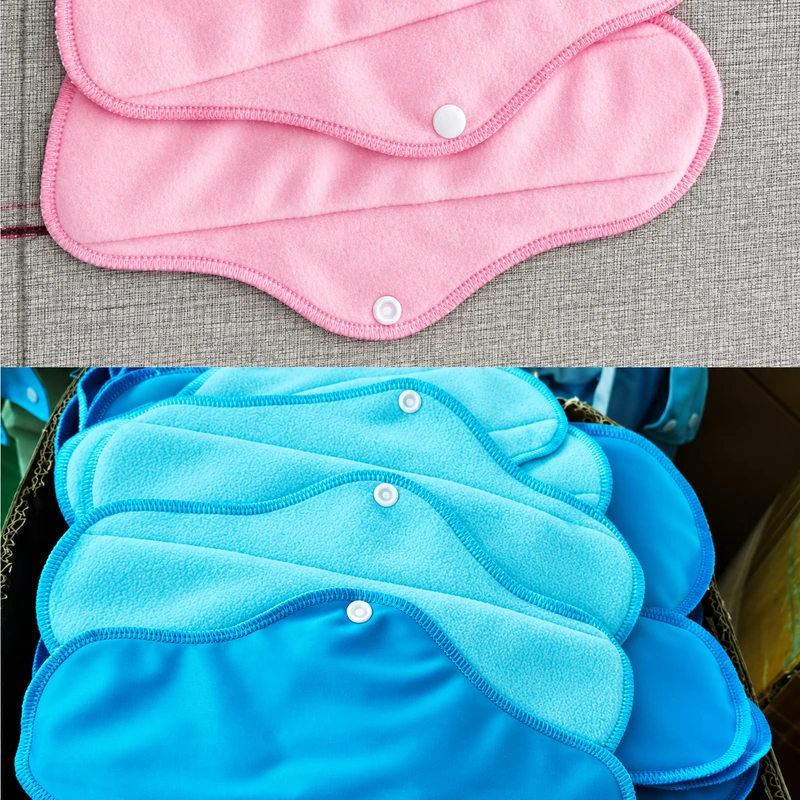
A useful request describes the finished item without relying on a product photo alone. Provide the pad shape and size, finished dimensions and measurement method, acceptable tolerance, closure, edge finish, color or print, care information and intended packaging. If the tender includes multiple sizes, list the quantity of each size and how each is grouped in a bag.
In one anonymized procurement example, the quoted pad size was 17 × 27 cm, with three absorbent layers, one waterproof layer and plastic snap buttons reported in the supplier response. The buyer requested an absorbent cotton inner, while the reply summarized the material as “polyester.” The exact fiber composition and position of each layer have therefore not been reconciled in the public brief. These reported values should be confirmed against the approved technical sheet for the exact pictured style. Ask the supplier to return a dimensioned drawing and a layer map for the quoted item.
Do not collapse a material description into a generic statement such as “polyester pad.” Polyester may refer to one layer or backing, while the absorbent inner may be a different material. Request the fiber and material composition by layer, its position, the number of layers and any finish. The material and layer guide explains how to record this clearly.
Make sample and wash evaluation reproducible
If physical samples are part of the tender, identify the sample revision before award or bulk production and compare it against the written specification. Confirm dimensions, shape, stitching, closure, fabric placement, labels and packaging. If a wash evaluation is required, write down the wash and drying conditions, number of cycles, inspection points and acceptance criteria, then agree how results will be documented. No generic product photo or unreported test should be treated as proof of performance.
Some institutional buyers do not require a physical sample. In that case, request dated product photos, a versioned technical sheet, material and construction records, and written approval of the exact production specification. Keep the approved version and any agreed inspection record tied to the purchase order. Note who can approve substitutions and require written approval before a material, size or pack change.
Request comparable commercial offers
Ask each supplier to separate the unit price for one pad from the price for one specified bag, then show the quantity basis and extensions. A complete offer should state which pad configuration and packaging each line covers, any printing or setup charges, sample costs, minimum quantity, quotation validity, currency, Incoterm and named place or port, and what is excluded. Do not infer a price from a quantity example.
For a cost comparison, see the manufacturing cost guide. Share the requested delivery destination and packaging assumptions with the request so suppliers are answering the same question.
Institutional due diligence and supplier records
Request the records required by your procurement process, such as company and manufacturing details, product specification, sample approval, inspection plan, packing information and shipping documents. Check references and any stated project history directly with the supplier and through your organization’s process. A reported prior supply to a procurement project, if mentioned by a supplier, is a supplier-reported history only; it does not imply endorsement, current approval or certification by the project or any associated organization.
Specify any required certifications or test documents precisely, including holder, product scope, issuer, validity and verification method. Do not treat a fabric or component record as certification of a finished pad unless its scope explicitly says so.
Procurement brief checklist
- Forecast in individual pads and in the requested number of bags.
- Pads per bag, bag type, wrap arrangement, artwork, labels and language.
- Style, size mix, dimensions, tolerance and a drawing or reference sample.
- Materials and fiber composition by layer, plus construction and closure details.
- Sample approval steps and any defined wash or inspection protocol.
- Quote per pad and per bag, with quantity basis and all packaging lines.
- Destination, delivery term, named location, schedule assumptions and exclusions.
- Required supplier documents, certificate scope and approval authority for changes.
Send the completed brief through the reusable menstrual pad quote request. Browse the reusable menstrual pad range to identify a starting style, then confirm the exact version with the supplier.