
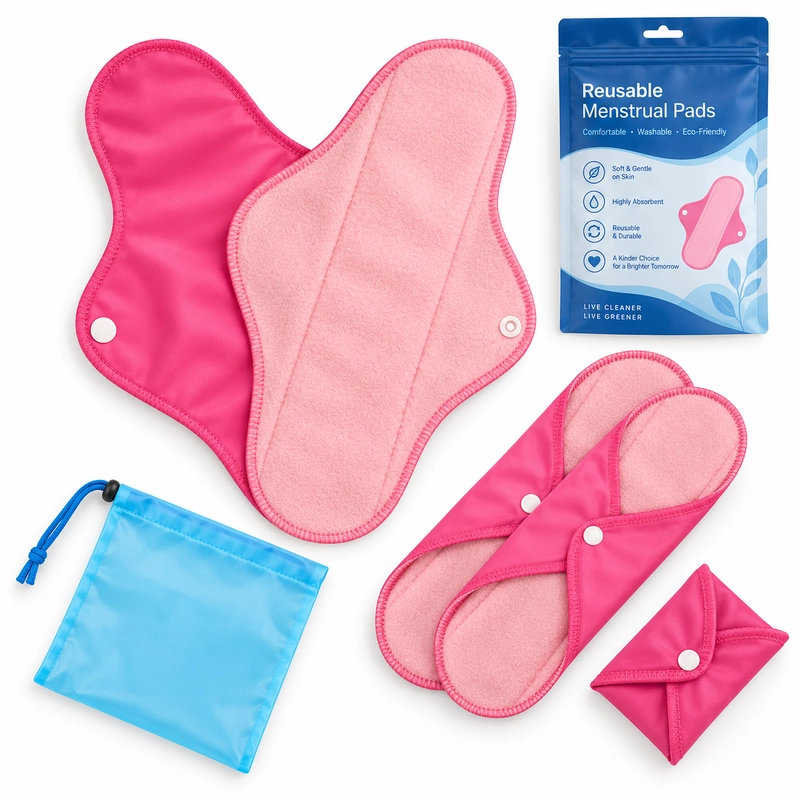
There is no responsible universal price for reusable menstrual pad manufacturing. A comparable quote needs the style and dimensions, layer construction, quantity by variant, branding, packaging and destination. Change one of those inputs and the price or minimum may change.
1. Product style and size mix
A panty liner, regular pad, heavy-flow pad and overnight style do not use the same shape or material area. A mixed set also needs its own packing plan. Start the RFQ with the styles you actually want to sell and list the quantity for each one. If the range is still being developed, separate the confirmed styles from options that need supplier advice.
Dimensions should be written in the specification and checked on the sample. A reference photo helps explain the look, but it does not replace measurements, layer order or an approved pattern. The reusable menstrual pad range shows the available category structure for an initial discussion.
2. Material and layer construction
The skin-contact surface, absorbent core, waterproof layer and backing each affect the quote. Material names should be connected to the exact sample being priced. If a buyer asks for bamboo, cotton, charcoal, fleece or another option, the quote should state where that material is used rather than treating one name as the complete construction.
When waterproof protection is part of the brief, confirm the selected PUL construction and the way it is used in the finished pad. ReuseCare’s published PUL lamination process uses a polyester or cotton base fabric with TPU film. That production reference helps explain the material, but the approved product sample remains the reference for the order.
3. Order quantity and customization route
Quantity is not only the total number of pieces. It must be divided by style, size, colour, print and retail pack. A 500-piece request split across many variants can be a different production task from one 500-piece style.
ReuseCare lists basic finished styles from 5 to 300 pieces, depending on the selected product. Finished-product custom printing starts from 300 pieces. These are planning ranges, not a universal minimum for every combination. The quotation should confirm the applicable minimum for each selected style and customization route.
Compare three anonymous buying plans
For a practical RFQ comparison, ask for separate offers at 100, 250 and 500 pieces using the same approved existing style wherever possible. At 100 pieces, request one existing style and state whether it is a day or night format. At 250, show the proposed day/night split by SKU rather than sending only a combined total. At 500, price that same split and list a waterproof storage pouch as an optional separate line. These are buyer planning quantities, not a promise that each mix is available or an MOQ for any SKU; confirm the applicable minimum and stock for each item.
Even when the total piece count matches, mixed SKUs can differ in pattern, materials, work content and packing. A pouch changes the bill of materials and pack configuration. Retail pack quantity, printed packaging and barcode or label requirements add further differences. Destination country/postcode and requested delivery term change the freight and landed-cost basis. Ask suppliers to quote product, pouch, packaging, sampling and freight on separate lines against the same SKU breakdown and destination; otherwise the totals are not directly comparable. Browse the existing pad styles and send the quantity split through the product quote form.
Count pieces and retail bags on the same basis
State whether the quoted unit price is per finished pad or per retail bag, then show the number of pads in each bag. These quantities describe different orders: 80,000 pads packed four per bag means 20,000 four-packs; 80,000 four-packs means 320,000 pads. Keep any individual inner wrap as a separate packaging requirement. An anonymized institutional inquiry used this kind of quantity ambiguity, so confirm the commercial unit before comparing quotes. No product prices or freight amount are assumed here. For CIF, request the named destination port and a dated shipping quote, with product value, export packing, ocean freight and insurance shown or clearly included, plus validity and exclusions; confirm any destination charges and import duties separately. The shipping quote remains pending in this example. See the CIF bulk reusable sanitary pad guide, the institutional procurement brief and the reusable pad category.
4. Sampling and revision work
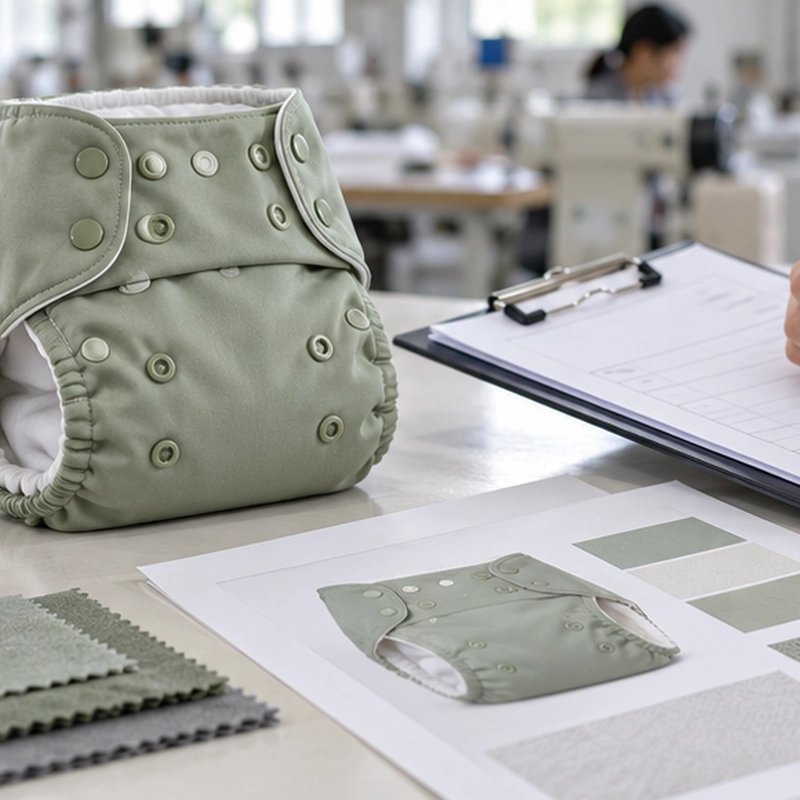
A sample is where the written brief becomes a physical reference. Cost and timing can change when a buyer requests a new pattern, material combination, print, label placement or packaging mock-up. Make each revision traceable with a sample number, written change record and approval date.
Use the sample approval guide to keep the approved version connected to production. Reviewing all important changes together is usually clearer than sending isolated adjustments after the sample has already been prepared.
5. Print, labels and brand assets
Available colours or prints usually follow a different route from new custom artwork. For a custom print, provide the artwork file, colour references, scale, repeat and direction. For private label, identify the logo format, label type, placement, care information, language and any barcode requirement.
Ask the quote to separate product cost from one-time or revision-dependent work where applicable. This makes it easier to see which cost belongs to the repeat order and which belongs to developing the first approved version.
6. Retail packaging and carton plan
A loose product, a bundled set, a mesh bag, a wet bag and a printed retail box are different packing tasks. State what the consumer receives, how many pieces are in one selling unit and what artwork or label is required. The outer-carton plan should also define how variants are separated and identified.
ReuseCare’s private-label packaging workflow shows how product labels, barcodes, packing confirmation and carton records can be connected. Packaging should be approved against the same product version used for bulk production.
7. Destination and commercial terms
A product quote and a delivered project cost are not the same. Ask what is included in the quoted price and state the destination country or postcode. Freight, duties, taxes, insurance and local handling depend on the agreed shipping term and destination. A low unit price cannot be compared fairly with another quote until those boundaries are clear.
For confirmed in-stock styles, dispatch may be available within two days after availability is confirmed. Dispatch is not delivery. Custom samples, printing, packaging and production require their own confirmed schedules.
How to request a comparable quote
Send the same specification to every supplier you compare. That turns the quote from a rough number into a commercial response you can review line by line. If some choices are still open, mark them clearly and ask the manufacturer to quote the alternatives separately.
Frequently asked questions
How much does it cost to manufacture reusable menstrual pads?
There is no reliable universal unit price. A factory needs the selected style, dimensions, layer construction, quantity, print or label requirements, packaging and destination before it can issue a comparable quote.
What is the minimum order for private-label reusable pads?
ReuseCare lists basic finished styles from 5 to 300 pieces depending on the selected product. Finished-product custom printing starts from 300 pieces. Confirm the applicable minimum for every selected style and customization route.
Does a lower unit price always mean a lower project cost?
No. Sampling, artwork changes, packaging, freight, import costs and rework can change the total project cost. Compare quotes against the same written specification and commercial terms.