
Launching a reusable menstrual pad brand is easier when product decisions are made in a deliberate order. Start by defining the product that users need, then confirm the sample and construction, and only then lock the brand-facing details such as prints, labels and packaging. This order helps an OEM or private-label buyer avoid changing multiple variables at once after a quotation or sample has already been prepared.
1. Begin with a focused product brief
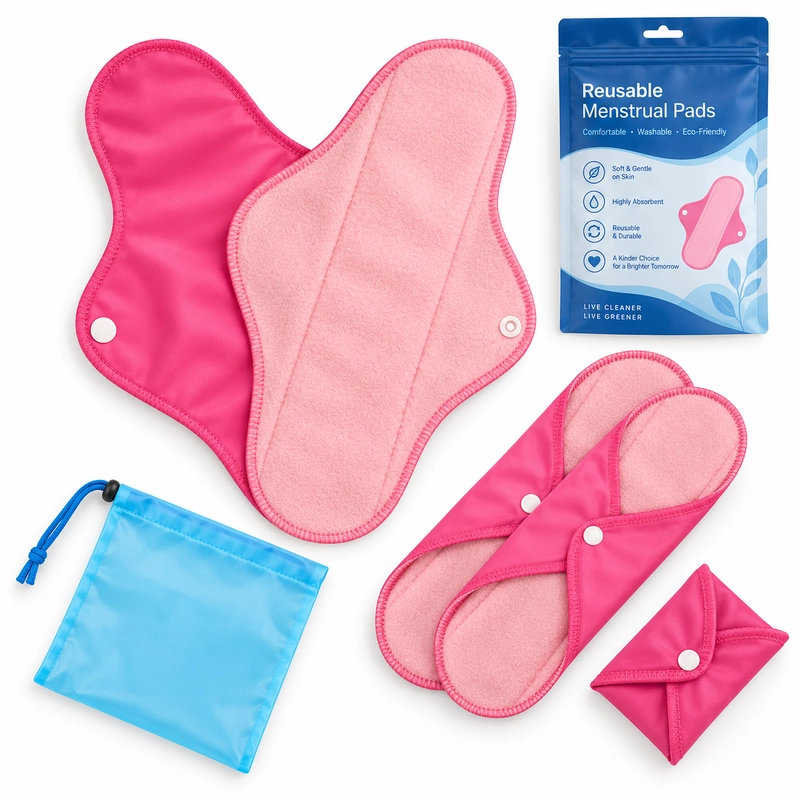
A launch range does not need every possible size or absorbency level. A focused first brief lets you compare suppliers and samples more clearly. Decide which formats are important to your customers: panty liners, regular pads, higher-absorbency or overnight styles, or a coordinated set. The reusable menstrual pads category provides a useful route map for that discussion.
For each style, document the intended use, approximate dimensions, absorbency target, skin-contact material, absorbent layers, waterproof layer, closure or wing design, and the parts that are still open for supplier advice. Avoid asking a manufacturer to copy a reference image without saying which construction decisions matter. A product photo is a visual starting point, not a complete technical specification.
2. Separate product specification from brand presentation
Product performance comes from the approved construction. Brand presentation comes from print, label placement, care information, packaging and the way the range is grouped for sale. Keep these conversations connected but separate. For example, a custom print or carton design can affect the commercial route, while material and size decisions affect the product sample.
Make a simple brand asset list: logo files, preferred colours, artwork ownership, language requirements, label content and packaging concept. Mark which assets are final and which are provisional. That gives the supplier a clean way to identify what can be sampled now and what needs to wait for design approval.
3. Use sampling to lock the production reference
Request a sample against the written product brief. Review it for dimensions, materials, shape, stitching, layer order, print placement, labels and packaging assumptions. Every sample should have a version number so that a later adjustment does not get confused with the first version. Record every change, the reviewer and the date of approval.
ReuseCare’s sample approval before bulk production guide explains the usefulness of a controlled sign-off record. For a launch project, the approved sample becomes the common point of reference for the buyer, designer, quality reviewer and production team. If a detail remains unresolved, treat it as unresolved rather than assuming it will be settled during bulk production.
For related production checks, review incoming material inspection and sewing and in-process inspection.
4. Choose a commercial route deliberately
The order route should match the level of customization. ReuseCare lists basic finished styles from 5–300 pieces depending on the product. Finished-product custom printing starts from 300 pieces. These figures help with early planning, but they do not replace a product-specific quote: material choice, artwork, packaging and availability can all change the applicable minimum and timing.
For confirmed in-stock styles, dispatch may be available within two days after availability is confirmed. Dispatch is not delivery, and it is separate from custom production timing. New samples, custom print and custom packaging should each be quoted as their own steps. The ordering guide explains these routes so you can align the product brief with a realistic commercial request.
5. Prepare packaging and final review
Packaging is part of the customer experience and the operational plan. Confirm the individual product presentation, barcode or label needs, carton quantities, language, destination-market requirements and how a finished carton will be checked. A packaging approval should point back to the same product version used for the sample, so a product change does not silently separate the item from its instructions or retail presentation.
Use the packaging and private-label workflow guide as a practical prompt for questions about label scanning, packing confirmation and carton review. The final process for a project is confirmed in its production documentation and must match the selected product and market.
6. Send a quote-ready launch request
A quote is easier to compare when it includes the intended styles, estimated quantity by style, destination country, material preferences, desired branding, packaging level, artwork status and whether a sample is required. Include a target launch window, but distinguish a fixed deadline from an early planning estimate. Ask the manufacturer to identify any choice that could change the price, minimum order or schedule.
This does not make the first brief perfect; it makes it usable. A clear brief allows a manufacturer to identify the remaining decisions and propose a sensible sample route. When your launch plan is ready, share it through the ReuseCare quote form so the project can be assessed against the actual product, packaging and destination requirements.
Frequently asked questions
What should an OEM quote request include?
List each product style and estimated quantity, destination country, material preferences, branding and artwork status, packaging level, and whether a sample is needed.
What order quantities should a new brand plan for?
Basic finished styles are listed from 5–300 pieces depending on product. Finished-product custom printing starts from 300 pieces. Confirm the applicable minimum for each selected style in the quote.
Does two-day dispatch mean two-day delivery?
No. Confirmed in-stock styles may dispatch within two days after availability is confirmed. Dispatch and transit or delivery time are separate.