
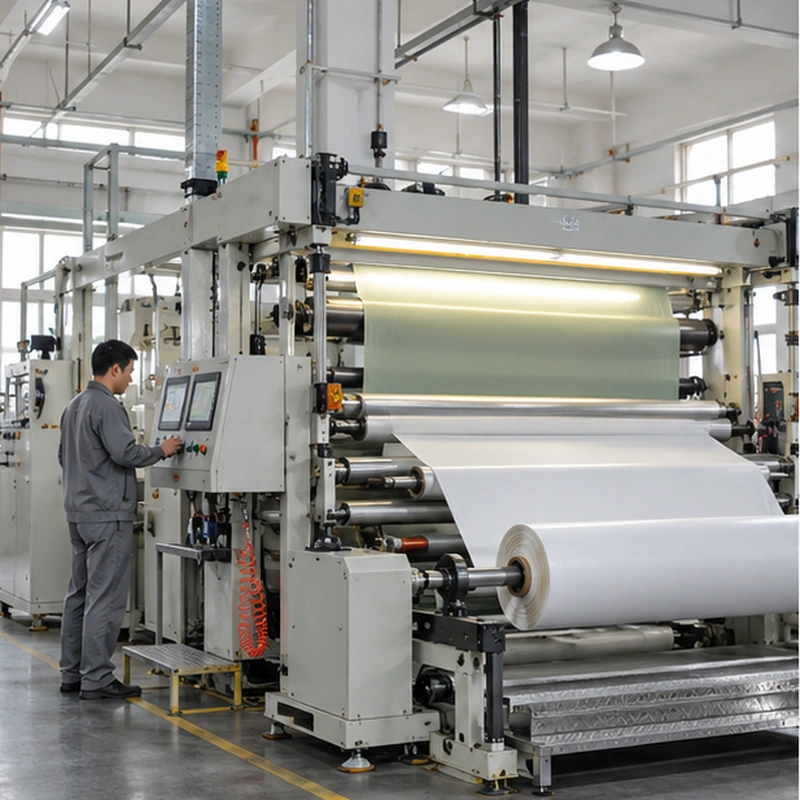
ReuseCare PUL constructions use a polyester or cotton base fabric laminated with TPU film. Before production approval, the selected base fabric and TPU film must match the approved reference, the production run must remain identifiable, and the review record must state what was checked and who accepted it.
1. Confirm the material reference before the line starts
Start from the approved construction: a polyester or cotton base fabric, the corresponding TPU film reference, the colour or print reference, the approved sample revision and the order identity. The choice between polyester and cotton depends on the required product construction and the approved sample. It is not treated as an interchangeable substitution during production.
The production record should make it possible to trace a finished roll back to the base fabric and TPU film used at the start of the run. This is especially important when a buyer has approved a particular hand feel, print or construction.
2. Feed the base fabric and TPU film without losing alignment
The polyester or cotton base fabric and TPU film must enter the line with the agreed orientation and without avoidable distortion. The operator watches feed consistency, edge alignment and visible surface condition as the materials move forward. A clear process instruction identifies when to stop, adjust or isolate material for review. A generic statement that a line is “running normally” is not a usable approval record.
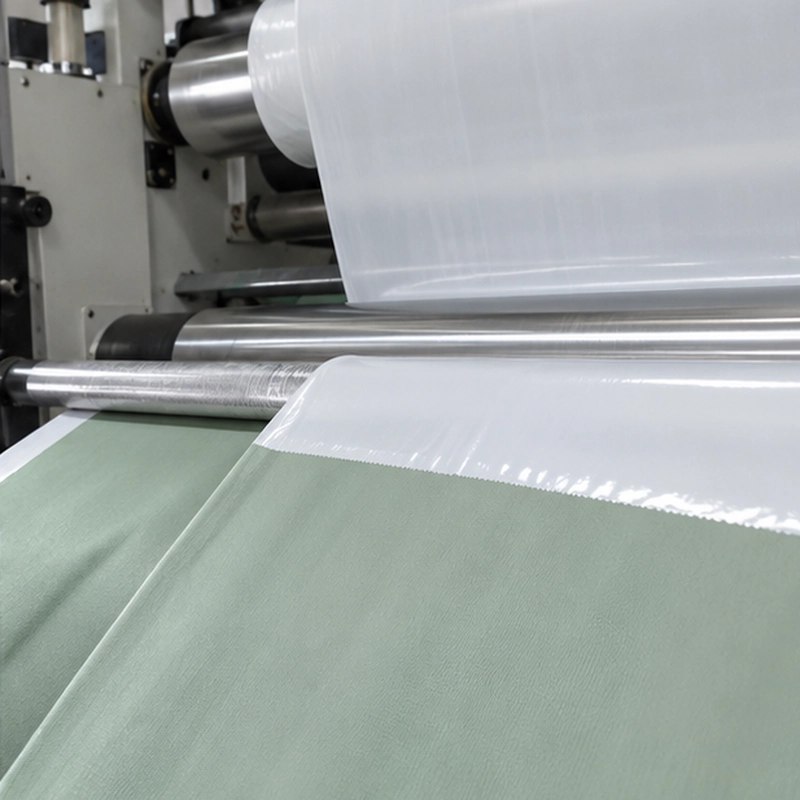
3. Review the finished roll against the agreed reference
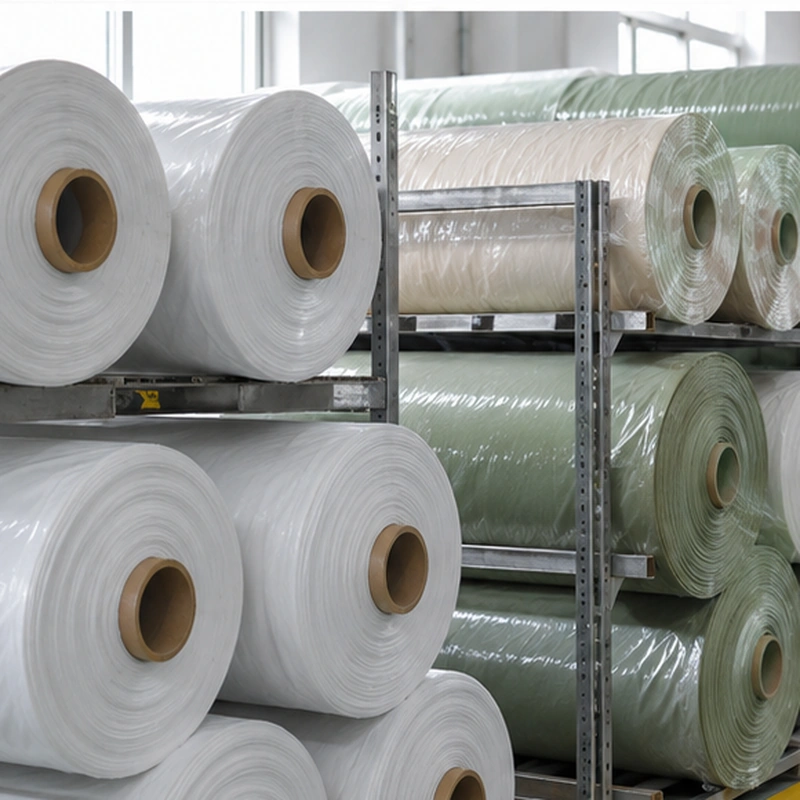
After lamination, the team reviews the TPU-laminated roll and its identification against the order record. The review can include appearance, visible marks, edge condition, roll labelling and any approved test or sample requirement. The exact acceptance criteria depend on the selected base fabric, agreed construction and end use, so this page does not assign universal pass values or claim one test result for every PUL material.
4. Keep the approval evidence usable
- Product, polyester or cotton base-fabric reference, TPU film reference and approved sample revision.
- Incoming material and finished-roll identification.
- Line and inspection record for the production run.
- Any agreed test method, result record or sample observation.
- Review by Mike, Quality Control Lead, with the review date and decision.
- Clear treatment of any hold, rework or follow-up requirement.
For reusable diapers, wet bags, bibs and other PUL applications, the final product requirement may include steps beyond fabric lamination. A fabric review does not automatically prove the performance of seams, elastic, snaps or a finished item after washing. Link the lamination record to the actual product sample and inspection plan.