
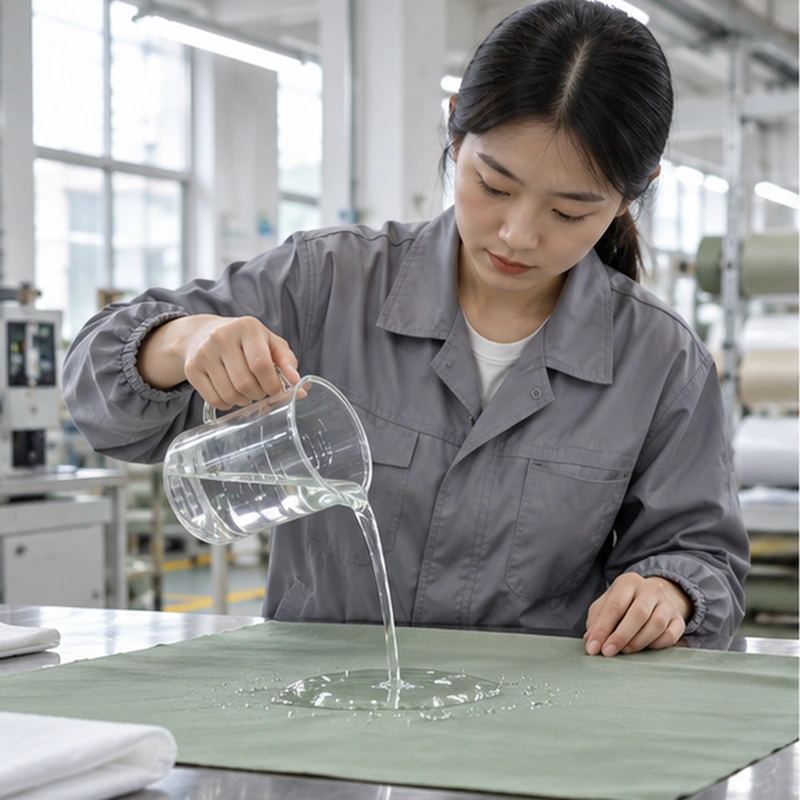
For this PUL fabric review, the record covers 5 samples, natural preconditioning, test equipment No. 5 and a 24-hour observation. The sample passes this check when the tested fabric shows no water penetration.
Test parameters recorded before observation
Start with the exact material reference
The water-test photos should be attached to a material record, not used as a general promise for every PUL fabric. For the PUL fabric reference shown on this site, the commercial starting point is 150 cm width, 160 g/m² weight and a 5 metre minimum order. The selected construction, print, laminate and approved sample remain the controlling references for a production order.
Each sample should remain traceable to its material reference, lot or revision. That link matters when a buyer compares the test record with the fabric used for sampling and later bulk production.
How to run a controlled visual water-droplet check
Place each labelled fabric sample on a clean, level support and begin the observation under the recorded natural preconditioning condition. Use the agreed water application and test arrangement, identify equipment No. 5 in the record, and retain the sample identification with the test photos. During the 24-hour period, record whether water remains on the surface, passes through the fabric or produces visible wetness on the opposite side.
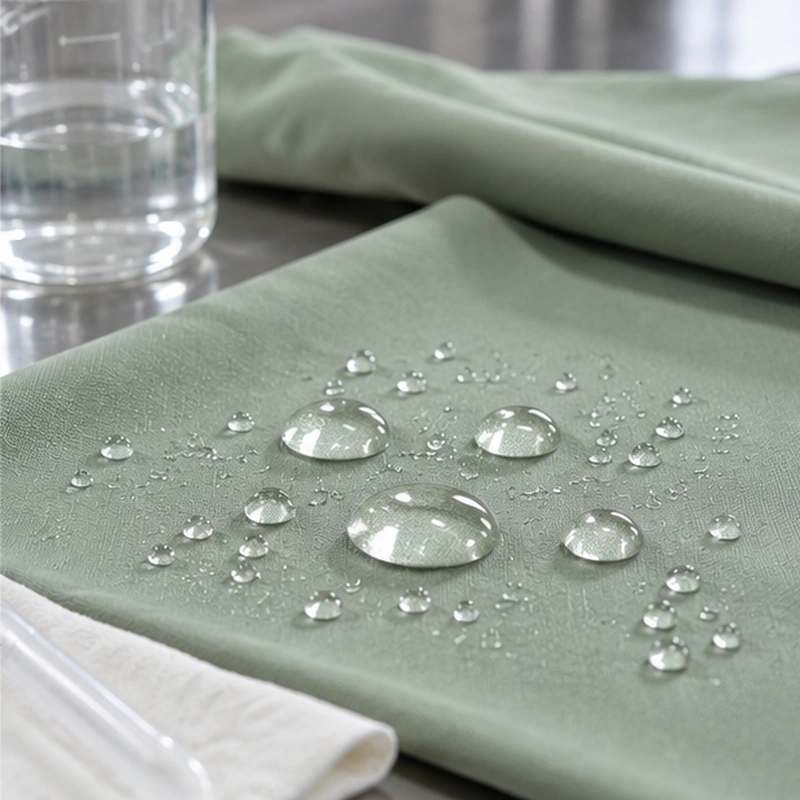
The decision rule for this record is not simply that droplets bead at one moment. The sample is accepted only when the tested fabric shows no water penetration during the full 24-hour observation. If any penetration is seen, the record should be held for review rather than presented as a pass.
What this check does not confirm
This 5-sample, 24-hour fabric check does not establish hydrostatic pressure resistance, leakage under compression, repeated-wash durability, abrasion resistance, chemical resistance or performance through sewn needle holes. It also does not replace a named laboratory method, a certificate or a report. When any of those claims matter to the intended market, define the required method, sample quantity, conditioning, acceptance value and report scope before production starts.
Use the right level of test for the product
For a sourcing discussion, a visual check may be enough to compare candidate samples. For an approved reusable diaper cover, wet bag, bib or menstrual-pad layer, the buyer may need a more specific functional requirement. The right method depends on whether the product faces static liquid, pressure, repeated flexing, washing, stitched seams or a combination of these conditions.
Keep the test request connected to the actual use case. For example, a fabric-only check does not automatically describe the behavior of a finished product with seams, elastic, snaps or bindings.
Approval record before bulk production
- Material and sample revision identification.
- Base fabric, laminate or coating construction as agreed for the order.
- Sample quantity: 5.
- Preconditioning: natural condition.
- Test equipment: No. 5.
- Observation duration: 24 hours.
- Acceptance criterion: no water penetration.
- Reviewer name or role, review date and buyer approval status.
- Link to the approved sample, quotation and final purchase specification.
With this record, the real test photos become useful factory evidence: they show what was observed on the identified samples, when it was observed and which acceptance rule was applied, without claiming more than the method can support.