
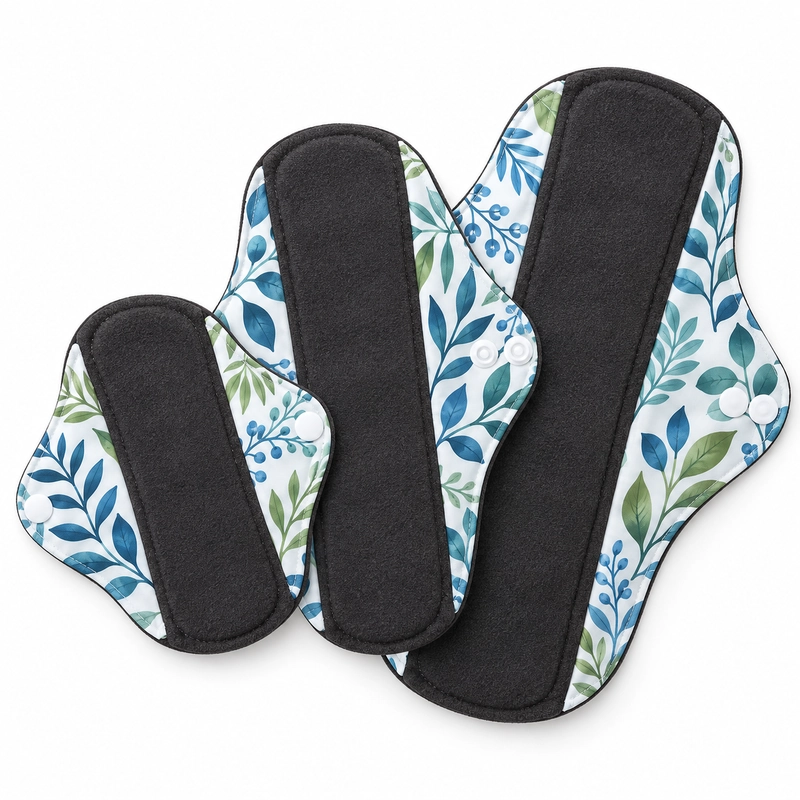
Write a layer-by-layer specification before comparing washable menstrual pad materials. Name the material and intended position for every layer, then record dimensions, absorption target, test method and packaging. Confirm the actual fiber blend, layer count and construction in the quotation and approved sample. A label such as “cotton” or “bamboo charcoal” is not a complete product specification.
Start with a layer map, not a single fabric name
A reusable pad is a finished assembly. A supplier cannot reliably compare two offers when one brief says only “cotton pad” and another says “bamboo charcoal.” The names may refer to different fabric blends, different positions in the product or a range description rather than a complete bill of materials. For procurement, connect each requested material to its location in the construction and to the sample that will be approved.
ReuseCare’s range includes bamboo-charcoal-facing and organic-cotton-positioned options. These are range names or positioning descriptions, not a statement of exact fiber percentages or layer placement. Ask the quote to identify the blend and where the material is used for the chosen style. See the bamboo-charcoal-facing range and organic-cotton-positioned range as starting points for a product discussion.
Resolve cotton and polyester wording layer by layer
In one anonymized institutional inquiry, the requested absorbent inner was described as cotton, while supplier shorthand used “polyester.” Those words do not establish that the same fiber or construction was intended. Request a layer-by-layer fiber map naming the fiber blend and percentage for each fabric, which layers are absorbent, and whether “polyester” refers to a specific component or a proposed substitution. The inquiry also reported a proposed build of three absorbent layers plus one waterproof layer; treat that as a reported example, not a construction verified from a photo or an approved sample. The test method and acceptance criteria remain to be agreed, so no absorption or leakage result should be inferred. See the institutional pad procurement brief and the reusable pad category when preparing a comparable specification.
Four construction areas to specify
This layer map is a request structure, not a claim that every style uses the same build. The supplier’s quotation and approved sample should state the exact fiber blend, material position, layer count, finished dimensions and any construction changes. If you are also evaluating PUL fabric as a waterproof textile, review the separate PUL cloth buyer guide; identify the end product and confirm how the selected material is used.
Verify fiber wording and certificate scope
Terms such as organic cotton, bamboo, charcoal and bamboo charcoal are not a complete material specification. For each named layer, request the exact fiber name and percentage, the material form stated by the supplier, its position in the layer map and supporting records. Confirm that the sample and proposed fiber or care label match the written composition. Keep a black appearance description separate from a claim about fiber content.
For any certificate claim, verify the certificate holder, number, issuer or official verification record, covered product or component scope and validity period relevant to the order. Confirm that the selected item falls within that scope before using the claim. A certificate for raw fiber, fabric or a component does not by itself certify the finished reusable pad. Use GOTS or OEKO-TEX wording, marks or logos only when current documentation and permission support that exact product claim.
Link the evidence to the style and sample revision so later artwork and packaging use the same verified description. Mark unresolved details as supplier confirmation required.
Translate material ideas into a sample review
Choose one sample version as the comparison reference. Write down what is fixed and what remains open: surface fabric, core, waterproof layer, backing, shape, dimensions, closure, edge finish, print and care label. If a supplier proposes an alternative, record it as a separate version instead of silently replacing a requested material. That makes the sample review useful for both technical and commercial decisions.
Review the sample against the agreed brief. Check that the quoted materials appear in the stated positions, the dimensions match the drawing or agreed measurement points, and the closure and edge construction match the approved reference. Define the absorption evaluation, conditioning, method, duration and pass criteria before treating any observation as a performance result. A photo or a fiber name cannot replace that method. For a controlled approval record, use the sample approval before bulk production guide.
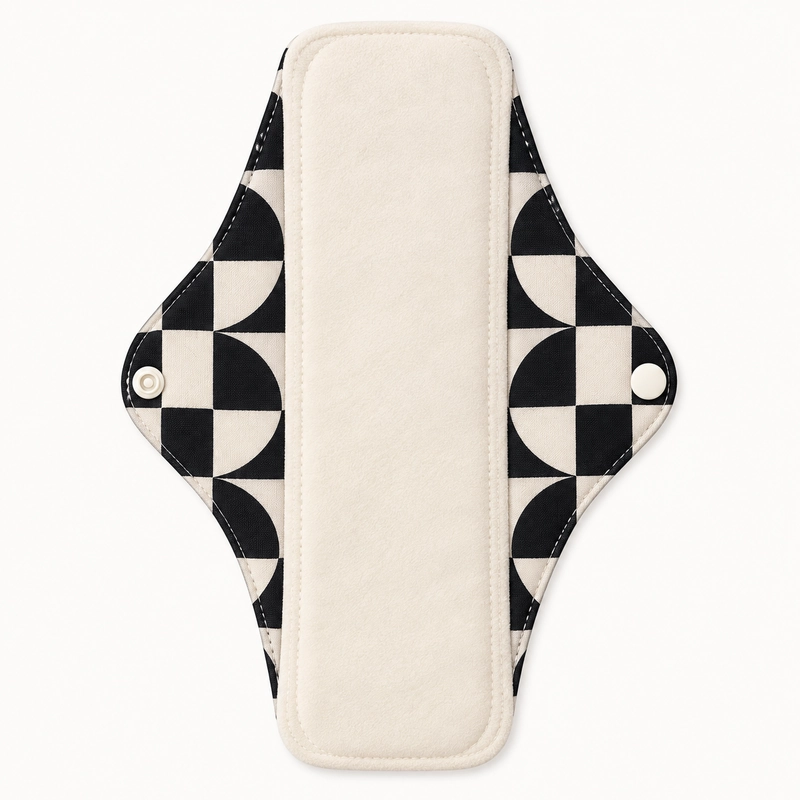
Keep the material brief separate from commercial assumptions
Once the layer map is clear, attach the order details that affect a comparable quote: style and size mix, expected quantity by variant, print or label needs, packaging, destination and sample request. ReuseCare lists basic finished styles with minimum orders from 5 to 300 pieces depending on product; finished-product custom printing starts from 300 pieces. Confirm the applicable minimum for the selected style and customization in the quote.
Confirmed in-stock styles may dispatch within two days after availability is confirmed. Dispatch is not delivery. Those stock references should not be used to infer timing for sampling, custom printing or made-to-order packaging. For a cost comparison, the manufacturing cost guide explains how style, construction, quantity and presentation feed into a quote. The private-label process covers the wider branding and packaging discussion, while the reusable menstrual pad range links to heavy-flow styles and panty liners.
Quote-ready checklist for washable menstrual pad materials
- Product style, intended use and quantity by style or size.
- Layer map showing skin-contact layer, absorbent core, waterproof layer, backing, closure and edge.
- Requested fiber blend and the position where each named material should be used.
- Finished dimensions and tolerance, or a drawing/sample to measure.
- Absorption target, named test method, sample preparation and acceptance rule.
- Print, label, care information, packaging and destination market.
- Sample version, requested changes, reviewer and approval record.
- Any required certificates or test documents, including the exact scope requested.
Mark unknown specifications as questions for the supplier instead of filling them with assumptions. This gives both sides a clear record of what is confirmed, what needs a sample and what must be included in the final quotation.
Frequently asked questions
What materials are used in a reusable menstrual pad?
A specification can include a skin-contact layer, absorbent core, waterproof layer, backing, closure and edge finish. The exact fiber blend, layer count and material position depend on the selected style and must be confirmed in the quotation and approved sample.
Does a fabric name prove how a pad will perform?
No. A material name alone does not establish absorption, leakage results or other finished-product performance. Agree on the complete construction, test method and acceptance criteria, then compare the sample with that written record.
What should I send to get a material quote?
Send the target style, layer map, requested material or fiber blend by position, dimensions, absorption target, quantity by style, print or label needs, packaging and destination. Mark unknown items for supplier confirmation and request a sample against the written brief.
Do the range names specify exact material composition?
No. Bamboo-charcoal-facing and organic-cotton-positioned describe names or positioning used in the ReuseCare range. Confirm the exact blend and where each material is used for the selected style in its quotation and sample.
How should I verify a certificate claim?
Check the certificate holder, number, issuer or official verification record, covered product or component scope and validity period. A raw-material or fabric certificate does not by itself certify the finished reusable pad.