
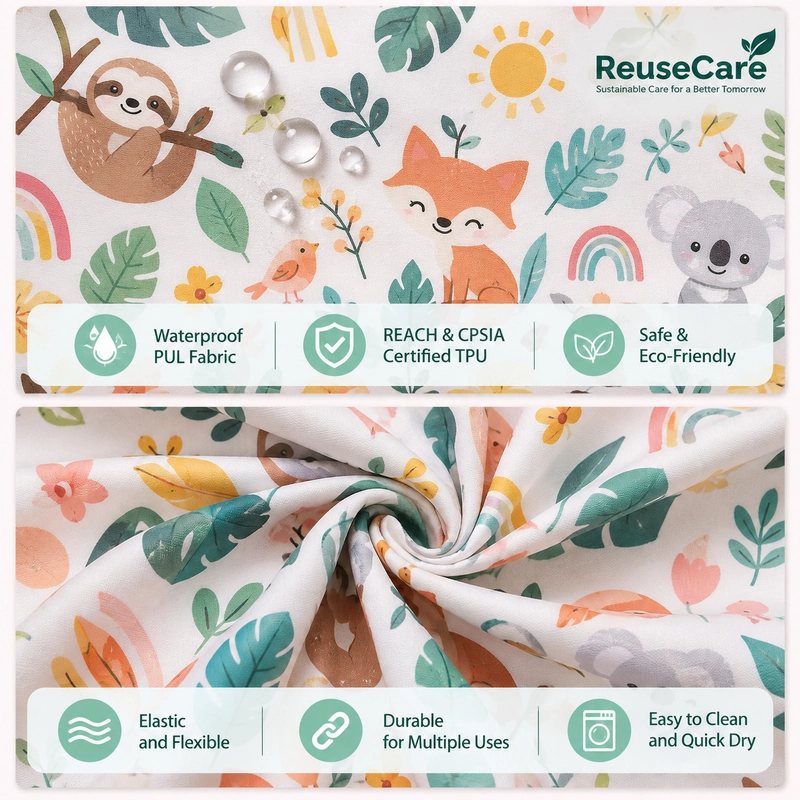
PUL cloth is a base textile plus a laminated waterproof layer. For the ReuseCare construction described here, the base can be polyester or cotton and the film is TPU. “PUL” names the finished textile construction; “TPU” identifies the film material in that construction.
Why PUL and TPU appear in the same specification
Buyers often see PUL and TPU treated as competing material names. That can hide the more useful question: what is the complete construction being supplied? PUL commonly refers to a fabric with a laminated waterproof layer. TPU can refer to the film used to create that layer.
A quote should therefore name the base cloth and the waterproof film or laminate. A generic label is not enough to compare handfeel, drape, finished weight, sewing behaviour, colour, print or the suitability of the fabric for a particular product.
How PUL cloth is made
ReuseCare’s published production process begins by identifying the polyester or cotton base fabric and the TPU film. The materials are fed into the lamination process, combined under the selected production settings, and reviewed as finished PUL fabric rolls. Batch labels and sample references help connect the finished material to the order.
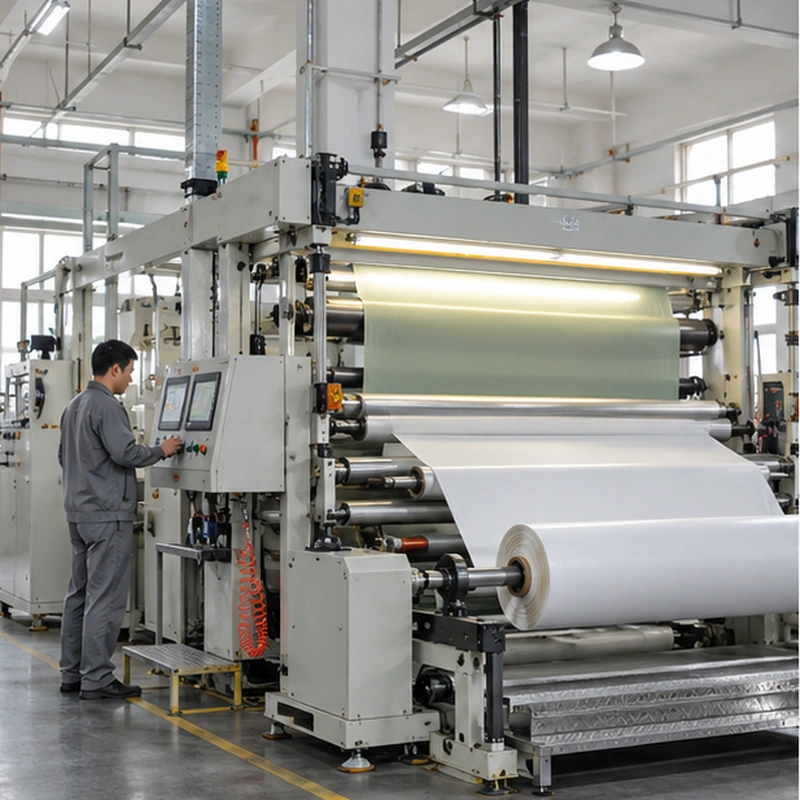
The full PUL lamination process explains the material identification, feeding, lamination and review steps. The selected sample and written specification remain the controlling references for a buyer’s order.
Where PUL cloth is used
PUL cloth can support reusable textile products that need a flexible waterproof layer. On the ReuseCare site, relevant applications include cloth diapers, reusable menstrual pads, reusable nursing pads, reusable swim diapers, wet bags and selected bib constructions. The way the material is cut, sewn and combined with other layers depends on the product.
A fabric result should not automatically be treated as a finished-product result. Seams, needle holes, elastic, snaps, bindings and repeated washing can change how the final item behaves. The RFQ should name the intended product so the fabric and the product construction can be reviewed together.
PUL cloth specifications buyers should confirm
The current ReuseCare PUL fabric commercial reference is 150 cm width, 160 g/m² weight and a 5 metre minimum order. Confirm the selected colour, print, construction, stock status and final specification in the quote because the category reference does not replace the order record.
Available print or custom artwork?
An available print can shorten the product-selection stage when the buyer accepts the existing design and stock is confirmed. A new custom print needs artwork review. Confirm the file, colour references, print scale, repeat, direction and base fabric before production. Printed samples should be reviewed in the orientation and product use that matter to the final item.
The custom printing quality checklist gives buyers a practical way to record those decisions. Keep the approved artwork reference with the fabric sample and quote so repeat orders do not rely on screenshots or verbal descriptions.
How to discuss waterproof performance
Water beading in a photo can be useful evidence for an identified sample, but it is not a universal laboratory claim. A useful test request states the material, sample quantity, preparation, equipment or method, observation duration and acceptance criterion.
ReuseCare’s published PUL fabric waterproof test record covers five samples, natural preconditioning, equipment No. 5, a 24-hour observation and a no-water-penetration acceptance rule. That record applies to its identified review. If a buyer needs hydrostatic pressure, wash durability, seam leakage or another named result, the required method and report scope should be agreed separately.
PUL cloth RFQ checklist
- Intended product and expected quantity in metres.
- Polyester or cotton base fabric preference.
- Required finished width and weight.
- Solid colour, available print or new artwork.
- Sample quantity and approval process.
- Any required test method, acceptance value or document scope.
- Roll packing, labels and delivery destination.
These details let a supplier quote the selected construction instead of a generic “PUL cloth” category. When the material will become a finished product, include that product in the brief so the sample can be reviewed for the intended cutting, sewing and use conditions.
Frequently asked questions
What is PUL cloth?
PUL cloth is a fabric construction with a laminated waterproof layer. In ReuseCare’s published process, a polyester or cotton base fabric is combined with TPU film.
Is PUL the same as TPU?
No. PUL commonly describes the finished laminated fabric construction, while TPU identifies the film material used in the published ReuseCare construction.
What specifications should a PUL cloth buyer confirm?
Confirm the base fabric, finished width and weight, colour or print, intended product, sample version, quantity, packing method and any required test or documentation scope.