
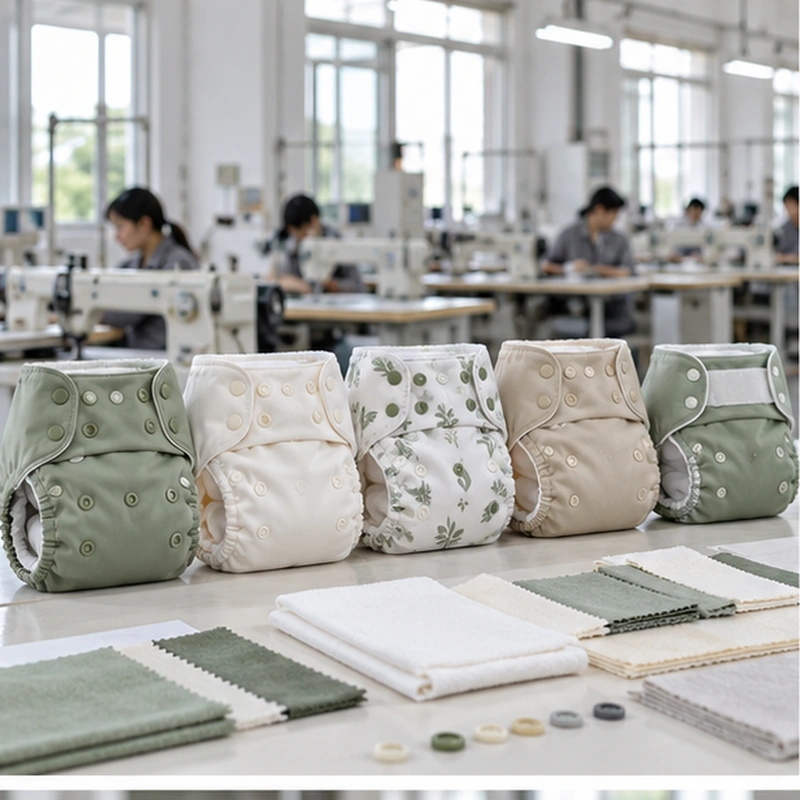
Do not specify only “print my logo on every pad.” Share the artwork, product style, position, approximate size and intended use, then ask the supplier to confirm a workable application method for that construction. Review a sample and agree how wash performance will be assessed before approving the production reference.
Start with the product and placement
A reusable menstrual pad is a layered textile product with functional faces, seams, wings and closures. The available flat area, fabric surface and intended contact zones can affect where a mark can be placed and which process is suitable. A logo that looks clear on a screen may be too large for a curved or stitched area, may intersect a seam, or may not suit a particular surface. These are questions for style-specific review, not assumptions to settle from a product name.
First identify the exact product or sample under discussion. Record its style, size, colorway and revision. Then mark the intended logo location on a product drawing or annotated photograph: for example, a designated outer-facing area, a wing or a separate label. Describe the visual priority and any restricted zones. If you have not chosen a location, invite the supplier to suggest options and show them on a mock-up. Product references are available in the reusable menstrual pad range; the wider private-label process explains how artwork fits into product development.
Prepare a review-ready artwork brief
Send the cleanest source file you have, preferably a vector format when available, along with a raster preview so both parties can verify the intended appearance. Include brand color references, minimum clear space if important, preferred logo width or a visual scale, and whether a one-color version is acceptable. Name each file with a revision date or revision code. If there are multiple product colors, supply a separate placement/color note for each variant.
Also explain what must remain unchanged: proportions, color relationships, clear space or a specific symbol. Identify elements that can be adjusted if a production method has limitations. Do not send only a low-resolution screenshot when a print-ready file exists. If the supplier returns a layout, check spelling, orientation, size, position, color and the correct product version before approving it. A digital visual approval controls appearance but does not replace a physical sample where material interaction or wash evaluation matters.
Confirm the application method per project
“Logo printing” is often used as shorthand for branding, but the actual route may differ by product construction and artwork. A direct application to the pad cannot be assumed to work for every style. Ask which method is proposed, where it will be applied, whether it changes the hand or appearance of the surface, and whether any alternative such as an attached label or branded packaging should be considered. The answer should refer to your selected product and sample, not a generic promise.
Ask the supplier to document the method and the parts it affects in the quotation or sample record. If a proposed change alters the fabric, sewing sequence or care instructions, treat it as a product revision. Confirm that the artwork placement does not obscure product identification, care information or any required label. Keep a clean master artwork file and link the approved layout to the sample identifier so an older version cannot be mistaken for the current one.
Make wash evaluation measurable
“Wash-resistant” is not a usable acceptance rule by itself. Before sampling, agree on the care conditions to be considered, the wash procedure, the number of cycles if relevant, the drying method, what will be inspected and what counts as acceptable change. Possible inspection points include visible fading, cracking, peeling, transfer, distortion or loss of legibility. Select only criteria that are appropriate to the chosen application and use case.
Record who evaluates the sample and how the observations are captured. Use the same agreed conditions on the approved sample and retain photographs or a written result. Do not infer a durability result from a digital proof, a supplier statement or a single unrecorded wash. ReuseCare does not make a universal wash-cycle promise for all pad styles or logo methods; the applicable method and acceptance need to be confirmed per project and sample.
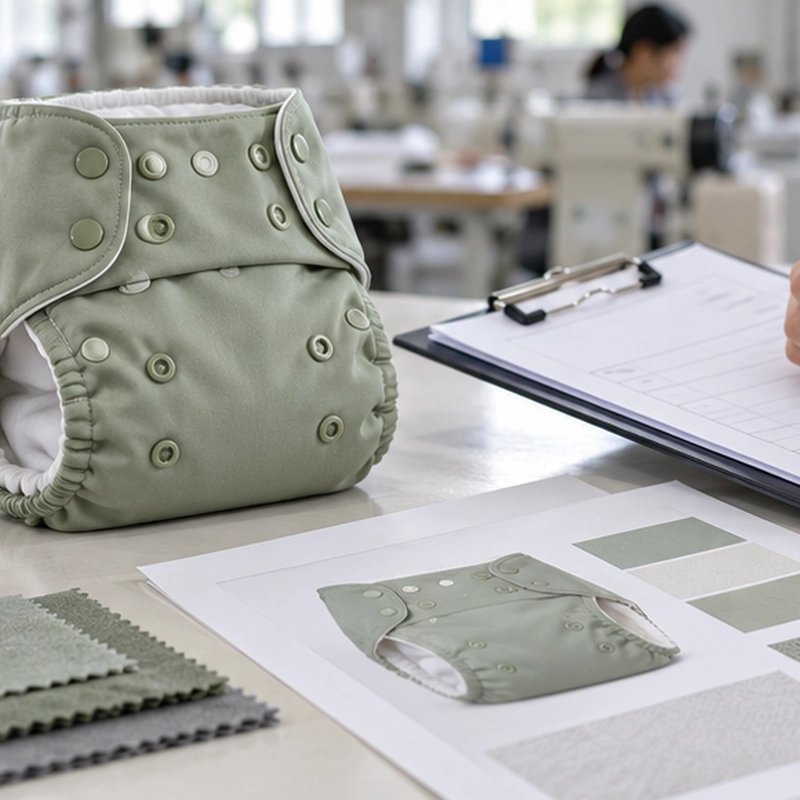
Connect the logo decision to sampling and order quantity
Request a sample that reflects the intended fabric, color, construction and logo route. Review the physical appearance under normal viewing conditions and check placement against the approved layout. If anything changes, log the revision and review the revised sample before release. The sample approval guide describes how sample versions, change history and sign-off can be controlled.
ReuseCare's confirmed starting point for finished-product custom printing is 300 pieces. Basic finished styles have minimum orders ranging from 5 to 300 pieces depending on product. These are starting facts, not a guarantee that every logo route is available at every quantity. Confirm the applicable minimum, method, sample charge, price and timing in a project-specific quotation. Confirmed in-stock styles may dispatch within two days; dispatch is not delivery, and this stock note does not establish custom-print production timing.
Artwork and sample-control checklist
- Product style, size, colorway and current sample revision.
- Logo source file, color references, revision name and visual preview.
- Preferred location and approximate size marked on a drawing or photo.
- Supplier-confirmed application method and any alternative under review.
- Digital layout approval for spelling, color, position and scale.
- Physical sample review against the intended construction.
- Wash conditions, evaluation method and acceptance criteria agreed for the project.
- Final approved artwork and sample identifier attached to the quotation or order record.
For the complete information needed to begin a private-label discussion, use the OEM inquiry checklist. For packaging artwork and barcode approval, continue to the individual packaging guide or the detailed packaging workflow. A broader introduction to building a product line is in the brand-start guide.
Frequently asked questions
Can a logo always be printed directly on each reusable menstrual pad?
No. The suitable method and placement depend on the selected construction, fabric surface, artwork and project requirements. ReuseCare confirms whether direct application is workable for the specific style after reviewing the brief and sample.
What artwork should I send for a logo review?
Send a vector file where available, the preferred logo colors, intended placement, approximate finished size, product style and any visual reference. Identify the file revision and request a digital layout or physical sample for approval before production.
How can I confirm a logo will withstand washing?
Agree on the care and wash conditions, evaluation method, number of cycles if relevant, inspection points and acceptance criteria for the specific sample. Do not treat an untested artwork mock-up as evidence of wash durability.
What is the minimum order for finished-product custom printing?
ReuseCare's confirmed starting point for finished-product custom printing is 300 pieces. Applicability depends on the selected product and project details, so confirm the minimum and timing in a written quotation.