
Read the scope line before the logo. Record exactly what was tested or certified, which sample or material it names, the method and laboratory, the date and any stated validity or exclusions. If the report cannot be linked to the ordered construction, ask for a scope clarification before treating it as purchasing evidence.
First separate the document types
Buyers often use “certificate” as a catch-all, but different documents answer different questions. A laboratory test report records a sample and method against specified criteria. A certification document may state a scheme, product group, holder and validity window. A supplier declaration identifies what the supplier is asserting. A material specification describes composition or construction. None should be treated as interchangeable without reading the actual document and its limitations.
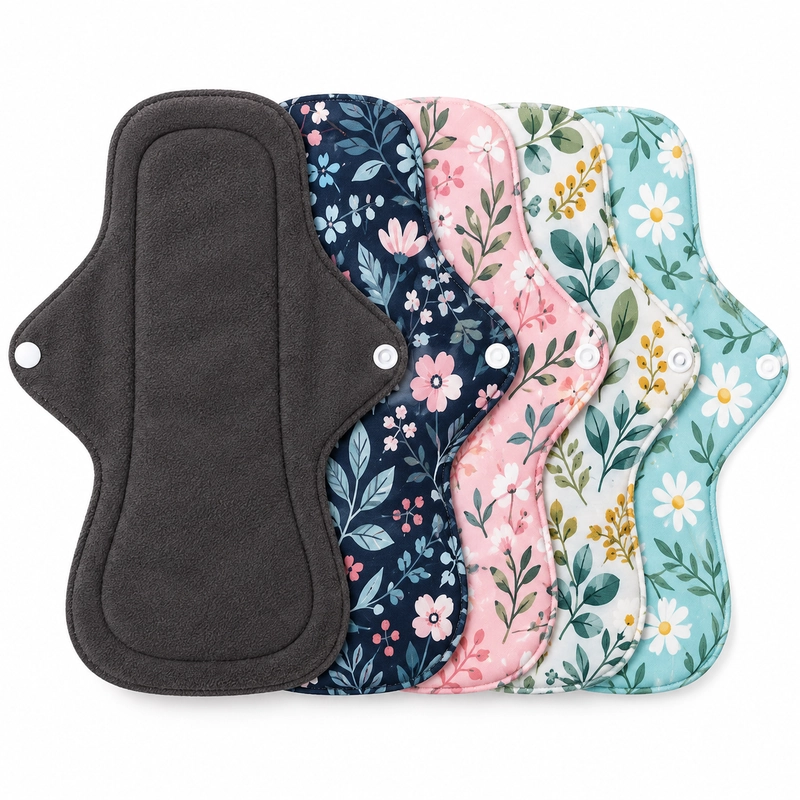
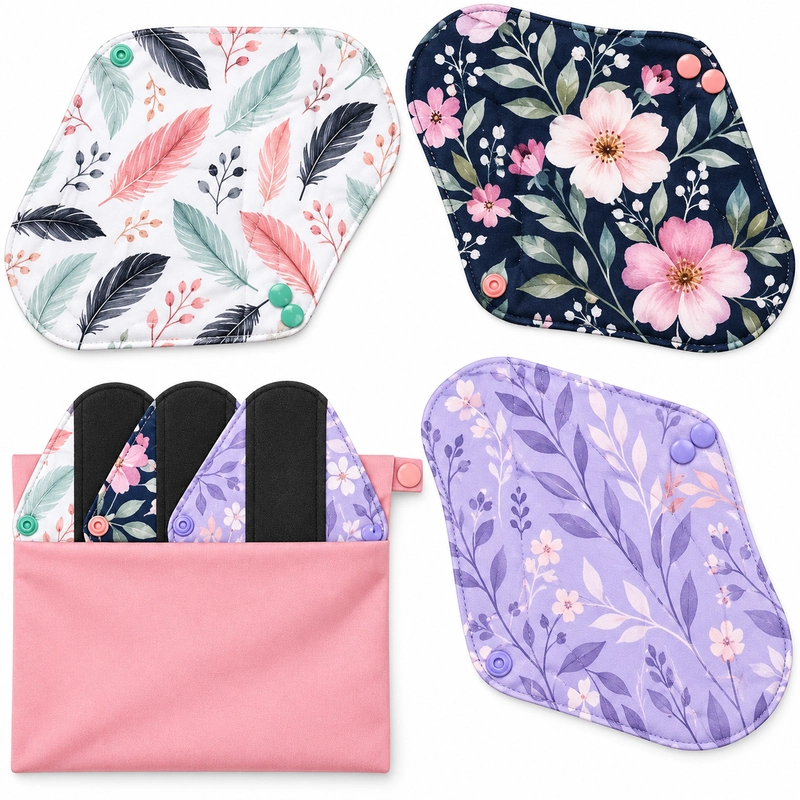
For reusable menstrual pads, start with the intended sales market and product configuration. Record each style, size, colour or print, layer sequence, component materials, packaging and product revision. Then map every requested document to a particular question: fibre composition, restricted-substance screening, product safety, wash evaluation, or another buyer-defined criterion. A broad marketing phrase such as “EU approved” is not a substitute for that mapping.
Check identity before interpreting a result
Look for the exact model, sample code, material name, sample receipt date and supplier or applicant on the document. Compare them with the approved sample, purchase specification and production revision. If the report names only a fabric, it may inform review of that fabric; it does not by itself establish that a sewn pad with different layers, thread, fasteners and packaging was assessed.
Ask whether colours, prints, coatings, waterproof layers, elastics, snaps or packaging differ from the reported sample. A test performed on one component should not be presented as a result for the complete pad unless the report explicitly says that the finished product was tested. Keep the product drawing and the document together in the approval file so later artwork or material substitutions can be noticed.
Read method, laboratory, date and boundaries
Every report should be reviewed for the test method and edition, sample preparation, conditioning, number of specimens if stated, laboratory identity, report identifier and issue date. Check whether the issuing body is accredited for the specific method when accreditation matters to the buyer. Accreditation marks do not make every test performed by a laboratory accredited; verify the laboratory’s current scope directly where needed.
Read the result and its limits together. Note pass criteria, measured outcomes, units, uncertainty where supplied, deviations, exclusions and any statement limiting use of the report. A report may be valid as a record of the test event even when it does not establish current validity of a product certificate. If an expiry date is not stated, do not invent one; instead ask the issuer or scheme owner whether the document remains current and whether the product formulation has changed.

OEKO-TEX STANDARD 100 and GOTS answer different questions
OEKO-TEX STANDARD 100 is a label for textiles tested for harmful substances. Its official description refers to testing the certified article, with requirements linked to intended use and skin contact. Ask for the certificate number and use the scheme’s label-check service to verify the article, holder, product class, validity and scope. If the document names only a material or component, do not extend that result to the complete sewn pad unless the certificate explicitly includes it.
GOTS (Global Organic Textile Standard) has a different supply-chain scope. Its standard describes scope certificates for certified entities and the product categories and processing, manufacturing or trading activities covered. For a particular shipment, ask what transaction or goods-level evidence is available and whether the SKU and supply-chain parties match. A supplier’s GOTS scope certificate is not by itself proof that every item or shipment is GOTS-certified.
For either scheme, record the certificate holder’s legal name, certificate or report number, named product or component, model and revision, product class or category where applicable, issue and expiry dates, issuing body, validity status and exclusions. Then confirm that the certificate is current and that the product sold under your brand appears within the stated scope. A certificate for one fabric, colour or facility does not automatically cover other components or finished-product variants.
Do not add an OEKO-TEX or GOTS logo, “organic” wording or certification claim to a pad, pouch, packaging or catalogue based only on a supplier’s general statement. Check the scheme’s conditions, the certificate holder’s authority and the exact product scope; obtain any required certification-body or scheme approval for the proposed artwork before printing. A logo-use permission does not expand the technical scope of the underlying certificate.
Use official rules to define the question
Regulation (EU) No 1007/2011 addresses textile fibre names and fibre-composition labelling. Your Europe explains that consumer-facing textile labels generally identify fibre composition and notes a different documentation option for business-to-business sales. The importer should confirm how the rules apply to the exact product and sales route, including required label wording and language for each destination.
The General Product Safety Regulation (GPSR) sets obligations for relevant product-safety actors and consumer products. Its application to a specific product and supply chain must be assessed from the actual facts. Ask the EU importer to establish who is the responsible economic operator, what product identification and safety information are needed, and which records support the risk assessment. This page does not determine those roles for a particular order.
For chemical restrictions, consult ECHA’s current REACH Annex XVII information against the substances, materials and product scope in question. A test report should identify the analytes or restrictions considered, the method, detection or reporting limits where relevant, the sample, and the result. A statement that a product is “REACH compliant” without an identified scope is not enough for a buyer to verify what was checked.
Build a document-to-product register
A simple register reduces repeated requests and helps buyers spot gaps before a bulk order. For each document, record: requirement or buyer question; product or material covered; model and revision; sample identification; method and edition; laboratory or scheme issuer; report number; issue date and stated expiry if any; result; limitations; and the person who approved it. Mark missing information as pending rather than assuming coverage.
When a sample changes, review the register again. Replacing a fabric, changing the waterproof backing, adding a new print process or altering the construction may affect whether prior evidence remains relevant. Ask the laboratory, certification body or qualified compliance adviser whether a new assessment is needed. Preserve the previous revision so the decision path stays traceable.
What this means for a supplier quotation
Send the supplier a document request linked to one named product revision and destination market. Ask which product or material records are available, what each one covers, and whether there are fees or lead times for additional testing. Request copies with commercial-sensitive details masked if necessary, but retain enough information to identify scope and issuer. Agree who pays for new testing and who reviews the outcome before bulk production.
Do not promise a certificate, mark or test outcome in consumer packaging until the importer has verified the requirement and the actual document. The buyer should also check that product claims on a website, label and packaging do not exceed the evidence. For help structuring a material brief, see reusable-pad materials and layers; for sample sign-off, see the sample approval workflow.
Official sources checked
- Regulation (EU) No 1007/2011: textile fibre names and composition labelling.
- Your Europe: textile label guidance.
- European Commission summary of Regulation (EU) 2023/988 and full official text.
- ECHA: REACH Annex XVII restricted substances.
- Your Europe: import classification, declarations and charges; French Customs: EORI; Access2Markets My Trade Assistant.
- OEKO-TEX STANDARD 100 official scope; GOTS Standard v8.0.
Important: This article provides general legal information, not legal or compliance advice. The EU importer must confirm classification, duties, VAT, responsible economic operator, language and label requirements, and current product compliance with competent authorities or qualified advisers. No CE-marking requirement or ReuseCare product-compliance claim is made here. A certificate or report applies only to the named product or material, method, laboratory, date and scope in that document.
Frequently asked questions
Does a certificate for one fabric cover every finished menstrual pad?
Not automatically. A certificate or report covers only the named sample, material or product, method, laboratory, date and scope stated in the document. Check whether the tested construction matches the finished item being purchased.
Are reusable menstrual pads required to carry a CE mark?
This guide does not state that CE marking is required. The importer must determine whether the exact product falls under legislation requiring CE marking and confirm current requirements with competent authorities or an adviser.
What should I check on a test report?
Check the issuing laboratory, report number and date, sample identification, material or model, test method, result, limitations, validity if stated and scope. Ask for clarification when the document does not identify the ordered product.
Does this article certify ReuseCare products?
No. It explains how buyers can review documents. It makes no product-specific conformity or certification claim; that would require exact documentation with matching scope.
Do OEKO-TEX STANDARD 100 and GOTS certify the same thing?
No. STANDARD 100 is a harmful-substance testing label for a certified textile article, while GOTS covers certified entities, products and processing or trading activities in its defined organic-textile supply-chain scope. Check the actual certificate and goods records for the product you intend to buy.
Can I put an OEKO-TEX or GOTS logo or organic claim on my private-label pad?
Only after confirming that the relevant certificate, product scope, holder, validity and scheme rules support the exact product and that the proposed logo or claim is permitted and approved for the artwork. A component certificate alone does not establish a claim for the finished pad.