
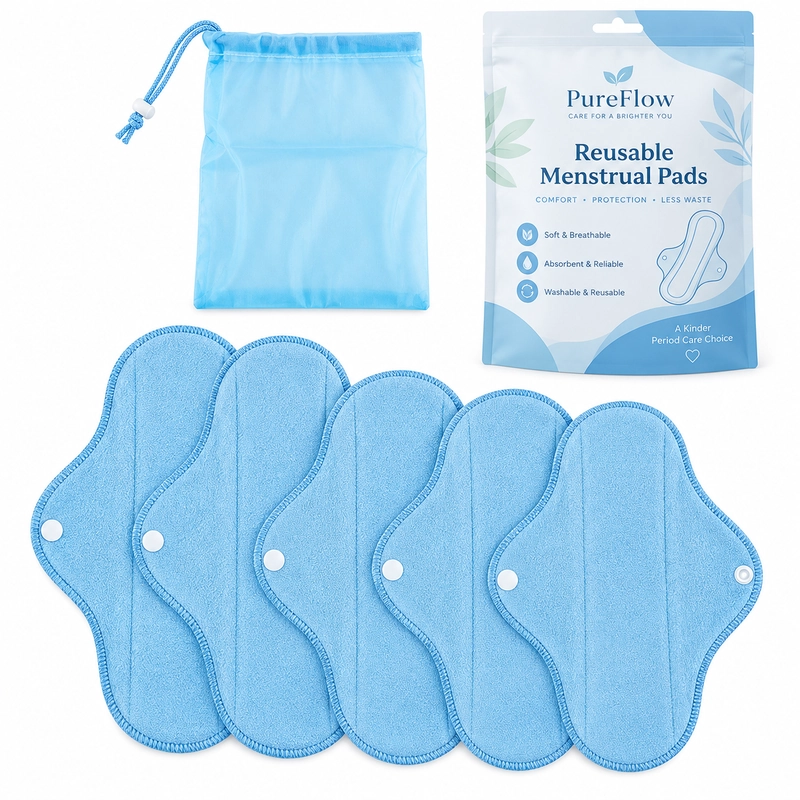
Choose existing day-use and night-use pad styles, add the selected waterproof pouch, and record each as a separate line in the specification. Then align the sample revision, label artwork, carton plan, commercial invoice and shipping quote. The French importer decides which legal, customs and tax requirements apply to the actual products and route.
Define the products before comparing prices
A private-label order using existing designs can still contain several product versions. Identify each SKU, use case, size or variant, colour or print, requested quantity, pack format and brand treatment. Ask the supplier to confirm the exact construction and current availability for each selected style. Do not infer absorbency, dimensions, layer sequence or material percentages from a product name or photograph.
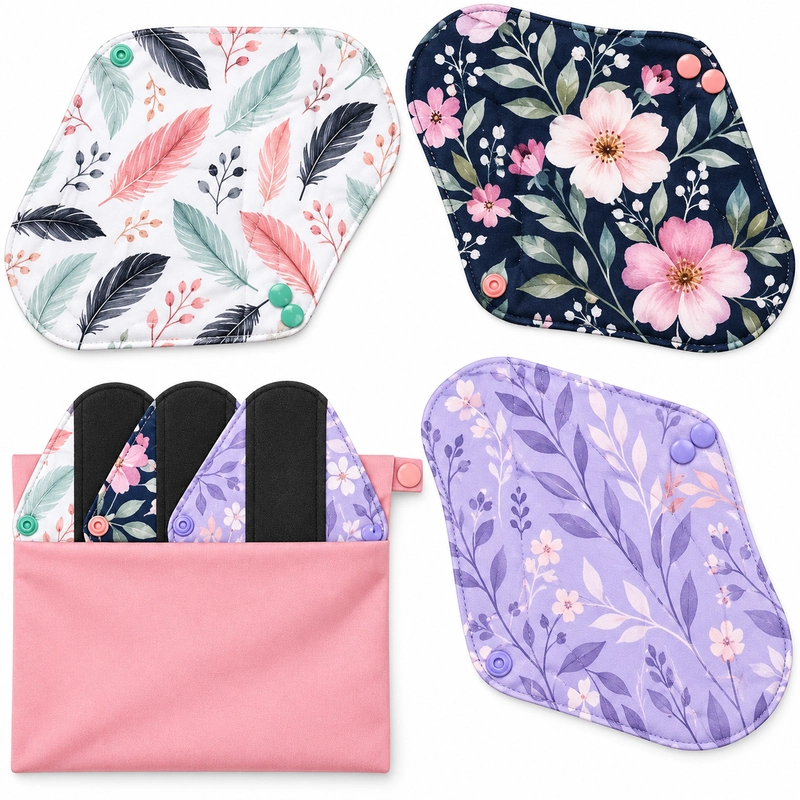
For the pads, specify day-use and night or heavier-flow references separately, with closure, care information and sample criteria. For each wet bag, describe its use—carrying clean or used pads—and ask the supplier to confirm the available design, composition, closure and care guidance. Keep unknowns as open specification fields.
Record materials by component: skin-contact textile, absorbent components, waterproof barrier, thread, fasteners, pouch and packaging. Ask for the exact fibre names and percentages supported by the supplier’s material records. Terms such as “organic cotton,” “bamboo” or “waterproof” should not be used as a precise composition or performance statement until the underlying product evidence supports that wording.
Review fibre labels and French-language artwork
EU textile rules address fibre-composition information for consumer-facing textile products, and the required information is generally provided in the official language or languages of the country where the goods are offered to consumers. Your Europe also describes scope and exceptions, including different documentation arrangements for some business-to-business sales. Ask the French importer or its adviser to confirm what applies to each finished pad, pouch, label and sales route, and prepare French artwork for review before printing. This guide does not determine a specific label’s legal sufficiency.
Keep fibre composition distinct from care, brand and promotional copy. Check that the composition wording matches the confirmed materials and that translations do not broaden a claim. If the order includes multiple textile components with different compositions, ask the importer to confirm whether and how each must be represented. Maintain an approved artwork version tied to each SKU so a later print run does not reuse outdated material information.
Map importer and product-safety responsibilities
Before the order is placed, identify the French importing entity, its customs representative if used, and the party responsible for reviewing product information and consumer-facing claims. Under the EU General Product Safety Regulation, economic-operator roles and obligations depend on the supply-chain facts and product. The French importer and professional advisers should determine the responsible economic operator, product identification and safety information, records, and any French national requirements that apply.
For every document, ask what exact SKU, material, revision, production activity or shipment it covers. Keep the holder’s legal name, certificate or report number, issue and expiry dates where stated, issuing body, product scope and any logo permission with the order file. A fabric test or certificate should not be presented as proof that every finished pad or pouch is covered. See the certificate scope guide for a more detailed review process.
Prepare EORI and customs information with the importer
French Customs explains EORI registration and its use in customs procedures. The importer should confirm its registration for the planned operation and coordinate the declaration with its representative. The supplier provides product and shipment facts; the importer or broker confirms customs treatment.
Ask the customs representative to review the product description, proposed tariff classification, country of origin, quantities, values, currency, freight and insurance treatment, and the commercial invoice and packing list. Confirm who will lodge the declaration, which party supplies each document, and which named Incoterm and place govern the quote. Do not treat a delivery label such as “door service” as a statement that import clearance, duty or VAT is included.
Keep product, shipment and packaging traceable
Use consistent SKU and revision identifiers across the sample approval, purchase order, labels, carton marks, commercial invoice and packing list. Agree how production lots or batches will be identified and which records connect finished goods to their materials and packaging. Before dispatch, reconcile the item descriptions, quantities and carton information across the approved documents.
Ask the French importer and packaging adviser whether packaging extended-producer-responsibility or other national obligations apply to the product and packaging format, who is responsible, and what registration, reporting, marking or fee information must be confirmed. The requirements can depend on the role, material and route; this article does not make that determination.
Request a comparable France shipping quote
Send each freight provider the pickup location, French postcode, delivery address type, quantity by SKU, carton count and dimensions, gross and net weights, cargo-ready date, service, insurance, named Incoterm and place, plus broker-requested consignee details. Mark carton data provisional until packing is confirmed.
Separate goods, sample, branding, packaging and freight line items. Ask providers to list inclusions, exclusions, quote validity, transit basis, clearance and final-mile assumptions. The importer or adviser confirms classification, customs value, duties, VAT and other charges. A quote cannot guarantee landed cost or delivery date.
Use a sample-first approval path
Request existing day-use pads, night-use pads and the selected wet bag as identified samples before releasing bulk production. Compare each physical sample with the written specification and mark any open questions: dimensions, material composition, construction, label information, print placement, packaging and the checks required for your product claims. Save annotated photographs and record approval against a named revision.
After approval, make the purchase order refer to that revision and list any approved variations separately. ReuseCare’s basic finished-style minimums range from 5 to 300 pieces depending on the product; custom finished-product printing starts from 300 pieces. Confirm the actual MOQ for each selected style, whether variants can be combined, and any packaging or artwork conditions in the quote. Confirmed in-stock styles may dispatch within two days after availability is confirmed; dispatch is not delivery. Sampling, custom work, freight and import clearance require their own confirmed schedules.
France buyer checklist
- Existing SKU, intended use, variant and quantity for each pad and pouch.
- Confirmed material composition by component, with unknowns listed for supplier confirmation.
- Sample identifiers, evaluation notes and written approval revision.
- French-language label and packaging artwork reviewed by the importer or adviser.
- Certificate or test records linked to the correct holder, product, scope, number and validity.
- Named French importer, responsible economic operator review and EORI confirmation.
- Classification, origin, invoice value, declaration party, Incoterm and named place confirmed by the importer or broker.
- Packaging/EPR responsibilities checked for the actual product and pack format.
- Final carton count, dimensions, weights, postcode and service scope for the freight quote.
- Goods, sample, branding, packaging, freight and importer charges separated in the decision file.
Official sources and scope note
- French Customs: EORI registration and identification.
- French Customs: official import and export guide, including Incoterms, classification and EORI topics.
- Your Europe: textile label requirements.
- EUR-Lex: General Product Safety Regulation summary.
Scope: This article provides operational information, not legal or tax advice. The French importer and its professional advisers must confirm product classification, customs duties, VAT, labelling and French-language information, EORI, the responsible economic operator, packaging/EPR responsibilities and current national requirements for the exact goods, sales route and transaction. No CE-marking requirement is asserted here. Shipment costs and delivery dates depend on confirmed order and carrier details.
Frequently asked questions
What should a French buyer define before requesting a pad and wet-bag quote?
Name each existing style and variant, intended day or night use, confirmed fibre composition, requested label and packaging, quantity by SKU, logo needs, destination postcode and documents to review. Mark unknown construction and commercial details as supplier questions, then compare a sample with the written revision.
Does this guide determine French import duty, VAT or EORI requirements for my company?
No. It is operational information, not legal or tax advice. The French importer and its customs or tax advisers must confirm classification, EORI, customs value, duties, VAT, Incoterm responsibilities and current national requirements for the actual transaction.
Must product information be in French?
EU textile guidance says consumer-facing fibre composition information must use the official language or languages of each country where the product is made available, subject to applicable rules and exceptions. The French importer should confirm which label, care and safety information needs French wording for the exact product and sales route.
Does a material certificate automatically cover a finished reusable pad?
No. Check the certificate or report holder, named product or component, model or revision, validity, certificate or report number and scope. Confirm any organic or logo claim and artwork use with the relevant scheme or certification body before printing.
Can an existing in-stock style arrive in France within two days?
No delivery date is implied. Confirmed in-stock styles may dispatch within two days after availability is confirmed; dispatch is not delivery. Sample preparation, custom work, carrier service, customs and final destination affect the overall schedule.