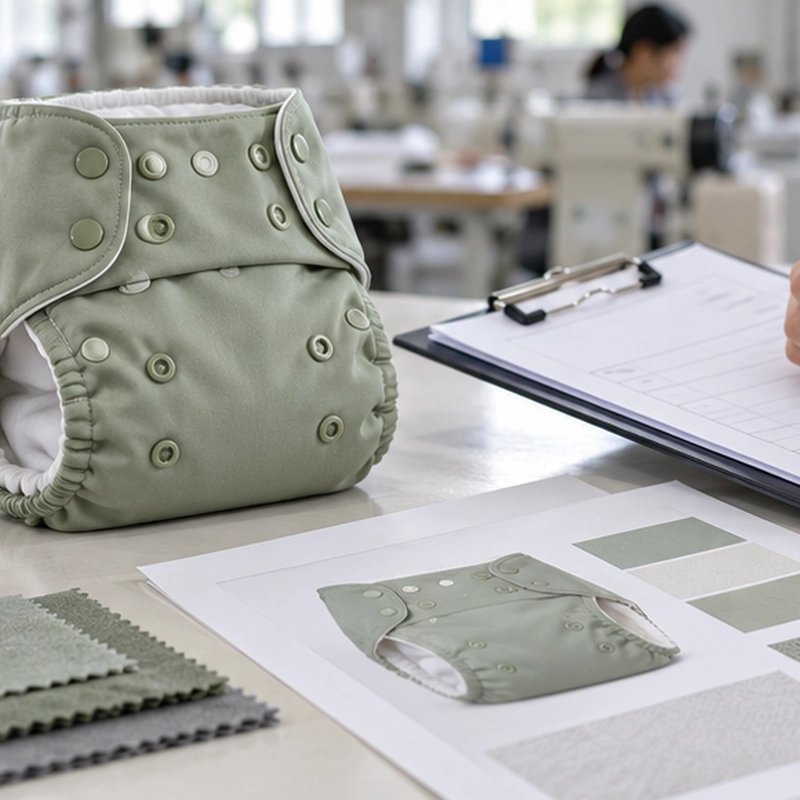
Before discussing a planned 500-piece order, agree what the sample must prove. Identify the style, requested materials by position, dimensions or reference, snap and wing details, logo treatment, individual pack and destination. Review each sample revision against that brief, write down changes, and sign off one specific version. Sample charges, any custom work and transport are separate quote items.
A sample is a decision gate, not just a preview
A product photograph can help identify a style, but it cannot show every material layer, finish, measurement or logo result. A physical sample gives the buyer and supplier a common reference. The review is most useful when the buyer defines questions first: which details are fixed, what is still open, and what evidence is needed before approving the next step.
For reusable menstrual pads, a buyer may need to review a daytime and a nighttime option, a black inner appearance, a waterproof construction, snaps, or an individual package. Those words do not by themselves establish exact composition, dimensions, absorption or leakage performance. Put each requested attribute in the brief and ask the supplier to identify what is confirmed for the proposed style and what needs testing or further specification.
Step 1: Turn the enquiry into a sample brief
Start with a planning quantity and destination, then divide the quantity by style, size, colour or print if more than one variant is being considered. State whether the 500 pieces are one style or a mixed range. This avoids treating a project total as though every variant had the same order minimum. ReuseCare lists basic finished styles with minimum orders from 5 to 300 pieces depending on product; finished-product custom printing starts from 300 pieces. The minimum applicable to the selected style and customization must be confirmed in the quotation.
Describe the product without using a broad name as a substitute for a specification. If the request is for bamboo-charcoal, black inner material, waterproof protection, day/night versions or snaps, ask the supplier to map each request to the proposed material, layer, pattern or component. Confirm final fiber blend and placement for the selected sample. Link artwork files, a placement sketch and packaging copy to version numbers so comments refer to the right files.
Suggested three-piece sample combination
For an initial range review, consider one daytime pad, one nighttime or larger-flow pad, and one waterproof storage pouch. This is a suggested evaluation set, not a minimum order or availability promise; confirm each style and sample charge in the quotation.
- Daytime pad: Check the identified pattern, dimensions, wings and snaps, layer map, edge finish and the agreed fit or functional review.
- Nighttime or larger-flow pad: Review coverage and construction separately. Agree a finished-product evaluation method and pass criteria in advance; do not infer a volume or guarantee from the use label.
- Waterproof storage pouch: Confirm intended use, dimensions, material, closure, seams, care and any required containment evaluation. A waterproof textile description alone does not prove finished-pouch performance.
Assign each item its own sample ID and revision, even when the products are proposed as one set. Record item-specific differences and open questions.
Step 2: Identify every sample and revision
Assign an identifier to the physical sample and record its revision. If a comment changes the material, construction, print placement or package, record that change rather than overwriting the earlier version. A useful sample log states the date received, revision, what was checked, what passed, what remains open and who owns the next action. The sample approval guide describes how ReuseCare records unique sample numbers, revision history and sign-off.
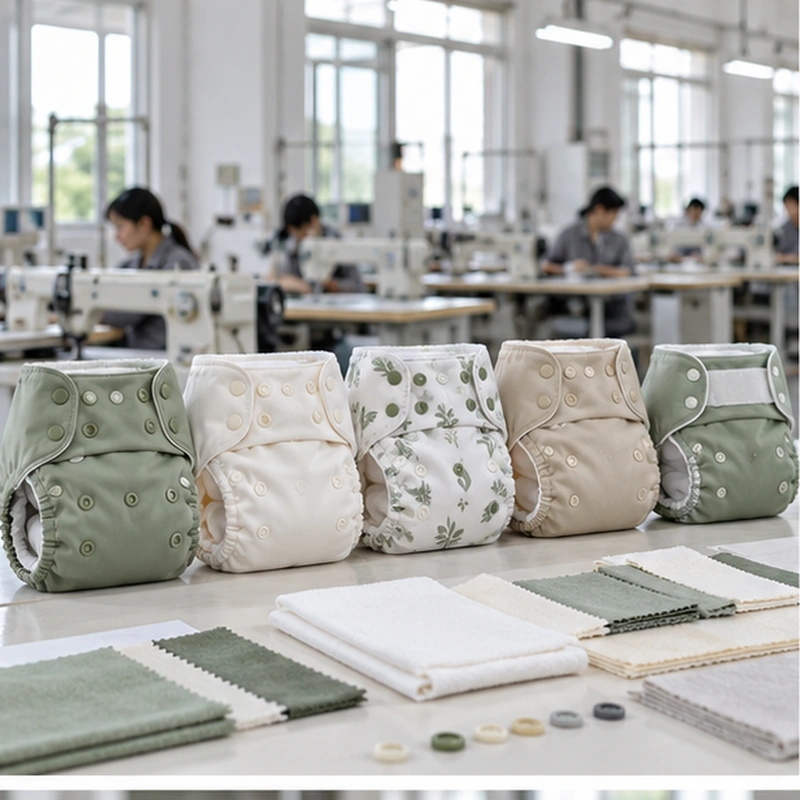
Compare the submitted sample to the same brief each time. Check the identified style, workmanship, requested closure, print direction and visible package details. For dimensions, state measurement points and whether the reference is a drawing, a buyer sample or a written specification. Do not infer an unprovided size or tolerance from a photograph. For absorbency or leak resistance, agree a method, preparation, duration and pass criteria before interpreting an observation as a result.

Step 3: Review branding and packaging separately
A logo mock-up is valuable for artwork, scale, colour and placement discussion. It is not proof that a process will withstand washing. State what “wash-resistant” means for the project, including the requested evaluation method and acceptance rule, and ask what production route is proposed. The physical approval should identify the artwork file revision, print position and evidence required. Avoid approving only a cropped digital mock-up when the actual surface or package has not been reviewed.
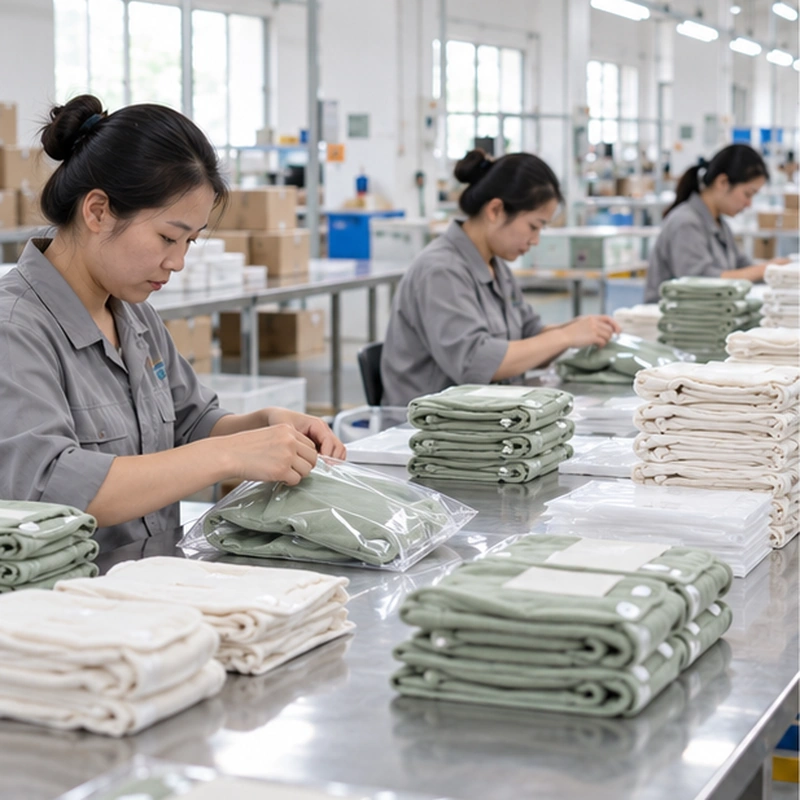
Individual packaging also has its own approvals: pack material, printed text, barcode data, language, quantity per pack and any required marks. Ask for a packaging proof and confirm whether the sample contains the final approved copy. The private-label packaging workflow can help structure those questions. Product and pack revisions should be recorded separately so an approved pad is not confused with an unapproved retail presentation.
Step 4: Sign one decision and define the production basis
Close the review with a clear status: approved for the next sample stage, revise and resubmit, or approved as the reference for bulk production. List any unresolved items and identify the approver. The approval record should point to one sample number, one revision and the related artwork or packaging versions. If the sample changes after approval, reopen the decision and document the new revision.
For a set, sign off each item separately. Record its ID, revision, review date, checks against agreed criteria, unresolved action, approver and written sign-off. Cross-reference the approved material specification, artwork revision and packaging proof. Any change requires a new revision and renewed approval.
Approval of a sample does not automatically set a production or delivery date. Sample work, custom production and transit should be quoted separately. Confirmed in-stock styles may dispatch within two days after stock is confirmed; dispatch is not delivery and this reference does not establish timing for custom work. Request the actual schedule in writing after the style, quantities, artwork and pack route are defined.
What to send with a 500-piece sample enquiry
- Planned total quantity and a breakdown by style, size, colour or print.
- Destination country and the delivery term or address details requested for a freight quote.
- Product references, intended day/night range and the construction questions that remain open.
- Logo artwork, desired placement, packaging reference and language requirements.
- Requested sample quantity and which variants must be reviewed physically.
- Written sample acceptance points, including any testing method and pass criteria.
- Request for separate sample, customization, production, freight and applicable import-cost information.
For related buying context, see the menstrual pad materials and layers guide, the cost-driver guide, the product range and private-label services. Use the quote form to share the plan and request a sample discussion.
Frequently asked questions
Does planning 500 reusable pads confirm the order minimum?
No. Five hundred pieces is the buyer's planning quantity in this guide, not a confirmed minimum order. ReuseCare lists basic finished styles from 5 to 300 pieces depending on product, while finished-product custom printing starts from 300 pieces. Confirm the applicable minimum for the selected style and customization in the quote.
What should I approve on a reusable menstrual pad sample?
Approve each identified sample and revision against a written brief covering materials and positions, construction, dimensions, closure, artwork, label, packaging and agreed evaluation criteria. Record the review date, open actions, approver and written sign-off; any subsequent change needs a new revision.
What three items can I include in an initial sample set?
Consider one daytime pad, one nighttime or larger-flow pad, and one waterproof storage pouch. Confirm each selected style and sample charge in the quotation; this suggested set is not a minimum order or availability promise.
Is a sample approval the same as a delivery date?
No. Sample work, custom production and transit are quoted separately. Confirm each schedule in writing. Confirmed in-stock styles may dispatch within two days, but dispatch is not delivery and does not establish the timing of custom work.
Can I approve the custom logo from a mock-up alone?
A mock-up can confirm proposed artwork and placement before production, but it does not prove wash durability or the result on a finished pad. State the requested process and acceptance method, then review physical evidence or a sample as agreed.