
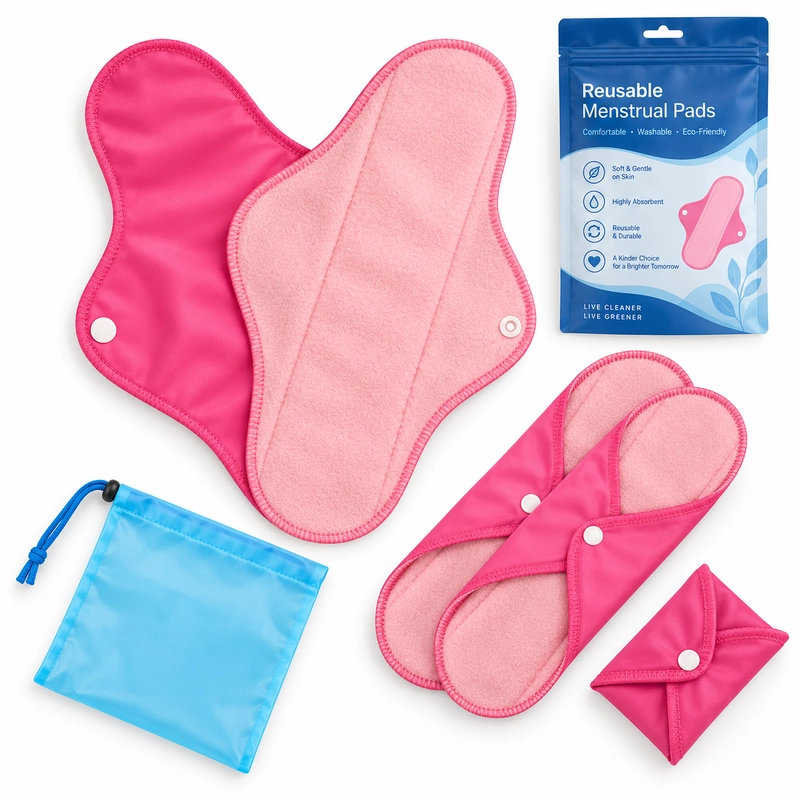
List every item and count in one set. Choose the pad mix, pouch purpose and care information, then sample that complete combination so the product and packaging can be reviewed together.
1. Give the set a clear architecture
A set is easier to buy and explain when its contents map to a simple customer need. Begin with the pad use cases you want to offer: daytime, nighttime or heavier-flow options. Ask the supplier to identify current models and provide the size, construction and any substantiated absorbency information for each. Do not infer a model's capacity from its name, colour or appearance.
Define the mix in a table: model reference, pieces per set, number of sets, colour or print and packaging. Decide whether day and night assortments are separate SKUs or one configurable bundle. Each SKU needs its own contents, label and barcode mapping; a mixed set quote should state each pad count per set. This prevents total pieces being confused with total sets.
Confirm whether each design is an existing style or needs product-level customization. ReuseCare's basic finished-style MOQ ranges from 5 to 300 pieces depending on product; finished-product custom printing starts from 300 pieces. The pouch and retail packaging may have separate minimums, so confirm requirements by component and artwork. These ranges do not confirm that a particular bundle is available.
2. Specify what the pouch is for
A pouch can be positioned for carrying clean pads, storing used pads temporarily while away from home, or organizing a set. Those are different use instructions. Tell the supplier which job the pouch needs to do and whether one pouch is intended to hold clean items, used items or a specific number of pads. Request the proposed dimensions and construction as supplier-confirmed fields; do not estimate capacity from a photograph.
If the pouch will be used with used pads, ask how the buyer should communicate separation from clean items. The set may need a care card, separate compartments, multiple pouches or another agreed approach, but do not advertise a feature that has not been confirmed for the chosen product. In particular, “waterproof,” “leakproof” and “odorproof” are performance claims. Confirm the pouch materials, closure, seams and relevant evaluation evidence before using them in product copy. If no evidence is available, describe the product neutrally as a storage or carry pouch.
Ask what cleaning and care instructions are supported by the selected pouch and pad materials. Keep those instructions consistent across the insert, sewn or printed labels, product page and packaging. If the supplier has not verified a care statement, mark it for review before artwork approval.
3. Plan the premium presentation
Choose the retail format after defining the set contents. A box, sleeve or paper band affects fit and presentation. Share a visual reference, target audience, preferred materials and opening experience; describe sustainability requirements as requests to confirm, not as an unsupported packaging claim.
Send a vector logo, colour references, brand guide and final copy. Request the supplier's dieline for the selected format before preparing print files. Record the language and artwork revision. Check product names, care wording, item counts, barcode, SKU and any responsible-party details for the intended market; have the importer or compliance adviser confirm applicable label requirements.
Ask how barcode readability and pack contents will be checked. For a set with multiple SKUs, provide a mapping table linking each barcode to the exact product mix and pack artwork. Request a digital proof for layout review, then a physical pack sample to check scale, legibility, fit and presentation. A screen proof is not a substitute for confirming the finished set physically.
4. Approve the sample as a complete set
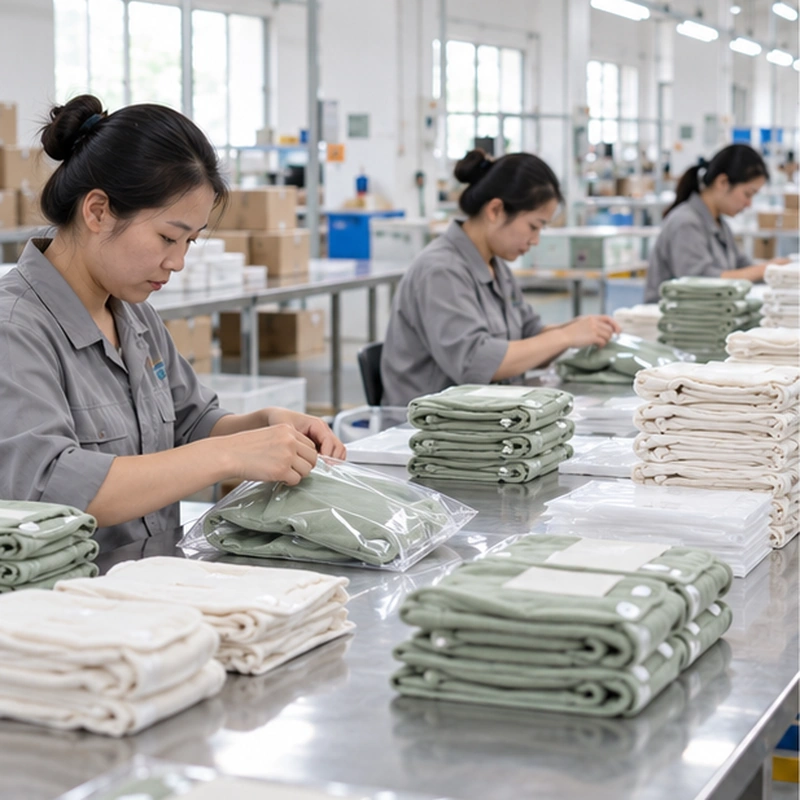
Request samples of the actual pad models and pouch, then ask whether the packaging sample will use the same materials and print route as the production offer. Evaluate fit as a system: do the items sit securely, can the customer identify each variant, and are care and usage instructions visible? Record the sample identifier, artwork file version, packaging revision, reviewer, date and changes requested.
When a sample is revised, compare it with the previous approved version and document what changed. Do not approve a pouch in isolation if its retail claim depends on a particular closure or use. Bulk production should reference the approved pad and pouch versions, final pack contents, label and barcode files, and agreed inspection criteria. If there are open details—such as a material composition, test result, print location or pack insert—resolve them before release or state explicitly how they will be confirmed.
5. Ask carton and transport questions early
Retail packaging affects the shipment shape and sets per carton. Once the physical pack is defined, ask the supplier to confirm set dimensions, carton configuration and count, gross and net weights, protective packing and shipping marks. Do not use unconfirmed sample measurements as final freight data.
Provide the delivery country and postcode and request sample and bulk freight separately. Have the offer state the shipping method, dispatch point or delivery term, quote validity and whether duties, taxes or clearance are included. Ask who handles export and destination clearance. Any estimate that depends on the final carton, route or customs arrangement should be clearly marked provisional. Confirmed in-stock styles may dispatch within two days after availability is confirmed, but dispatch is not delivery; the note does not set timing for samples, branded packaging, custom work or transit.
Copy-ready gift-box RFQ checklist
- Set concept, channel, target customer and destination country/postcode.
- Pad model references and proposed day/night mix, with pieces per set and sets by SKU.
- Supplier-confirmed pad sizes, construction, material information and any evidence requested.
- Pouch purpose: clean carry, temporary used-item storage, or both; ask for capacity and construction details.
- Any performance language requested for the pouch, with the evidence or evaluation method required.
- Logo source, colour references, product-label needs and packaging format.
- Final languages, care wording, SKU/barcode map, carton marks and artwork revision.
- Sample request for the complete pad, pouch and packaging combination; approval criteria and reviewer.
- Itemized product, pouch, sample, printing, label, retail-pack, carton and freight charges.
- MOQ by product, variant and packaging artwork, plus separate sample, approval, production, dispatch and transit estimates.
For logo and label preparation, see the artwork review guide and individual packaging guide. The sample approval guide explains revision control, and the Europe shipping guide outlines destination questions. Send the component list through ReuseCare's product quote form to confirm current options.
Frequently asked questions
What should a menstrual pad gift box include?
Define the exact pad styles and quantities, pouch, care or use information, labels, retail packaging and any insert as one selling unit. Confirm the complete contents and pack presentation in an approved sample.
Can a pouch be described as leakproof or odorproof?
Only use those claims when the selected pouch's construction and relevant evidence support them. Ask the supplier to confirm the materials, closure and any test method or limitations, then approve the claim wording for the exact product.
What packaging files should I approve?
Approve the final artwork revision, product and care wording, language, barcode and SKU mapping, pack contents and any carton marks. Request a proof or physical pack sample and confirm what checks the supplier will record.
How do I get a comparable quote for a gift set?
Send the pad mix by style, pouch specification request, pieces or sets, packaging format, artwork and label requirements, destination and requested sample plan. Ask for product, pouch, packaging, sample, freight and other applicable charges to be itemized, with unknown details identified for confirmation.