
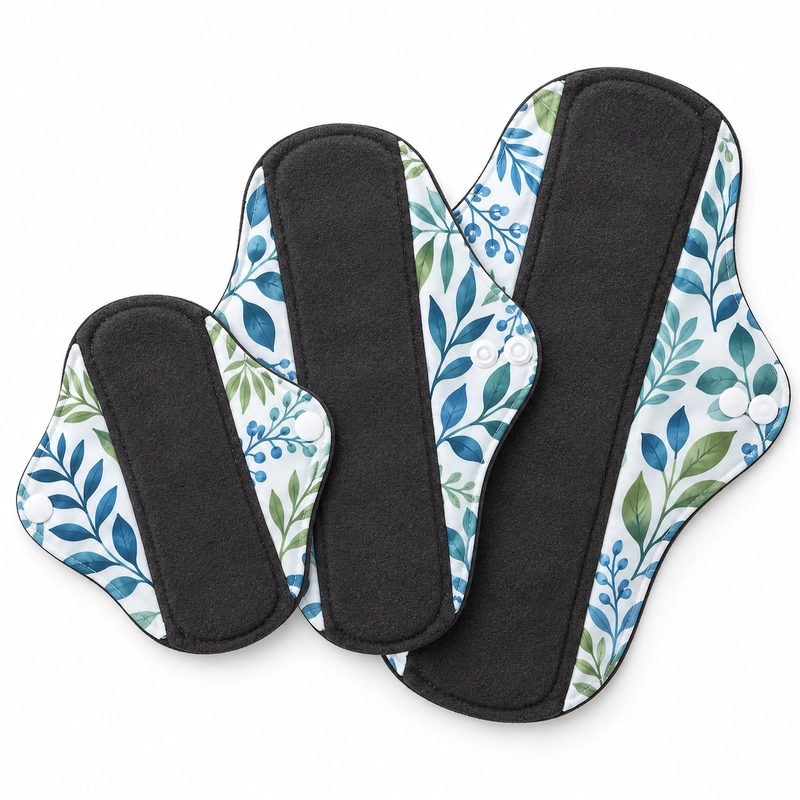
Existing-style private label begins with a current product design and concentrates the work on style selection, sample approval, brand identity, packaging and order details. It can avoid new pattern development, but the supplier still needs to confirm which variants, decoration methods, minimums and dates are available for the particular project.
Three routes buyers should distinguish
For this specific reusable menstrual pad: at 100–250 pieces, ask first whether a ready-stock style is available. A ready-stock option uses a white snap. The custom route for this pad has a 500-piece MOQ and allows snap-button color selection, including gold. These are product-specific routes, not a sitewide MOQ policy. Stock, style, colors and any proposed mix must be confirmed for each inquiry.
Ready-stock vs. custom for this pad
Ready-stock, 100–250 pieces: ask which current stock style can meet the requested quantity; the snap is white. Confirm available design, stock quantity, color and whether a mix is possible. Custom, MOQ 500 pieces: this specific pad can be ordered with a selected snap color, including gold, subject to confirmation of the selected style and order details. Ask whether other requested changes require separate review.
Existing-style private label uses a supplier's current product design as the starting point. The buyer selects a confirmed model and agrees on the selling unit, label and packaging presentation. Ask exactly what can carry the brand and whether any product change is included.
Finished-product custom printing adds printing or another confirmed branding treatment to the finished product. This is a separate manufacturing choice with its own artwork review and minimum. ReuseCare's confirmed starting point for finished-product custom printing is 300 pieces; confirm whether the selected pad surface and proposed method are feasible.
Full custom OEM may change the pattern, construction, materials or other product features. That introduces a development brief and technical review. Do not treat a private-label order as a new design project—or assume all custom development is included in a basic finished-style MOQ.
Build a useful day and night assortment
Start with intended use, not assumed dimensions. Ask the supplier to show its currently available daytime and nighttime or heavier-flow references, with the model identifier, size information, construction description and any substantiated absorbency evidence. Product labels such as “night” or “heavy flow” should be tied to a supplier specification and your own sample evaluation; the name alone is not a performance test.
Then write a variant table. Give each model its own line for requested quantity, colour or print, fastening, packaging and label language. If the launch is intended to offer both daytime and nighttime choices, tell the supplier whether the proposed counts are fixed or whether you are open to an alternative mix. Ask how its minimum applies: per design, per colour, per printed artwork, or to the total order. ReuseCare's basic finished-style MOQ ranges from 5 to 300 pieces depending on product, so a single blanket minimum should not be assumed.
For an early assortment, prioritize a small number of clear use cases and a consistent visual system. That makes it easier to explain the difference between variants, keep SKU records accurate and understand the cash commitment. Confirm whether sample models correspond exactly to the offered bulk styles before comparing quotations.
Request samples and control revisions
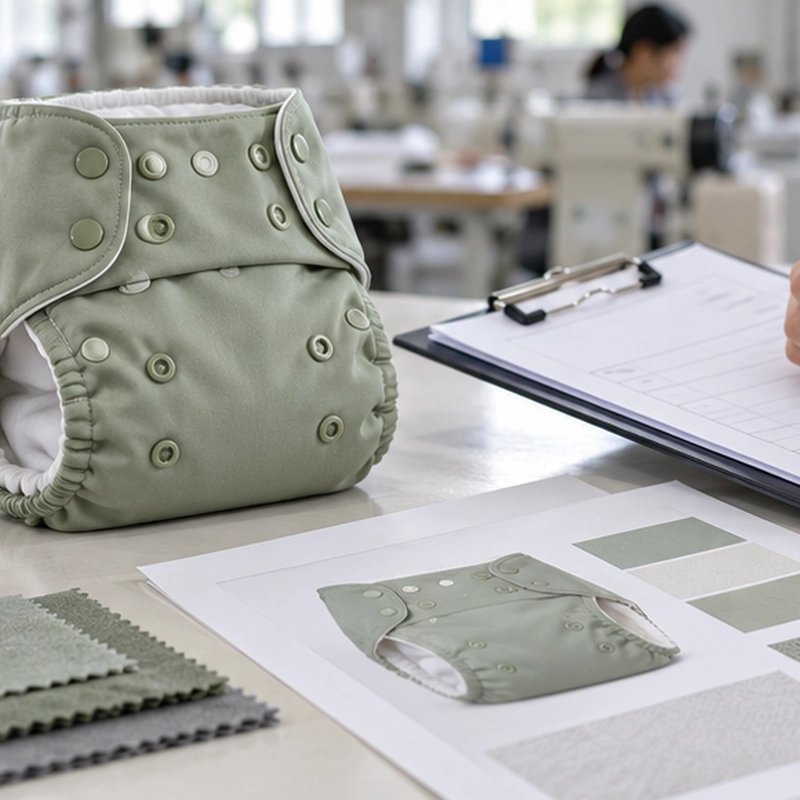
Ask for samples of each shortlisted model before finalizing the product page or purchase order. Confirm sample availability, charges, shipping method and timing in the quotation. Use a written evaluation sheet covering the features important to your brand: hand feel, shape, fastening, stitching, care information, packaging and any performance checks agreed with the supplier. Record observations rather than relying on an informal approval message.
Assign a reference to each sample and artwork version. Record the date received, reviewer, requested changes, decision and the version accepted. If the sample changes after review, open a new revision and repeat the relevant checks. Bulk production instructions should point to the approved sample and the final artwork, label and pack files. This creates a shared reference if a question arises during production or repeat ordering.
Prepare brand and packaging inputs
Send a vector logo where available, brand colours, placement preference and the file revision. Ask whether the selected route is a sewn label, printed packaging, finished-product printing or another method that the supplier confirms. Finished-product custom printing starts from 300 pieces at ReuseCare; a logo on a tag or retail pack is a different scope and must be quoted separately. Do not infer that a logo can be applied directly to every textile surface.
For labels and packaging, provide the selling-unit contents, approved product name, care wording, language, barcode/SKU mapping and artwork dimensions only after the supplier confirms its template. Ask who checks barcode readability and which proof or physical pack you will approve. Keep regulatory and fibre-composition wording aligned to the documentation for the exact product. If the composition or certificate scope is not yet verified, mark it as a pending supplier confirmation rather than printing a claim.
Understand what can still change MOQ and timing
Using a current pattern does not make every commercial detail fixed. MOQ can depend on the product, number of variants, colours, printed designs, packaging format and whether product-level customization is requested. Timing can depend on sample revisions, artwork approval, material or packaging availability and the shipping plan. Ask for separate estimates for sample preparation, approval, production, dispatch and transit, and have each assumption stated in writing.
Confirmed in-stock styles may dispatch within two days after availability is confirmed. Dispatch means the order is handed over or sent; it is not arrival at the buyer's address. This stock note does not set the schedule for samples, custom printing, packaging or a made-to-order project.
Copy-ready quote checklist
For this pad, state whether you are asking about the 100–250-piece ready-stock route with white snaps or the 500-piece custom route and requested snap color (gold is an option). Ask the supplier to confirm current inventory, exact style, color availability, MOQ basis and whether the proposed combination can be supplied. This MOQ applies to this specific pad only.
- Shortlist of current daytime and nighttime styles, with supplier model references.
- Requested quantity for each variant, colour/print and SKU; clarify total versus per style.
- Any material, composition, size or absorbency evidence required for review.
- Sample models, destination postcode, requested sample route and evaluation points.
- Logo source file, desired application, placement, colour and artwork revision.
- Label text, care wording, barcode/SKU map, retail-pack format and language.
- Separate itemization for product, sample, branding, packaging, freight and any setup charges.
- Applicable MOQ assumptions and separate sample, approval, production, dispatch and transit estimates.
- Certificate or test documents requested, identifying exact product and coverage.
For a structured request, use the private-label inquiry checklist. Review the day and night pad guide and sample approval workflow as you prepare the brief. Compare 100, 250 and 500-piece scenarios in the reusable pad order-planning guide. Use the gold snap button guide for the custom color route. ReuseCare can confirm current options against a product-specific inquiry through the private-label service page.
Frequently asked questions
What is the difference between existing-style private label and custom OEM?
Existing-style private label starts from a supplier's current design and focuses on confirming the selected style, sample and brand presentation. Finished-product custom printing adds a product-level customization route. Full custom OEM may involve developing or changing patterns, materials or construction, which requires separate feasibility, MOQ and timing confirmation.
Can I combine daytime and nighttime pads in one order?
Ask the supplier to quote the quantity for each selected style separately and confirm whether variants can share an order minimum. Available styles, sizes, absorbency descriptions, mix rules and applicable MOQ must be confirmed for the current selection.
What is ReuseCare's MOQ for finished menstrual pads?
Basic finished-style MOQs range from 5 to 300 pieces depending on product. Finished-product custom printing starts from 300 pieces. Confirm the applicable minimum for the chosen pad, variant mix, artwork and packaging in a written quote.
What should I approve before bulk production?
Identify the physical sample and revision, record construction or artwork changes, approve the label and packaging files, and document the accepted specification and order breakdown. The bulk order should point to those approved versions.