
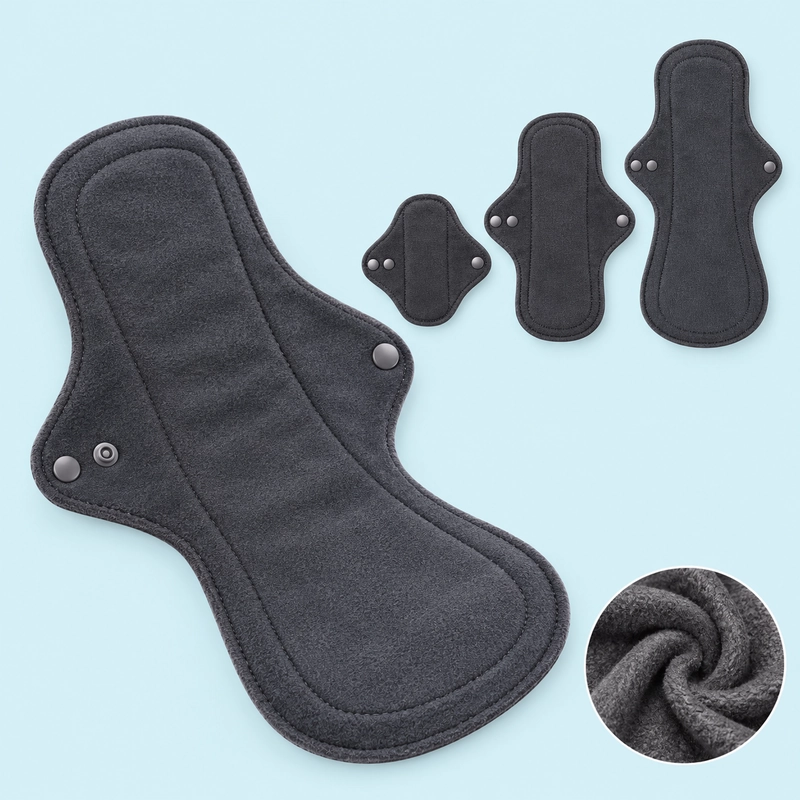
For an OEM brief, treat “bamboo charcoal” as a material family or range description. Write down the requested fiber blend, the intended layer position, the rest of the pad construction, and how the sample will be checked. The final quotation and approved sample should identify the actual version. A dark color or a material name alone does not prove composition or product performance.
Start with the material position
Product listings often compress several decisions into a short name. A buyer may mean a charcoal-colored fabric against the skin, a textile described as bamboo charcoal in another position, or simply a black inner layer in a multi-layer washable pad. These are not interchangeable instructions. Tell the supplier which face or layer you have in mind and ask the quotation to state the confirmed material and position for the chosen style.
ReuseCare's product range includes bamboo-charcoal-style reusable menstrual pads, but the phrase does not publish an exact fiber percentage, layer count or construction for every option. Use the bamboo-charcoal product page as the starting point, then resolve the details against a product-specific specification. The existing reusable pad material and layer guide explains how to record the skin-contact surface, absorbent core, waterproof layer, backing, closure and edge without assuming they are identical across styles.
Write a layer map for the finished product
A material brief becomes more useful when it describes the complete assembly. For each requested layer, record a name, intended position, confirmation status and the sample evidence still needed. If you have not chosen the blend or construction, label it as a question for the factory rather than turning a marketing phrase into a precise claim.
A layer map also protects against substitutions. If a suggested alternate changes the surface, core or backing, give it a separate sample number and update the written construction. For material background, compare the linked PUL cloth guide, while remembering that a fabric reference does not by itself establish how a sewn menstrual pad performs.
Separate appearance from verified performance
Black or charcoal-colored fabric can help distinguish a visual option in a product range. It is not proof of fiber composition, absorption, odor control, antimicrobial action, leak resistance or wash life. Avoid approving a claim from a product photo. Instead, decide what matters for your market, name the evaluation method, and apply the same criteria to the sample versions you compare.
For example, a buyer can record the sample identification, condition before evaluation, relevant measurement or test setup, observations and pass rule. If leakage resistance is important, define where water is applied, how the sample is prepared and what counts as a failure before testing. The separate waterproof testing guide documents a fabric test workflow; it does not certify a completed pad or promise an outcome for another construction.
Approve a physical sample against the brief
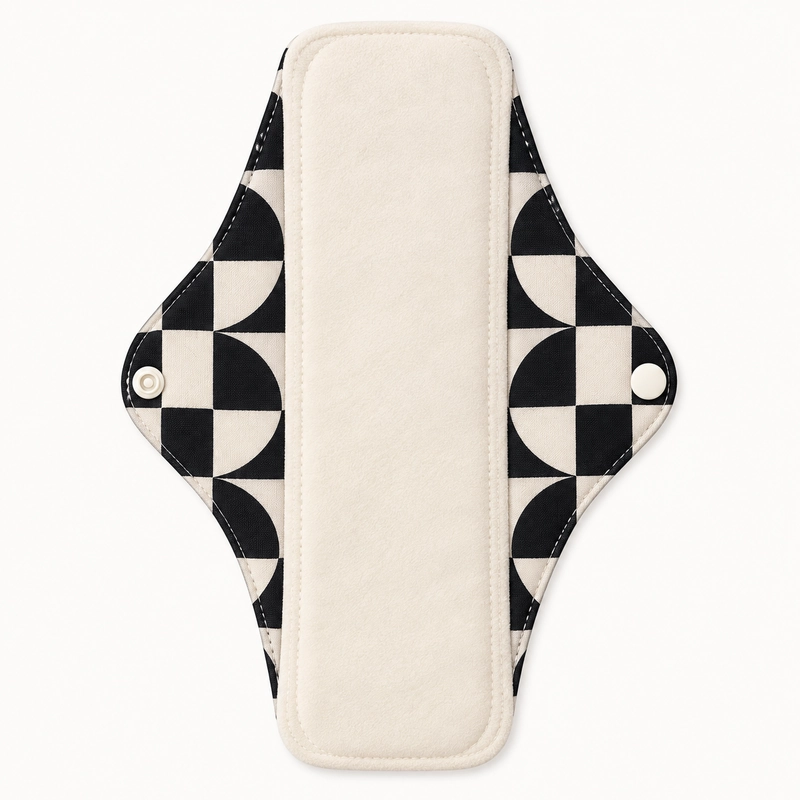
Ask for a sample that corresponds to a named revision of your written requirements. Review the surface and backing, layer order where it can be confirmed, shape, dimensions, snap or other closure, stitching and care-label presentation. If an item cannot be evaluated visually, request the relevant supplier document or test record. Record a change as a new revision rather than relying on a chat note or an old photograph.
ReuseCare's sample approval guide sets out a controlled record: sample identifier, modification history and a clear approval decision. The point is to make later production refer to the same version that was reviewed. A single sample is not automatically representative of every size, print or construction; note which variants it covers and ask what must be sampled separately.
Plan quantity, logo and packaging as separate quote lines
Once the technical brief is clear, add the commercial information: quantity by style and size, logo location, artwork files, individual packaging, barcode or label needs and destination. ReuseCare confirms basic finished-style minimums from 5 to 300 pieces depending on the product, and custom finished-product printing from 300 pieces. Those are general thresholds; confirm the applicable minimum for the selected pad, artwork route and packaging in the quote.
Sampling and custom packaging timing is quoted separately. Confirmed in-stock styles may dispatch within two days after stock is confirmed; dispatch is not delivery and this reference does not set a delivery date for Belgium or any other destination. The reusable pad cost guide explains which inputs help produce a comparable offer. If you are planning a 500-piece launch, request the sample, printing and packaging costs as separate items so you can see how each choice affects the order.
A quote-ready brief for bamboo-charcoal-style pads
- Target style and quantity by size or variant.
- Meaning of “bamboo charcoal” for this project: requested blend and intended material position, both pending supplier confirmation if unknown.
- Layer map, shape, wings, closure, measurement points and any drawing.
- Day or night use and the criteria you want the sample to meet.
- Logo method and placement, artwork revision, care label and individual pack requirements.
- Sample charge and timing, custom pack charge and timing, production quote and destination.
- Any certificates or test records requested, with scope and product version identified.
Send open questions with the brief. This keeps the factory's response specific and lets you review a sample before treating the specification as final.
Frequently asked questions
What does bamboo charcoal mean in a reusable menstrual pad listing?
It is a material or range reference, not a complete composition or construction specification. Confirm the exact fiber blend, the material's position in the pad and the sample revision in writing.
Does a dark charcoal layer prove absorbency or odor control?
No. Appearance and material naming do not establish absorption, odor control, antimicrobial performance or leakage results. Define the required test method and acceptance criteria for the finished sample.
Can I order a custom bamboo-charcoal-style pad in 500 pieces?
ReuseCare's basic finished-style minimums range from 5 to 300 pieces depending on the product, while custom finished-product printing starts from 300 pieces. Confirm how the selected style, artwork and packaging apply in a product-specific quote.
What should I send to request a quote?
Send the target style, quantity, intended material position, required layers, day or night use, closure, dimensions or reference sample, logo and packaging needs, destination and requested checks. Mark unknown details for supplier confirmation.