

Define “leak-resistant” as a requirement to evaluate, not as an assumed product result. Identify the exact pad version, sample preparation, test method, observation points and acceptance criteria. Separate component or fabric checks from a test of the complete sewn pad, then make any claim only as broad as the evidence for the identified construction and conditions.
Start by defining the intended conditions
A request for “good waterproof protection” is not yet a reproducible test instruction. Leakage may be discussed in relation to product shape, material selection, seams, binding, closure, placement and the way a sample is used. A buyer should define what problem the product is intended to address and which conditions the review should represent. The factory can then confirm what can be evaluated and what evidence is available for the selected version.
List the target use, sample revision, material construction and any relevant orientation or setup. Decide what the evaluator will observe and how a passing sample will be distinguished from one that needs revision. If the method is still undecided, ask the supplier to propose a method for review, and keep it marked as a proposal until both sides agree. Do not publish a numerical result when no agreed test record supports it.
Keep material evidence and product evidence separate
A water test on a textile examines that textile under a defined setup; it does not include every feature of a finished pad. Sewing, edges, layer transitions, component placement and shape may matter to the complete item. Label a fabric-level report with its sample and method. Do not present it as proof that every sewn product made from that fabric meets the same outcome.
The ReuseCare PUL fabric waterproof testing guide describes a material-level workflow and record. If your requirement concerns the finished pad, request a product-specific method and sample record. Keep the material check separate from any assembled-product evaluation.
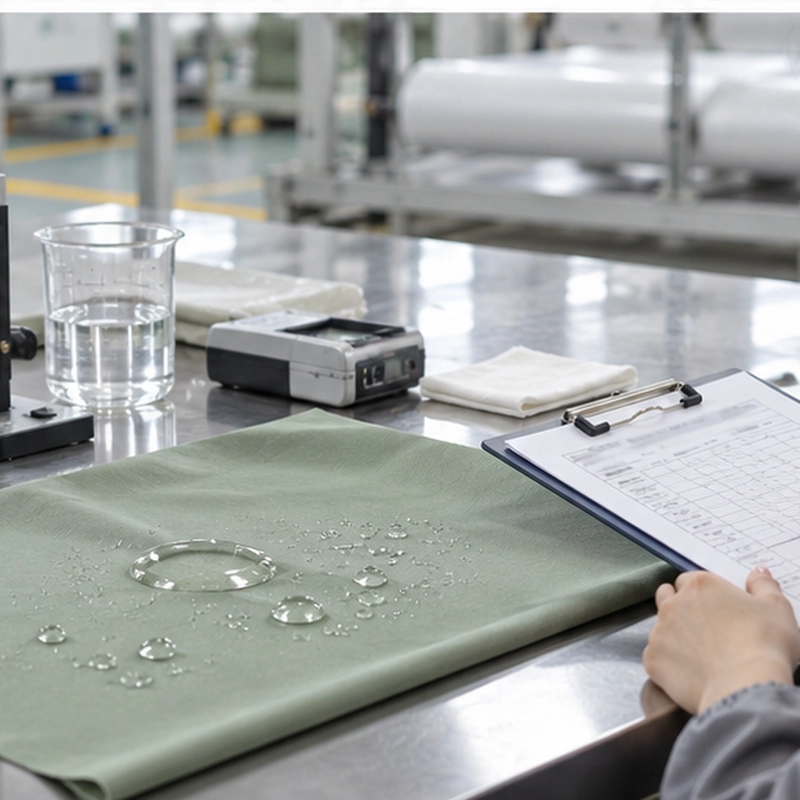
Write a reproducible test instruction
Identify the sample and revision, whether the specimen is fabric, a component or a complete sewn pad, preparation, method, setup, observation points, duration when relevant and pass rule. Record who checked it, when, and what happened. Mark unknown details as open questions instead of filling them with assumed values.
This is a record structure, not a test standard or proof that every ReuseCare pad style has passed a particular test. Agree the method and acceptance language before using a result in product copy or a purchase specification.
Review the complete sample and its construction
For a washable pad, document the selected surface fabric, absorbent section, waterproof component if specified, backing, shape, seams, edge finish and closure. Confirm the exact fiber blend and material positions in the quotation or sample record. A material phrase such as “bamboo charcoal” remains a range or material reference until its blend and location are identified. It cannot stand in for a test result.
Inspect the sample against the agreed drawing and measurement points, then carry out the checks defined for the sewn item. If the sample changes after review, issue a new revision and repeat any evaluation affected by that change. A change to a layer, seam, binding or shape may change what the previous record describes. Link the approval to the precise sample version, following the sample approval before bulk guide, and keep modifications and sign-off together.
For construction details, see the material and layer guide and product range. The bamboo-charcoal-style product page starts a product discussion; its final details still require sample confirmation.
Match claims to the evidence you hold
Use precise wording in internal records and public product content. A statement that a named fabric was checked by a defined method is narrower than a statement that an entire pad prevents leaks during all use. If a finished product was evaluated, identify the version and scope in the record. Do not generalize a single sample result across different sizes, materials, production lots or wash cycles unless the supporting evidence addresses those cases.
Likewise, photographs show the scene or sample but cannot convey the complete method or acceptance threshold. Keep the test record, sample identification and approved construction as the evidence package. If the customer needs a certificate or report, ask which document, test scope, product version and destination requirements apply. ReuseCare's certifications page lists document-related information; availability and scope must be confirmed for the product and request.
Include test planning in the quote request
Send the target style, quantities by variant, intended use, material and construction preferences, logo placement, packaging, destination and requested test scope. Ask the supplier to identify what can be evaluated at fabric level and what needs a finished-product sample. Request separate confirmation of sample cost and timing, packaging and artwork options, and the production offer.
ReuseCare confirms basic finished-style minimums from 5 to 300 pieces depending on product. Custom finished-product printing starts from 300 pieces. Sampling and custom packaging timing is quoted separately. Confirmed in-stock styles may dispatch within two days after availability is confirmed; dispatch is not delivery and does not provide a custom production or transport estimate. The manufacturing cost guide helps organize the commercial inputs without assuming a price.
Buyer checklist before approving a leak-resistance claim
- Is the test on fabric, a component or the complete sewn pad?
- Does the specimen ID match the product and revision being quoted?
- Are preparation, method, setup and observations documented?
- Are duration and pass criteria defined where relevant?
- Does the evidence cover the intended use and conditions stated in the claim?
- Were any material, seam, shape or process changes made after testing?
- Are the reviewer, date, result and corrective actions recorded?
- Is the public wording limited to the evidence's actual scope?
If the answer to any item is unclear, pause the claim and resolve the question with a traceable sample or supplier record. This is more useful to buyers than an unqualified “waterproof” label with no method behind it.
Frequently asked questions
Does a waterproof fabric test prove that a finished menstrual pad is leak-resistant?
No. A fabric check applies to the tested material and method. Seams, edges, shape, construction and use conditions affect a finished product, so define a separate finished-pad method and acceptance rule when the claim depends on it.
What should a buyer define before testing a washable pad?
Define the target use, sample version, preparation, test setup, observation points, duration if relevant and pass/fail criteria. State whether the test applies to fabric, a component or the complete sewn pad.
Can I market a pad as leak-proof based on a supplier photo?
No. A photo is not a test record and does not show the method, sample identity or acceptance criteria. Support product claims with evidence for the specified finished construction and intended conditions.
How should custom samples and packaging be timed?
ReuseCare quotes sampling and custom packaging timing separately. Confirmed in-stock styles may dispatch within two days, but dispatch is not delivery and does not establish a custom-production or transit schedule.