
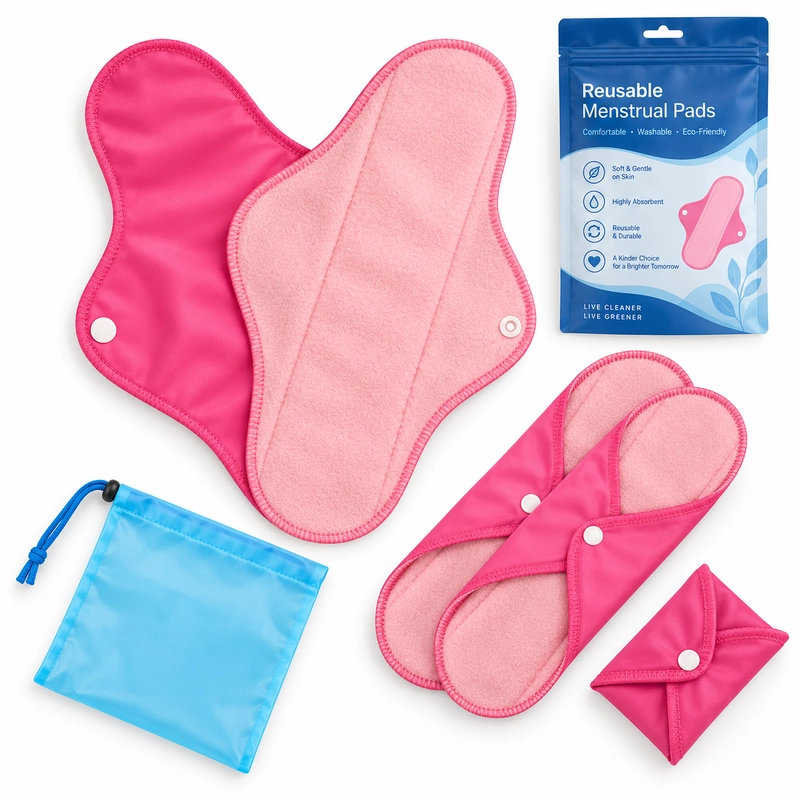
Before asking for an all-in delivered figure, define the exact pad, materials, pack, carton, destination, shipment terms and the party acting as importer of record. A customs amount cannot be reliably guaranteed without classification, origin, customs value, freight, Incoterm and importer setup.
1. Describe the product precisely
“Reusable menstrual pads” is a useful product description for a conversation, but it may not be enough to determine the customs code or the documents needed for a particular sale. Build a product identity sheet for each style: intended use, shape, dimensions, layers, declared fibre composition, waterproof component if present, fastening, accessories, retail pack contents and country of origin. Keep artwork and sample revision identifiers with the sheet.
For a made-to-order programme, note which details are confirmed and which remain proposals. A charcoal-coloured absorbent layer, for example, should be described by its verified composition and construction rather than by a colour or marketing name alone. Link the approved sample to the material declaration and the invoice description so the customs representative can review consistent information.
2. Ask the importer to confirm classification and EORI
The EU import guidance explains that customs procedures depend on the goods’ origin, nature and value, and that the Combined Nomenclature classification determines applicable duties and rules. Ask the Belgian importer or its customs broker to determine the proposed CN code for the exact finished product and verify it in the relevant official systems. Do not copy a code from a similar listing without checking whether construction and intended use match.
EU guidance describes an EORI number as mandatory for economic operators conducting customs operations in the EU. Confirm who will lodge the declaration, whose EORI will be used, whether the number is valid for that party and who will handle any customs representation. Belgian Customs publishes application information; the EU EORI page explains the general framework. These checks belong to the importer and its appointed representative.
3. Approve labels and product information before printing
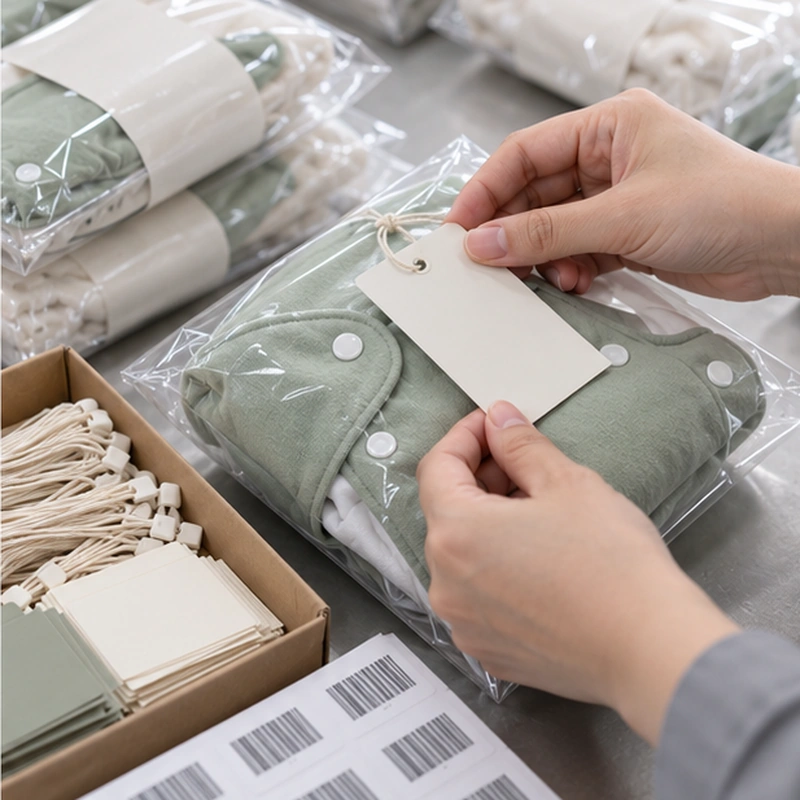
EU textile labelling rules concern fibre composition and approved fibre names. Your Europe’s official guidance says that consumer-facing textile products generally need a clear fibre-composition label, while B2B sales may use or be supplemented by accompanying commercial documents. Which route applies depends on how and where the item is marketed. Confirm the final label, language versions and placement for Belgium with the importer and relevant authorities before ordering printed packaging.
Keep composition wording separate from care instructions and promotional statements. Check that the declaration matches the actual product, including relevant textile components, and have the importer approve the final artwork. A packaging mock-up is useful for review, but approval of artwork does not itself establish regulatory compliance.
4. Prepare a product-safety document request
The General Product Safety Regulation (GPSR) establishes obligations for consumer products and relevant economic operators. Ask the supplier for product-specific records that are available and relevant to the exact style: identification and traceability details, material declarations, risk-related information, instructions or warnings where applicable, and test reports with their scope. Ask the EU importer to identify the responsible economic operator and the information that must accompany the product or online offer for the intended sales channel.
For chemical restrictions, use the current ECHA REACH Annex XVII information to identify whether restrictions may apply to the product’s materials or substances. A general statement such as “REACH certified” is not enough to identify what was checked. Request the named substance or material, method, report date, laboratory, sample identity and applicable restriction scope. Do not assume every test is required for every product or that an unrelated report covers this pad.
5. Build the landed-cost question from shipment data
Ask the supplier to quote the goods and freight separately, with the named Incoterm and named place or port. Supply the quantity, unit pack, master-carton count, carton dimensions, gross and net weights, pickup location, Belgian postcode and preferred delivery service. Ask which export documents are included and which party arranges export clearance, main carriage, insurance, import declaration and final delivery under the proposed terms.
Then ask the importer or broker to estimate duties, import VAT, clearance fees and any other applicable charges using the confirmed classification, origin, customs value, freight and importer setup. Use the European Commission’s Access2Markets My Trade Assistant as a starting point for trade information, then verify shipment-specific treatment with the competent authority or broker. A supplier’s freight quote is not a guarantee of the importer’s total landed cost.
Belgium import preparation checklist
- Approved product, material, pack and artwork revisions.
- Supplier invoice description, quantity, origin and customs value inputs.
- Importer-confirmed CN classification and EORI responsibility.
- Belgian label wording and required language versions checked before printing.
- Product-specific safety and material documents reviewed for scope and date.
- Named Incoterm and place, freight mode, postcode, carton count, dimensions and weights.
- Written estimate of duty, VAT, brokerage and delivery charges from the importer or broker.
Official sources checked
- Regulation (EU) No 1007/2011 on textile fibre names and labelling.
- Your Europe: Textile labels and fibre composition.
- European Commission summary of the General Product Safety Regulation and official regulation text.
- ECHA: substances restricted under REACH, Annex XVII.
- Your Europe: customs duties and import procedures; EU EORI guidance; Access2Markets My Trade Assistant; Belgian Customs EORI application information.
Important: This article is general legal and import information, not legal, customs, tax or compliance advice. The EU or Belgian importer must confirm product classification, duties, VAT, responsible economic operator, language and label requirements, and current compliance with the competent authorities or qualified advisers. No CE-marking requirement or product-compliance claim is made here. Any certificate or report applies only to its named product or material, method, laboratory, date and stated scope.
Frequently asked questions
Can a supplier guarantee the exact import duty and VAT for Belgium?
Not responsibly from a product name alone. The importer or its customs representative must confirm classification, origin, customs value, freight, Incoterm and importer setup with current official tools and authorities.
Does a Belgian business need an EORI number?
An EORI is generally required for economic operators conducting customs operations in the EU. The importer should confirm its status and application route with Belgian Customs and current EU guidance.
Which language should appear on a reusable-pad label in Belgium?
Language requirements depend on where the product is made available and the applicable rules. The importer should confirm required languages and label wording with Belgian authorities or an adviser before artwork approval.
Does this checklist confirm that a product is compliant?
No. It is an information and planning checklist, not legal or customs advice and not a compliance declaration for any ReuseCare product. The importer must verify the exact product, market, documents and current requirements.