
For every requested record, write down what it is meant to establish, which product or material revision it covers, who issued it, its date and limitations, and who on the buyer’s side will review it. A component or material certificate does not automatically cover a finished product. Claims depend on the exact holder, scope, validity and ordered SKU.
One pack, several evidence categories
“Compliance documents” can refer to very different records. A business-registration record identifies an entity; a facility audit concerns a site and audit scope; a material declaration describes an input; a laboratory report records a test on an identified sample; product artwork carries consumer-facing information; and shipping paperwork supports a particular consignment. Putting them into one folder is convenient, but treating them as interchangeable creates gaps.
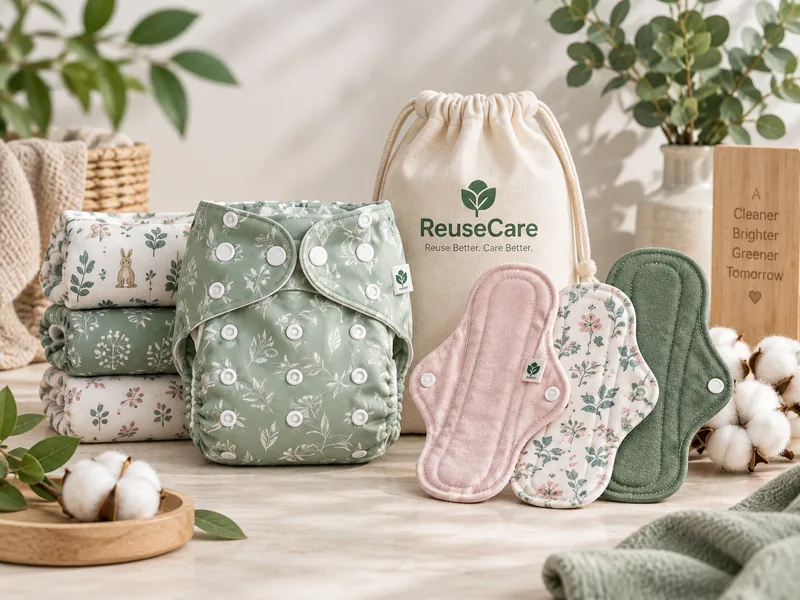
First define the item: product type, intended use, destination country, sales channel, style, colour or print, construction, packaging and revision. A cloth diaper may have a shell, inserts, fasteners and retail pack; a wet bag has its own textile construction and intended use; a reusable pad is a multi-layer sewn product. A document for one item should not silently be copied to another because both are reusable textiles.
1. Company and facility records
Company-level material can help with supplier onboarding, contracting and payment controls. Depending on your process, ask for the supplier’s correct legal name and address as it appears on its own business records, a business registration document where appropriate, contact details for document questions and a named party responsible for changes. Verify names and addresses against the purchase contract and invoice. Do not infer manufacturing authority, product coverage or certification from a company profile.
Facility-level records answer a different question: which site performed which activity, on what date, under whose audit or approval scope? If an audit or social-compliance record matters to your procurement policy, check the facility identity, audit issuer, scope, date, exclusions and validity or follow-up status where stated. A facility audit is not a product safety certificate, and a supplier’s office address does not establish where a particular order was produced.
2. Product and material evidence
Product records should identify the SKU or model, revision, intended use, pack contents and sample or drawing used. Ask for the current specification, bill of materials or layer map, care and composition information, label artwork, packaging artwork, risk or safety information relevant to your review, and any declarations or test reports actually available for that configuration. For a test report, check sample identity, laboratory, method and edition, result, issue date and limitations. If it names only a fabric or component, keep that boundary explicit.
Material records can include supplier specifications and declared fibre composition for each fabric, elastic, thread, closure or other relevant input. For restricted-substance questions, ask what substances or restrictions were assessed, on which sample, using what method and reporting limits, and when. “REACH compliant” alone does not explain the scope of evidence. Use the reusable pad layer guide to structure a layer-by-layer brief and the certificate scope guide to review holder, product coverage and validity.
A material or component certificate does not automatically certify the finished diaper, pad or bag. Before using a certification mark or claim, verify the exact holder, certificate status, scope and ordered SKU against the issuing scheme or body, plus any applicable claim-use rules. No general category statement establishes that every item in a supplier’s range is certified or meets a particular chemical requirement.

3. Shipment and transaction records
Shipment documents are linked to an order or consignment, not a product category in perpetuity. Depending on the route and transaction, the buyer and broker may need a commercial invoice, packing list, transport document, origin information, customs declaration data, carton count and weights. Confirm who prepares each record, who checks it, and whether descriptions, quantities, values, origin and consignee details align across documents. The importer or its appointed customs representative determines classification and required declaration data.
Keep shipping paperwork separate from evidence that supports product design or material review. A packing list can show what cartons were declared; it does not prove the composition or test performance of the contents. Conversely, a product test report does not replace customs documentation. For shipment planning, see the existing shipping guide and check destination-specific import steps with official sources and your broker.
Use a version register that catches drift
Give each product a controlled identity before collecting documents. A practical register can include: SKU and buyer name; product description and intended use; market; sample and specification revision; material or bill-of-material revision; artwork and label revision; document title and type; document owner or issuer; named holder; report or certificate identifier; covered material, model or facility; issue date and stated expiry; verification date and source; restrictions and exclusions; linked purchase order or shipment; reviewer; decision; and next review trigger.
Use clear statuses such as requested, received, scope checked, accepted for the stated purpose, clarification needed, expired or superseded. These are workflow labels, not regulatory findings. Store the original file and a review note together. When a fabric, print, finish, component, construction, supplier site, label or package changes, record which documents were rechecked and why. Preserve superseded versions so an old report is not accidentally attached to a new SKU.
Make the buyer’s responsibility visible
The manufacturer can supply accurate product information and records it holds, but the buyer must define the destination market, sales route, claims, language, evidence threshold and review process. Assign named owners for technical review, label approval, customs, artwork and final release. Decide in advance whether a buyer will accept a supplier declaration, needs third-party testing, or requires an independent certification record. If the evidence is incomplete, note the gap and ask a qualified adviser or relevant issuer what would answer the question; do not turn silence into approval.
Before placing bulk production, align the approved sample, written specification, purchase order and document register. The sample approval workflow provides a way to record the approved version. For factory-stage checkpoints, see incoming material inspection and cloth diaper quality inspection. Ask for a quote with the selected product, quantity, label and packaging needs through Request a Quote.
Buyer request list
- Confirm supplier and production-site identities relevant to this order.
- Request the current SKU specification, sample reference, composition and label artwork.
- List each material or product report needed and the precise question it should answer.
- Request facility records only when a defined supplier policy or contract requires them.
- Agree which shipment records will be supplied and who checks their consistency.
- Maintain a register with dates, scope, validity, revision and buyer review status.
- Reopen the review after a product, material, site, artwork or market change.
This guide is a purchasing workflow, not legal advice, a compliance declaration or certification of any product. Confirm applicable obligations and evidence for the exact goods and market with competent authorities or a qualified adviser.