
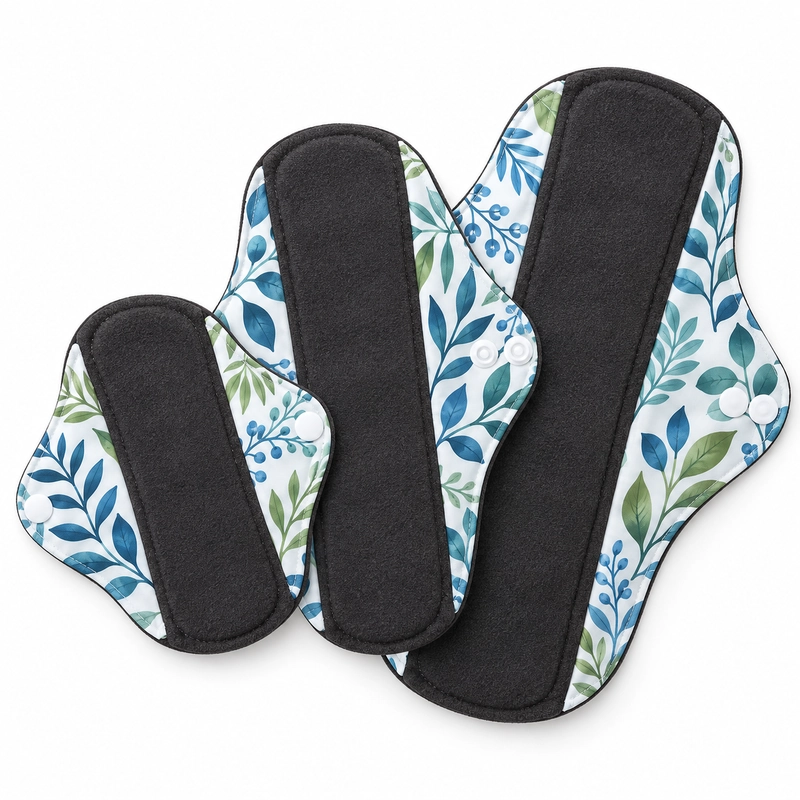
Ask for a component-by-component material declaration, a statement on intentionally added PFAS, and any laboratory report tied to the actual material or finished product under review. Read the report for its sample, analyte scope, method, detection and quantification limits, date and lot. Describe conclusions only within that documented scope; “not detected” under a named method does not mean every PFAS is absent.
Why buyers are asking in 2026
A 2025 peer-reviewed study in Environmental Science & Technology Letters investigated PFAS in reusable feminine hygiene products. It examined 59 products across five categories, including eight reusable pads. This is a small, non-representative sample: it is not evidence that all reusable pads contain PFAS, nor does it establish the composition of any particular supplier’s product. It does make clear why buyers should ask what was tested and how the answer maps to the item they intend to sell. Read the 2025 ACS study for its methods, sample description and limitations.
Rules also depend on the market and the precise legal definition. The Minnesota Pollution Control Agency says Minnesota’s prohibitions effective January 1, 2025 cover products with intentionally added PFAS in named categories, including menstruation products; its guidance includes reusable pads. This is a Minnesota rule, not a blanket United States or European Union requirement. Buyers should check current destination-market requirements and the product’s route to market. See the Minnesota PCA 2025 PFAS prohibitions guidance.
Map the whole pad before requesting evidence
“The fabric” is rarely a sufficiently precise test scope. Begin with the bill of materials or a layer map for one style and revision. Include the face fabric, absorbent core, waterproof layer, backing, thread, binding or edge finish, snaps or other closures, print or finish, labels, and integral product packaging where relevant. Ask suppliers to identify materials and treatments at component level, including any repellency or other functional finish.
A declaration should state whether PFAS are intentionally added, define the supplier’s PFAS definition and covered parts, and identify the basis of the statement. Ask who issued it, when, and whether it covers upstream materials or relies on lower-tier supplier records. Keep “not intentionally added” separate from “not present”: the first is a statement about use; the second requires a defined analytical scope and still has limits.
What to request from an accredited laboratory
Ask the laboratory which methods it can apply to the actual textile or product matrix, and whether the requested method is within its accreditation scope. Accreditation alone does not mean every PFAS, material and method combination is covered. The report should let a reviewer identify what was sampled, what was measured and what the result can support.
- Sample identity: component or finished pad, style/SKU, color or print, lot or batch, revision, sample condition and who selected or submitted it.
- Test scope: named PFAS analytes or defined analyte list, and whether the work is targeted analysis, a total-fluorine screen or another specified approach.
- Method and matrix: method identifier and version, preparation/extraction approach, material matrix and any deviations or subcontracted work.
- Limits and units: analyte-specific LOD and LOQ or the applicable screening threshold, reporting units, and any blank, recovery or quality-control information needed to interpret the result.
- Results and boundaries: actual reported results, qualifiers and exceptions; distinguish “not detected above the stated limit” from zero or universal absence.
- Traceability: laboratory name, report number, issue date, tested lot, accreditation reference and scope, plus a way to verify the report with the issuer.
A total-fluorine result is a screening measurement, not an identification of each PFAS compound. A targeted analyte panel can speak only to the compounds included, under that method’s limits and sample preparation. If the buyer needs a broader conclusion, agree with a qualified laboratory on the question, method and claim language before testing. See the related guide on how to read a textile test report for a practical way to check sample identity, method, scope and version.
Review the claim, not just the certificate logo
Ask what exact wording the supplier supports and which product, component, revision, market and date range it covers. “No intentionally added PFAS” is narrower than “PFAS-free.” A test report limited to a fabric, a short analyte list or one production lot should not be presented as proof about every component, every PFAS or future production. Preserve the report and the approved claim together so artwork, listings and buyer documents use the same bounded wording.
REACH compliance documentation, OEKO-TEX certification or GOTS certification does not, by itself, establish that a particular finished pad is PFAS-free. Each framework has its own scope and criteria; confirm current certificate validity, covered article or material, and the specific PFAS requirement or test evidence relevant to the claim. Do not treat a certificate for a fiber or fabric as certification of a finished pad unless its scope explicitly covers that product.
For the same reason, a TPU/PUL waterproof layer should not be presumed to contain PFAS, or presumed free of them, from its name alone. Request the material specification, treatment declaration and product-specific evidence needed for the chosen claim. Keep the answer open when supplier records or testing do not resolve the question.
Control changes after review
Connect each accepted declaration and report to a dated bill of materials, approved sample, supplier and product revision. Require notice and review before changing a fabric mill, coating or laminate, finish, ink, thread, component or manufacturing process that could affect the evidence. Decide in advance which changes trigger an updated declaration, new sample or repeat test. A report for an earlier construction does not automatically cover a changed product.
PFAS documentation checklist for an RFQ
- Identify the product style, SKU, destination markets and target production revision.
- Request a complete component/layer map, including finishes, closures, trims and relevant packaging.
- For every component, request material identity, supplier or mill, lot traceability and a signed statement on intentionally added PFAS.
- Ask the supplier to define “PFAS” for the declaration and list exclusions, unknowns or reliance on upstream declarations.
- Specify whether evidence is required for components, a representative finished product, or both; name color/print and lot coverage.
- If testing is requested, agree the matrix, analytes or screening approach, method, accreditation scope, LOD/LOQ, units, sample selection and report date.
- Require the complete report, including results, qualifiers and limitations, and a way to confirm authenticity with the laboratory.
- Agree the exact permitted claim wording and where it may appear; prohibit broader copy than the evidence supports.
- Set change-control triggers for materials, suppliers, treatments, processes, product design and packaging, with evidence refresh requirements.
- File declarations, reports, certificates and the approved sample against one SKU/revision record before release.
Mark missing information as “supplier confirmation required” or “testing scope to agree.” Do not fill a gap with a product-level claim. For the product conversation, start with the reusable menstrual pad range, review available certification information by its actual scope, or send the style and destination-market requirements through the sample and quote request.
Related buyer guides
Use the reusable pad materials and layers guide to build a construction map, the EU certificate scope guide to check document coverage, and the reusable hygiene supplier questionnaire to organize supplier records. These resources support procurement discussions; confirm legal obligations with qualified counsel for each market.