
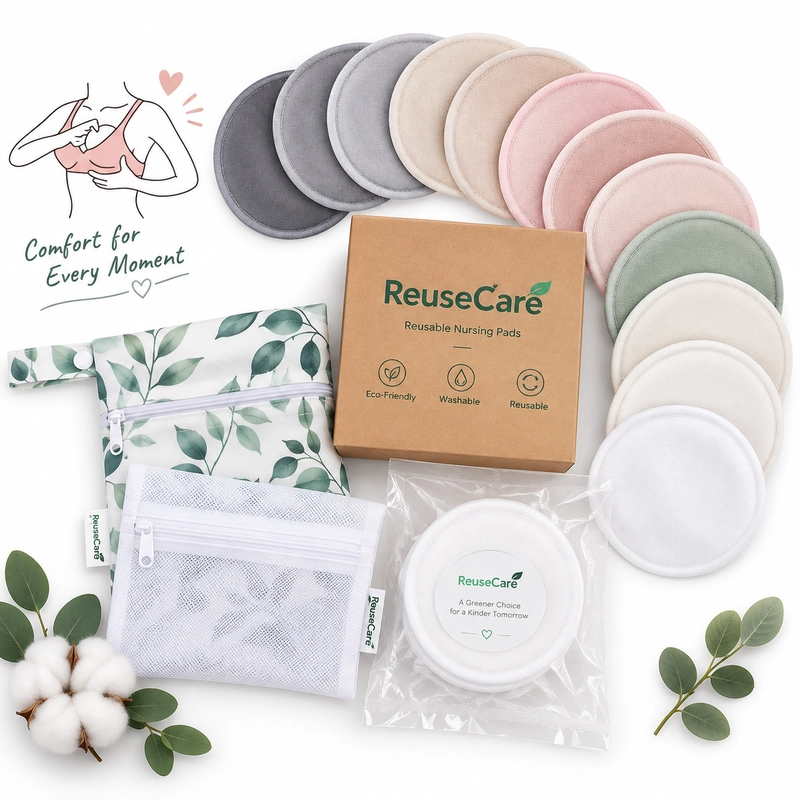
Product category: washable nursing breast pads. Current confirmed starting specification: three layers including a 100% cotton flannel layer and a PUL layer; 12 cm diameter; four pads per retail pack. The third-layer material and all layer GSM remain pending written confirmation. The 15 mL absorption figure is a target only until buyer and supplier agree a method and pass criteria.
Identify the product and commercial unit
Open with the product's intended use: reusable breast pads worn in a bra to absorb breast milk leakage. They are nursing pads, not menstrual pads. This category distinction matters in product scope, artwork, labels, search copy and buyer expectations. Link the RFQ to the relevant nursing pad range or attach an image as a reference, while noting that a photo alone is not a complete specification.
State whether your requested quantity is measured in pads, retail packs or cartons. The current retail pack contains four pads. Therefore, a quantity stated as packs corresponds to four times as many individual pads, while carton quantity is a separate conversion based on 400 retail packs per carton. Spell out the unit in every quantity table and ask the supplier to echo it in the quotation. This simple step prevents a mismatch between sample discussions, manufacturing quantities and freight estimates.
Separate confirmed facts from decisions still open
Give the supplier a concise product baseline: three-layer construction; one layer is 100% cotton flannel; one layer is PUL; nominal diameter is 12 cm; retail configuration is four pads. Do not describe the whole product as 100% cotton. The exact material of the third layer has not been specified, and no GSM values have been supplied for any of the three layers. Put these facts in an “open for written confirmation” column rather than silently filling them in with a likely material or weight.
Thickness and dimensional tolerance also remain unprovided. If either matters to fit, shelf presentation, packaging or product claims, ask for a proposed value and its measurement conditions. Otherwise, require review against the approved sample and written quotation while preserving the fact that no numeric tolerance or thickness has been agreed. Include a named decision owner and a due point for each open field so that they are closed before production rather than deferred into production instructions.
Use clear status terms: confirmed, proposed by supplier, buyer to decide, or pending evidence. Ask the supplier to list any assumptions separately. When a revised quote arrives, compare it against the previous revision and verify that every assumption has either been accepted or replaced with an agreed value. A quote is comparable only when the product and packing scope are comparable.
Explain the absorption target responsibly
If you include 15 mL, label it “absorption target for evaluation.” No supplied test method supports treating it as a certified or verified claim. Ask the supplier to propose or review a test method, then agree it before interpreting the result. The written protocol should cover sample conditioning, sample count and selection, liquid dosing volume and rate, number of doses, interval and observation time, measurement points, and the pass/fail rule.
Clarify whether your concern is total liquid uptake, surface wetness, strike-through, leakage under pressure or another outcome. Those are not interchangeable measures. Define the evaluation endpoint and how observations will be recorded. Avoid asking for a simple “yes, 15 mL” without a documented method. Keep any evidence linked to the tested construction and sample version. Marketing or compliance claims should be assessed separately against suitable evidence and applicable market requirements.
Request the sample and timeline as separate quote lines
The current sample reference is approximately US$30 and approximately three days. These are planning estimates, not a complete commercial promise: ask the supplier to state what the sample charge includes, whether custom packaging or courier charges are extra, and what event starts the sample lead time. Confirm the intended sample construction, quantity, delivery destination and any requested test work before comparing sample offers.
Bulk production is approximately 25 days after final specification and order confirmation. Ask the supplier to confirm what counts as final specification and order confirmation, and when the production clock starts. Artwork approval, sample review, material availability and packaging confirmation may be separate milestones; obtain the actual project schedule in writing. Do not present the estimate as a delivery date or assume transit time is included. Distinguish manufacturing from dispatch and shipping in the quote.
Use a controlled sample record: version, date, dimensions checked, materials declared, pack contents, agreed testing and buyer comments. If changes are requested, ask whether they affect cost or schedule and request a revised sample or written confirmation. The sample approval workflow offers a useful structure for sign-off.
Ask for a transparent price breakdown
Request a unit price for the clearly named unit—one four-pad pack, for example—and identify quantity breaks separately. Ask whether the price includes the pads, retail packaging, printed insert, label, barcode application, custom artwork setup and carton packing. List each customization as a separate line or state that it is excluded. This reveals whether two quotes differ because of product construction, packaging scope or a separate service.
Ask the supplier to state any MOQ by product version, print, color or packaging. Confirm whether quantities can be combined across designs and how any mixed assortment is counted. The product information available for this request does not establish a custom-print minimum or a complete commercial price schedule, so obtain those terms directly for your requested configuration. Keep payment terms, quote validity, tooling, sample fees and freight assumptions visible rather than embedded in an unexplained total.
For shipping estimates, provide destination country and postal code, requested shipping mode and whether the request is for a delivered estimate or factory collection. Ask for carton count, gross and net weight if available, carton dimensions and shipment assumptions. Do not share an exact competitive quotation or confidential tender information in a public-facing specification or article; exchange private commercial details directly with the supplier.
Make the evidence request product-specific
Direct suppliers to the certifications page as a starting point, then request copies or identifiers for the exact documents relevant to the quoted product. Check the named holder, scope, product or material description, validity and applicable batch or transaction references. Confirm whether a report covers the finished nursing pad, an individual layer fabric or another item. Coverage of a material does not automatically establish coverage of the finished pack.
A certificate page does not itself guarantee legal compliance or establish that the current batch is covered. Ask the supplier to explain the scope and supporting evidence, and have your own compliance or quality reviewer determine whether it meets your market and claim needs. Keep the reviewed documents with the final specification and approved sample record.
RFQ message structure
A practical inquiry can be organized into a one-page brief with: product and intended use; reference image or product page; confirmed construction and dimensions; unresolved material/test questions; packs and quantity; packaging and branding; sample and timing request; destination; evidence request; and requested price breakdown. Attach artwork only when it is ready, and label the revision. If artwork is not final, ask for pricing both with and without the proposed custom elements, where the supplier can quote them separately.
Ask the supplier to return a written specification along with the quote. It should identify layer materials and GSM, diameter and any agreed tolerance, pack contents, relevant test method, sample version, lead-time trigger, quote inclusions and exclusions, and certificate or report scope. Review those values before approval. The specification guide expands the technical fields; the pack and carton guide explains quantity conversion.
Frequently asked questions
What should a nursing-pad RFQ include?
Identify washable nursing breast pads, specify known construction and pack count, state quantities and destination, and list open specifications, sample needs, packaging and requested quote breakdown.
What does the 15 mL absorption target mean?
It is a target, not a certified claim. Agree the test method, conditioning, dosing, observation and pass criteria with the supplier before evaluating it.
How long do sample and bulk production take?
A sample is approximately US$30 and approximately three days. Bulk production is approximately 25 days after final specification and order confirmation. Confirm actual timing and scope in the quotation.
Can a certificate page confirm my exact product is covered?
No. Verify document scope for the exact product, material and relevant batch or transaction with the supplier. A general listing is not a guarantee of coverage or compliance.
When your brief is ready, send it through the nursing pad quote form. Include your pack quantity, destination and preferred sample route; ask for all open technical decisions and final commercial terms to be confirmed in the written quotation.