
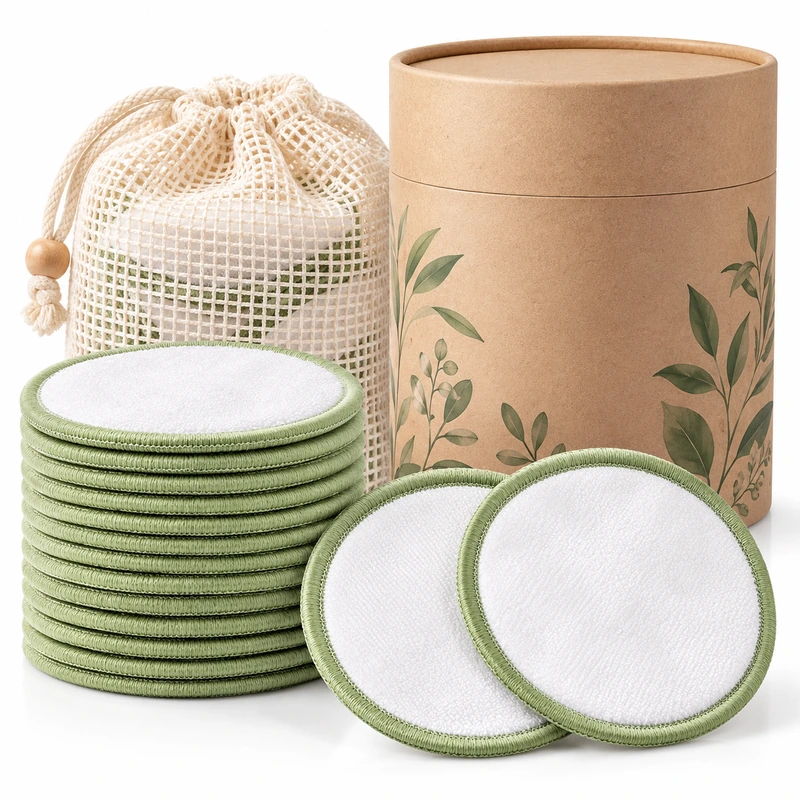
There is no reliable winner from the material names alone. Ask the supplier to identify the fiber percentages and construction, then compare the same format and intended use using physical samples and written criteria. Make the approved sample, specification and quote describe one matching product.
Start with the job the product must do
Reusable makeup-remover products can be rounds, small pads or larger cleansing towels. A round may suit a compact retail set; a towel may be positioned as a different format. These are assortment decisions, not performance promises. Decide how the customer is expected to use the item, how it will be sold and what needs to fit in the package before choosing a material label.
ReuseCare's current references include bamboo-cotton styles and microfiber pads or towels, alongside mesh-bag and kraft-packaging presentations. The images identify example styles; they do not establish exact fiber blend, size, pack count, care instructions or present stock. See the makeup remover pad product range and nominate the exact reference you want priced.
How to compare bamboo-cotton and microfiber
Use the material names to begin a specification conversation, not to substitute for one. “Bamboo cotton” does not tell a buyer the precise fiber percentages, which fibers are in each layer, or whether a surface has a particular knit or finish. “Microfiber” also needs a supplier-confirmed composition and construction. Request the exact content and product build for the selected style, and keep the answer with its sample identifier.
Write down the qualities that matter for your market. If your team wants to compare feel, cleansing routine, liquid handling, durability or care, define a suitable evaluation method with your product and compliance teams. Review the same method and conditions across candidate samples. Do not infer softness, absorbency, drying speed, hypoallergenic or antibacterial properties, environmental benefits, or superiority from the fiber name or a photograph.
Example comparison record: label two physical samples A and B; record the supplier-confirmed fiber content and layer build for each; use the same dry and damp condition, cleanser, number of strokes and rinse routine if those conditions suit your intended use. Have the same reviewers note handling, visible residue and cleanup observations separately, then launder both according to the proposed care instructions and record any visible change. This is a buyer-designed comparison, not a published performance test: define the method and acceptance rule before reviewing, retain the raw observations and do not generalize beyond the samples and conditions used.
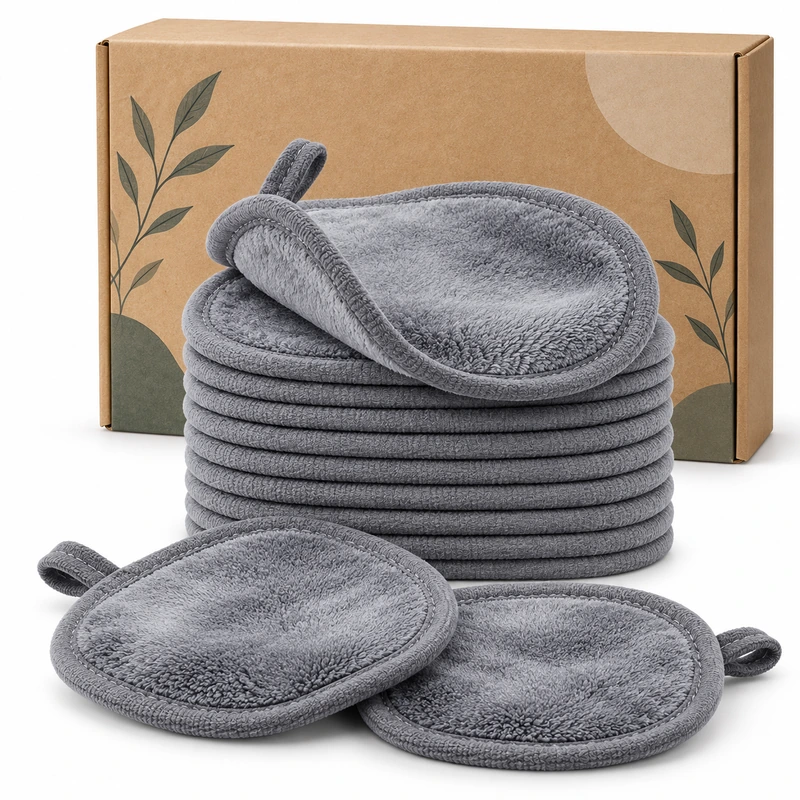
A simple material and format decision framework
Build a quote-ready specification
A clear request helps the factory identify the same product you have in mind. Include the reference style or image, target format and dimensions, required composition, colors, edge finish, quantity by variant, retail pack contents, brand assets and destination. Mark every unknown as “to confirm” instead of filling it with assumptions. For reusable facial rounds, the specification checklist helps organize diameter, layer construction and edge-finish questions. Ask the quote to show which points are confirmed and which depend on sample approval.
For material, request the fiber percentages and construction in writing. For dimensions and pack contents, ask for the proposed values and verify them on the physical sample. For care information, use supplier-confirmed instructions for that exact construction. If you have a required performance or compliance claim, discuss its scope, test method and supporting evidence before putting it on packaging or a product page.
Approve the sample before placing bulk production
Record a sample number or version, date received, materials and dimensions checked, comments, requested changes and final decision maker. Keep photos and written comments attached to that version. If a revision changes material, shape, stitching, color or packaging, request a new version and review the changed points before sign-off.
When approved, make the sample and its specification the production reference. Send the same version number with the final order and ensure the supplier's order confirmation describes it. Use the serged-edge facial-round sample inspection guide to record workmanship observations for that format. ReuseCare's sample approval guide explains how sample revisions and sign-off can be recorded before bulk production.
Packaging, MOQ and availability
Choose how customers receive the product: a single item, a set, a mesh-bag presentation, a kraft box or another agreed pack. Confirm pieces per selling unit, label and care information, barcode or artwork, language, protective packaging and master-carton identification. Product photos may show a packaging concept; only the approved sample and written packing specification confirm what is included.
ReuseCare's published planning context is basic finished styles from 5 to 300 pieces depending on product, and finished-product custom printing from 300 pieces. The actual minimum varies by selected style and customization. Confirm it for each variant and package in the quote. Confirmed in-stock styles may be dispatched within two days after stock and order details are checked; this means dispatch, not delivery. Customization, availability and schedules need written confirmation for the requested order.
For branding options, review ReuseCare private-label services. To compare a style, state your preferred material label, exact product reference, estimated quantity, packaging route and destination in the quote request.
Buyer checklist before you request pricing
Frequently asked questions
Are bamboo-cotton pads better than microfiber pads?
Neither label is enough to establish that one product is better. Compare exact composition, construction, shape and intended use using samples and criteria selected for your market.
What should I confirm before ordering reusable makeup remover pads?
Confirm fiber composition, dimensions, edge finish, pieces per set, colors, care instructions, label, packaging, order quantity and availability for the exact style.
What is the minimum order quantity?
Basic finished styles have minimums from 5 to 300 pieces depending on product. Finished-product custom printing starts from 300 pieces. Confirm the MOQ for your selected style and customization route.
Can an in-stock style dispatch within two days?
Confirmed in-stock styles may be dispatched within two days after availability and order details are confirmed. Dispatch is not delivery, and stock must be checked for the selected style.