
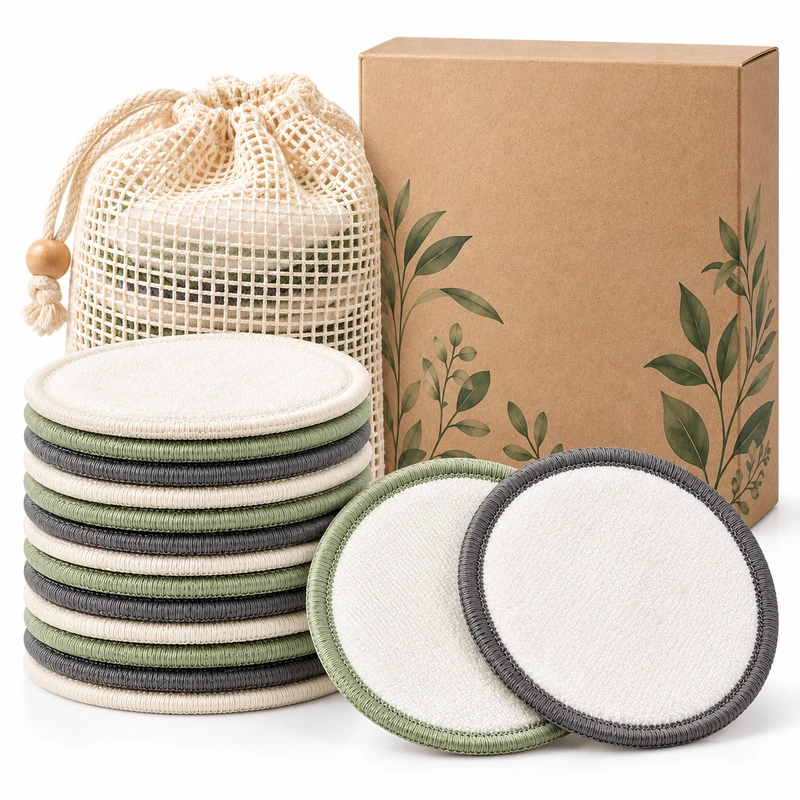
Describe the finished diameter and tolerance, layer construction, edge finish, confirmed material, colors, pack contents and approval checks. If you use a target such as 3 inches (7.62 cm), label it as your requested finished size pending sample review. It does not establish the size of a pictured style.
Separate the product reference from the requested specification
Begin with the intended product: a reusable facial round or washable facial cleansing pad for a skincare routine. Identify a reference style or image, then list the changes you want. A reference photo may help discuss color and overall appearance, but it cannot confirm the fiber blend, finished size, number of layers, stitch construction, care instructions or pieces in a set.
ReuseCare’s makeup remover pad range includes reusable rounds and pads. Use the product name or quote reference to identify the style under discussion. Keep this brief specific to facial cleansing products; other reusable care products have different shapes, constructions and intended uses.
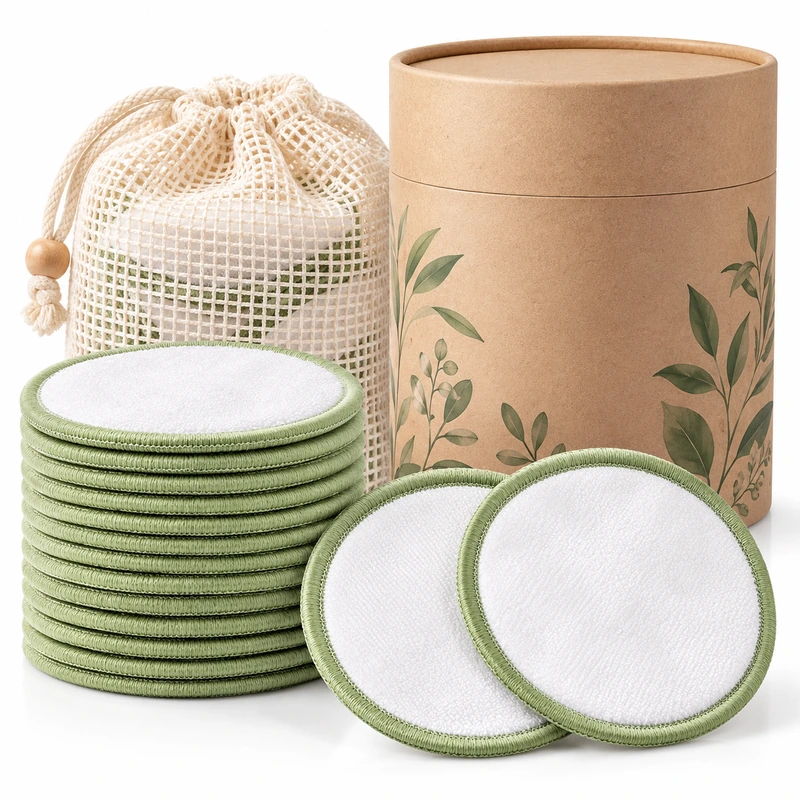
Write down the finished size and how it will be checked
Specify the target diameter of the finished round, the tolerance your team will accept and the measurement method. Say whether measurement is taken across the outside edge after sewing. For example, “3 inches (7.62 cm) finished diameter” can be a buyer’s target; request a sample and confirm that it can be made consistently before treating it as an approved production value. No tolerance is assumed here.
For a circular shape, note whether you will compare two perpendicular diameters or another agreed method. If appearance and consistency matter across a set, define how many pieces should be checked and how measurements are recorded. Agree any acceptable variation with the supplier before sample approval rather than relying on an unstated factory tolerance.
Example drawing note: “Finished outside diameter target: 3 in / 7.62 cm; tolerance: pending buyer and supplier agreement; measure flat after edge finishing across two perpendicular axes; record both readings on each checked piece.” This illustrates a complete measurement instruction, not a confirmed catalog size or an implied tolerance. Replace the target and method if your product brief requires something else.
Define two-ply construction by layer
“Two-ply” indicates two layers, but leaves several important details open. Ask the supplier to identify each layer’s fiber percentages, fabric type or surface, color, and any other relevant construction detail. State whether both layers should match or whether you require different faces. Confirm the proposed build in writing and compare it with the physical sample.
A request for bamboo and cotton does not establish an exact blend. Do not assume a 70/30 ratio, organic status, or that both faces use the same fibers. Request supplier documentation for the exact material and the scope it covers. If a certification or claim is important for your market, verify the relevant certificate, product or material scope and supply-chain documents before using that wording.
Describe the edge finish without ambiguous shorthand
If you want a serged edge, state that the cut perimeter should be finished with an overlock stitch and describe the appearance you expect. Review stitch coverage, consistency, loose threads, skipped areas, puckering and alignment between the two layers around the full circumference. Agree which observations are acceptable and record them for the sample version you inspect.
A “1/4-inch gusset” needs a drawing clarification for a flat facial round. The term could be interpreted in different ways, and a flat round does not inherently have a gusset. Mark the intended feature on a sketch or cross-section and ask whether the measurement refers to seam allowance, edge offset, finished thickness, an added sidewall or something else. Do not quote or approve the phrase alone.
For a hands-on review, follow the serged-edge facial-round sample inspection guide. It covers finished measurements, shape, stitch observations and version sign-off.
Ask for evidence that matches the material and claims
Request the fiber composition in writing for the specific proposed fabric and each layer. Ask which records can substantiate any required material or sourcing claim, and confirm that the documents correspond to the material and order being quoted. A color name, supplier description, product photograph or generic certificate reference is not enough to establish the exact item’s composition or organic status.
Do not put “hypoallergenic” or other health, safety or performance language into the product brief as an established product fact. If your market requires such a claim, define the evidence and assessment needed with your qualified compliance team and supplier before making the claim. Likewise, care guidance should be supplied for the confirmed construction; do not infer wash life or performance from the product category.
Make packaging part of the approved product
State the number of rounds per retail unit, whether colors are mixed or separated, and the preferred presentation such as a pouch, band, box or other agreed pack. Specify label position, artwork version, barcode, language, care information and any required protective packaging. Ask the quote to separate product configuration from packaging or print assumptions that still need confirmation.
Review a packaged sample or packaging proof if the retail presentation is part of your approval. Confirm the sample shows the same pieces per unit, color assortment, label and artwork that will appear in the final order. Ask how outer-carton quantities and marks will be recorded for shipment planning.
Approve one identified sample version
Give each sample a version or reference and record the date received, requested specification, measured dimensions, material information received, workmanship observations and packaging reviewed. List any changes clearly. If a revision affects the fabric, layers, diameter, edge finish, color or pack, request and assess the revised version before sign-off.
Approval should connect the physical sample, written specification, packaging details and quote. Save the approved reference and send its version with the purchase order. If any point remains open, mark it as pending and ask the supplier to confirm the applicable sample, order minimum, price and schedule in the written quotation.
Copy this short RFQ checklist
For context on material labels, read bamboo-cotton vs microfiber reusable makeup-remover pads. Then send the brief through the facial-round quote request, identifying which values are targets and which still need supplier confirmation.
Frequently asked questions
Is 3 inches a standard size for reusable facial rounds?
It can be used as a buyer’s target example, but it is not a confirmed standard for a pictured ReuseCare style. State your requested finished diameter and tolerance, then verify the identified sample before approval.
Does two-ply mean a particular bamboo-cotton blend?
No. Two-ply describes two layers, not their fiber percentages or whether they match. Request the construction and composition for each layer in writing and check the sample.
Can I specify a 1/4-inch gusset?
Ask for a drawing clarification first. On a flat round, “gusset” may not describe the intended feature; identify whether you mean a seam allowance, edge offset, finished thickness or a different construction detail.
Can a photo confirm organic or hypoallergenic claims?
No. Request product- and supply-chain-relevant material evidence and have any market-facing claim reviewed for its scope and support before publication.
What should sample approval cover?
Connect the sample version to its dimensions, construction, material information, edge workmanship, packaging and agreed acceptance checks. Record the decision and any unresolved items.