The current sample reference is US$30 and approximately three days to prepare. Bulk production is approximately 25 days after final specification and order confirmation. These are planning references; confirm scope, shipping, timing assumptions and start dates in the written quotation and order confirmation.
What the sample process should establish
A sample review answers a bounded question: does this identified product version match the requirements the buyer has approved? It does not resolve every open specification automatically. A physical sample may help assess shape, feel, workmanship, appearance and packaging, while material composition, layer weights, performance and compliance evidence require their own written records or agreed checks.
Nursing pads are breast pads worn in a bra to manage breast milk leakage. They are not menstrual pads. Keep terminology consistent across sample labels, comments, quote references and artwork so a review does not accidentally apply the wrong use case.
Step 1: Freeze the review baseline
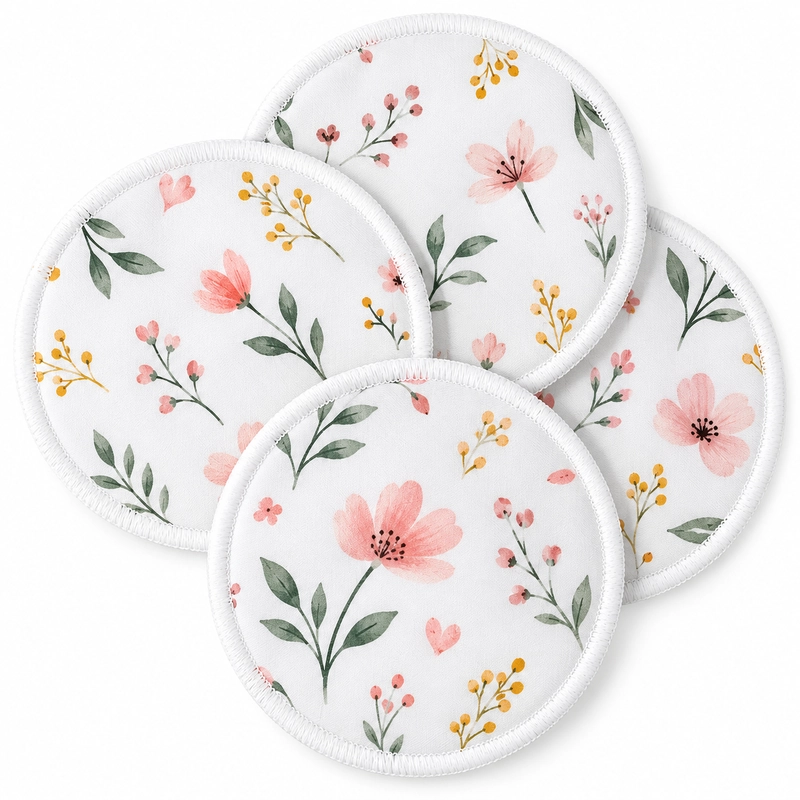
Before a sample is prepared, create a short specification revision with an identifier and date. The current confirmed starting point is three layers, including one 100% cotton flannel layer and one PUL layer, a 12 cm diameter and four pads per retail pack. The overall product must not be called 100% cotton. The exact third-layer material and GSM for all layers have not been provided; list them as open and request written confirmation.
Thickness and dimensional tolerance are also open. Ask for proposed values, measurement conditions and acceptance ranges to be added to the specification before sign-off. Do not infer a tolerance from a sample that happens to measure a particular value. Include the sample version on the shipment label or accompanying record and make sure any artwork or packaging version is separately identified.
Step 2: Confirm the sample offer
Ask the quote to state whether US$30 covers one sample, a set, custom materials, decoration or another defined scope. The stated preparation estimate is approximately three days; ask when that clock starts and whether it excludes buyer feedback, material sourcing, weekends or transit. Keep courier charges and destination-specific delivery separate unless explicitly included in the current written quote. This page does not publish shipping costs.
Before paying or dispatching, ensure the supplier and buyer agree on delivery address details privately, the sample contents, requested review deadline and contact for questions. If a sample cannot represent a proposed material or finish, that limitation should appear in the quote so reviewers understand what it can and cannot validate.
Step 3: Review the actual sample against agreed points
On receipt, record date, package condition and sample identifier. Compare the piece with the approved specification: confirm the stated 12 cm diameter using the method agreed by the parties; inspect the three-layer construction; note which layer identifications are documented; and review sewing, symmetry, edge finish, appearance and pack presentation. Material composition should be supported by an appropriate supplier record for the relevant material, not inferred from color, touch or a photograph.
The 15 mL absorption figure is a target only. It is not a certified claim and no test method has been supplied. If absorption is part of approval, agree method, conditioning, dosing, observation and pass criteria first. Record sample identity, number of pieces assessed, results and deviations. Without a settled protocol, mark the performance point “pending method agreement,” rather than pass or fail based on an informal pour or subjective impression.
For certificates or reports, consult the certifications page and check exact product, material, holder, validity and batch or transaction scope. A certificate shown during sampling may concern a different material or lot. Keep evidence review distinct from visual sample approval; neither is a blanket legal-compliance guarantee.
Step 4: Control comments and revisions
Consolidate feedback in one review log. Each comment should identify the sample revision, location or feature, requested outcome, owner and status. Separate required changes from preferences and questions. Avoid vague instructions such as “make softer” without a mutually understandable reference or agreed evaluation method. For changes affecting fabric, layer composition, dimensions, absorbency, care or packaging, ask the supplier to update the written specification and issue a new revision.
Never allow comments for one version to drift into approval of another. Label resubmitted samples with a distinct revision and summarize changes since the previous version. Keep dated photographs alongside the record where useful, but do not use photos to establish hidden layer composition or exact dimensions. If there are multiple colors or pack variants, say which variants the approval covers and whether each needs a separate check.
Step 5: Sign off and retain the reference
The approval should name the final revision, approver, date and disposition. State any remaining exceptions explicitly and whether they block bulk production. The signed approval should point to the same product description, material declarations, layer GSM, agreed dimensions and tolerance, performance protocol, pack contents and artwork referenced by the order. If these items are still incomplete, record the approval as conditional and identify what written confirmation is still needed.
Retain an agreed bulk reference sample, with a durable label linking it to the approved revision and order. Buyer and supplier should each know who stores it, how long it is kept, and how it may be compared with production. Agree whether the retained piece is the exact approved sample or a duplicate produced to the same specification. Store the approval, photographs, specification and order confirmation together so an incoming check can locate the reference later.
Step 6: Release bulk timing from a confirmed order
The current bulk production estimate is approximately 25 days after final specification and order confirmation. Clarify whether this is production time only, what event starts the count, and what changes would affect the schedule. The estimate is not a delivery date. Confirm any transit estimate separately against destination and shipping method. A material substitution or revised artwork after approval may require renewed review and a schedule update.
Before release, reconcile the approved sample with the final written quotation. Confirm four pads per retail pack, total pack quantity, any label or insert, master carton plan and destination. For carton calculations, see the nursing-pad carton and DDP planning guide. For purchasing teams, the institutional procurement checklist covers evidence and RFQ fields.
Sample approval record: minimum fields
- Product name, intended use, sample ID, revision and receipt date.
- Written specification and artwork revision reviewed.
- Known materials and every open field, including layer GSM and third-layer identity.
- Dimensions, method, tolerance and inspection observations.
- Absorption method and results, if agreed; otherwise a pending status.
- Comments, corrective revision, final approver and approval date.
- Bulk reference sample location and order linkage.
Frequently asked questions
How much is the sample and how long does it take?
The current sample reference is US$30 with an approximate preparation time of three days. Confirm the exact sample scope and shipping charge in a written quotation.
When does bulk production take approximately 25 days?
The current planning estimate is approximately 25 days after the final specification and order are confirmed. Confirm the schedule and start point in the written order confirmation.
Can 15 mL be used as the sample pass criterion?
Only after the parties agree the method, conditioning, dosing, observation and pass criteria. The 15 mL value is a target, not a certified claim or established test result.
What is the purpose of a bulk reference sample?
It gives the buyer and supplier an identifiable physical or documented reference for the approved version. Tie it to the written specification and order so production review has a controlled comparison point.
Request a sample with the intended product revision, destination and evaluation questions. Approve only after the open specification and evidence items are resolved in writing, and link the decision to the final quote. Start a nursing-pad sample and quote request →